What happens in your brain when you need to pee?
Updated
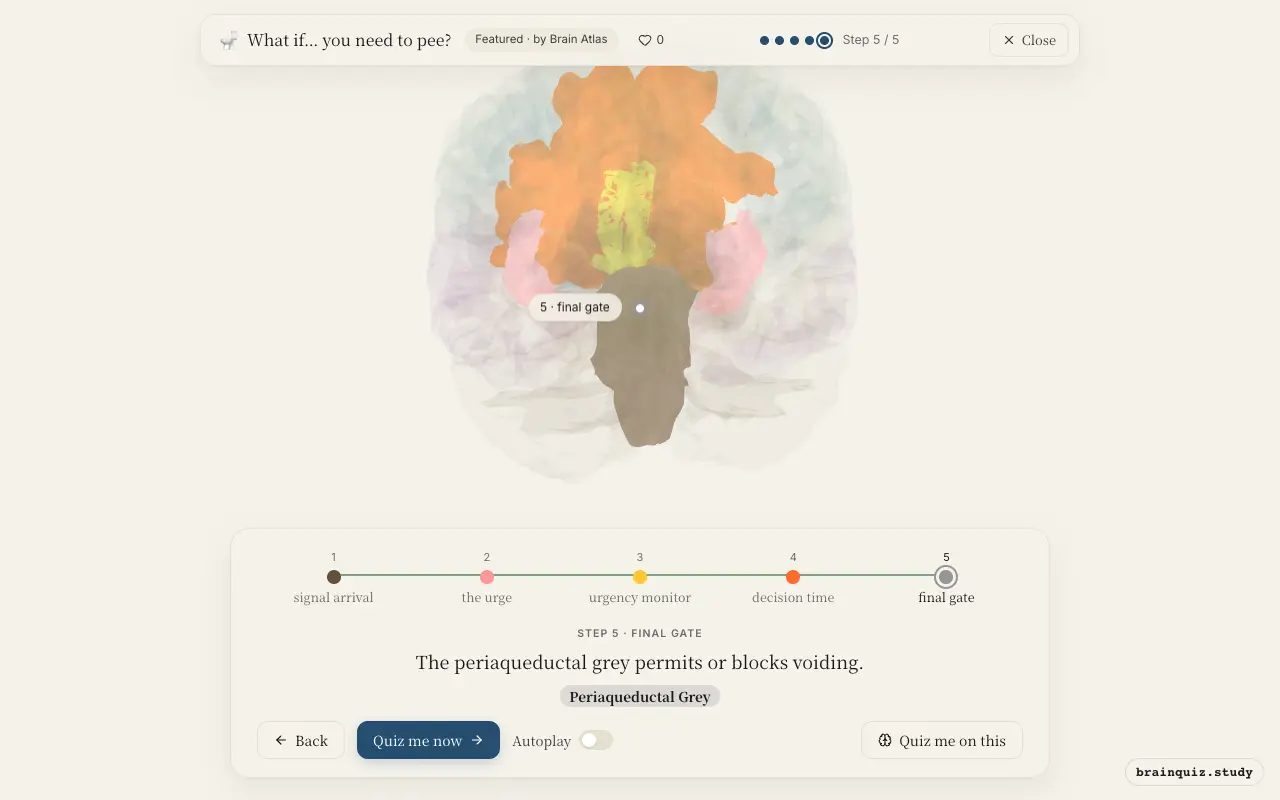
The brainstem detects bladder fullness, the insula makes you consciously aware of the need, the anterior cingulate monitors urgency, the prefrontal cortex decides when and where to go, and the periaqueductal grey controls the final release.
Watch it light up on the 3D brain
Brain regions that light up
| Order | Region | What it does here |
|---|---|---|
| 1 | Brainstem | Bladder stretch receptors send fullness signals to the brainstem. |
| 2 | Insula | The insula generates the conscious feeling of needing to pee. |
| 3 | Anterior Cingulate Cortex | The anterior cingulate tracks how urgent the need is. |
| 4 | Prefrontal Cortex | The prefrontal cortex plans when and where to go. |
| 5 | Periaqueductal Grey | The periaqueductal grey permits or blocks voiding. |
1. Brainstem: signal arrival
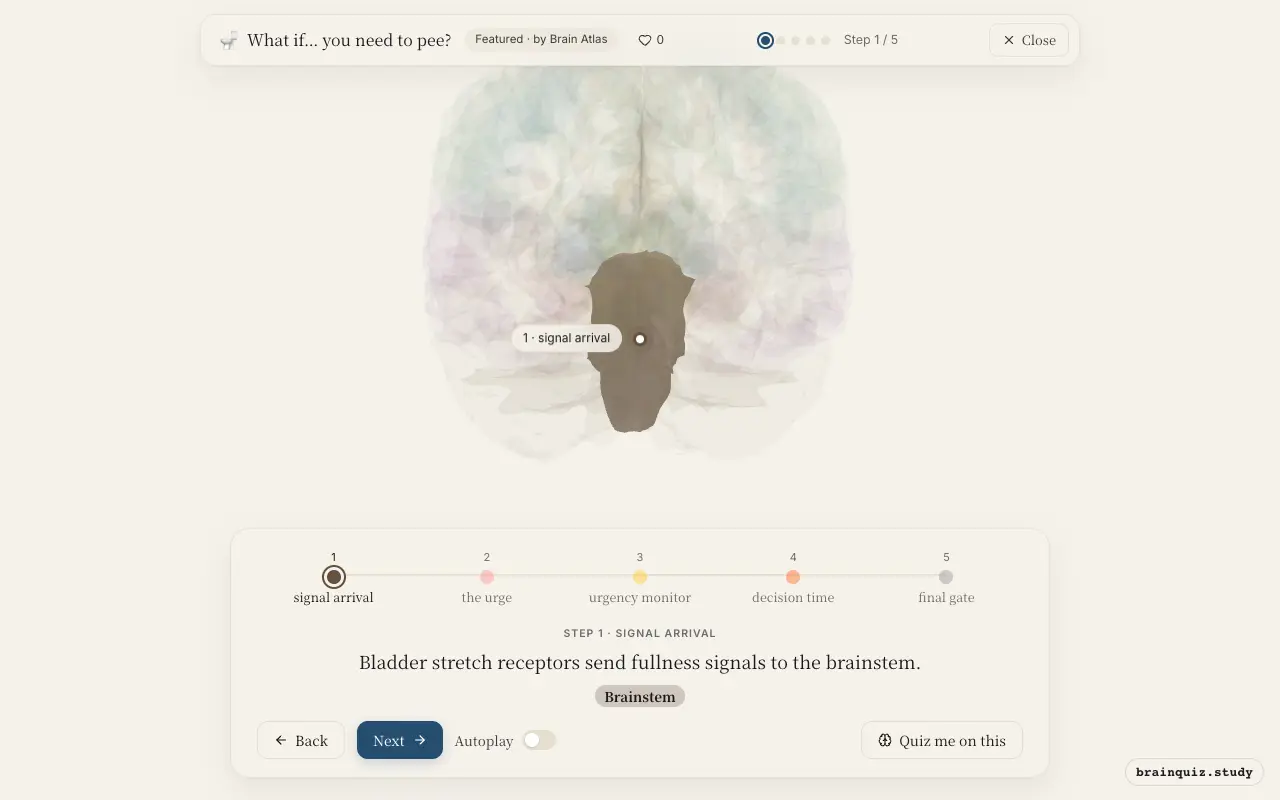
The brainstem, specifically the pontine micturition center, receives sensory input from the bladder via the spinal cord. It relays this information to higher brain centers while also maintaining basic bladder reflexes.
2. Insula: the urge
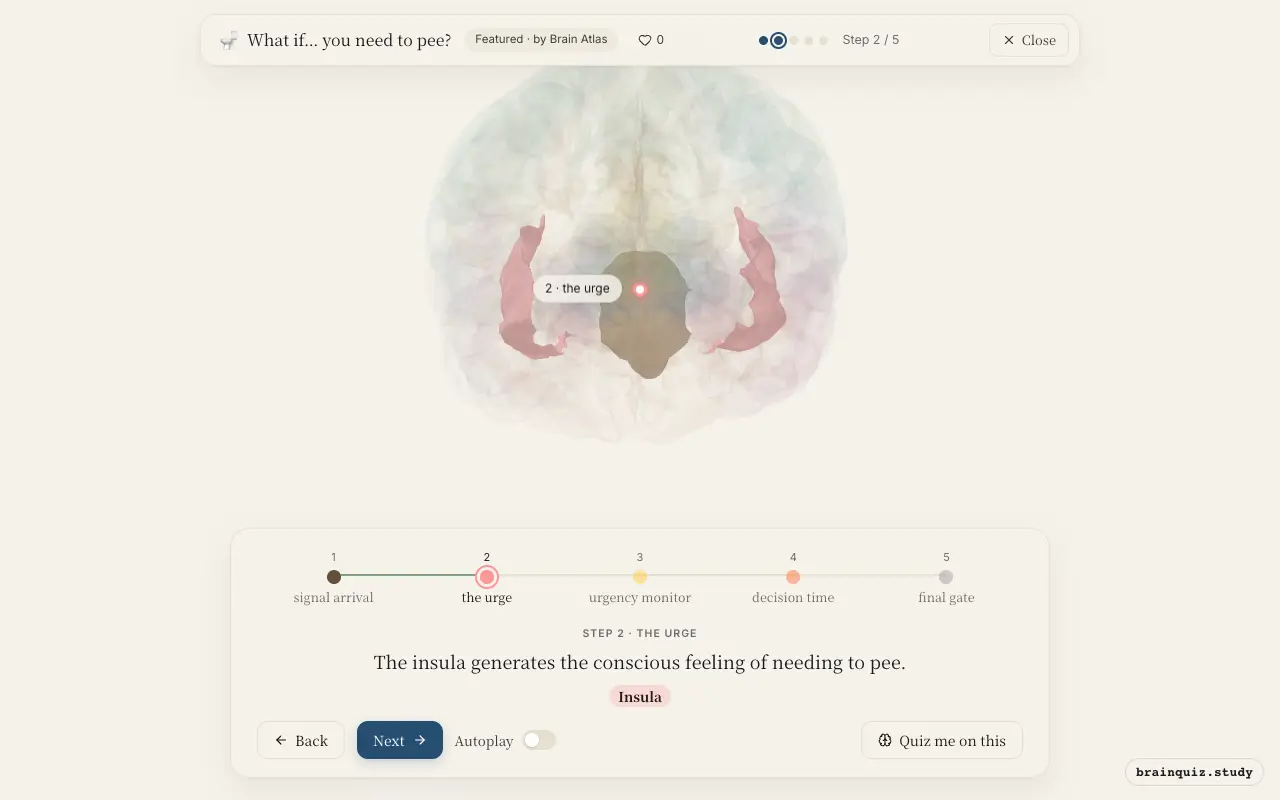
The insula is the hub for interoception, the sense of the body's internal state. It integrates visceral signals from the bladder to create the subjective awareness of fullness and urgency.
3. Anterior Cingulate Cortex: urgency monitor
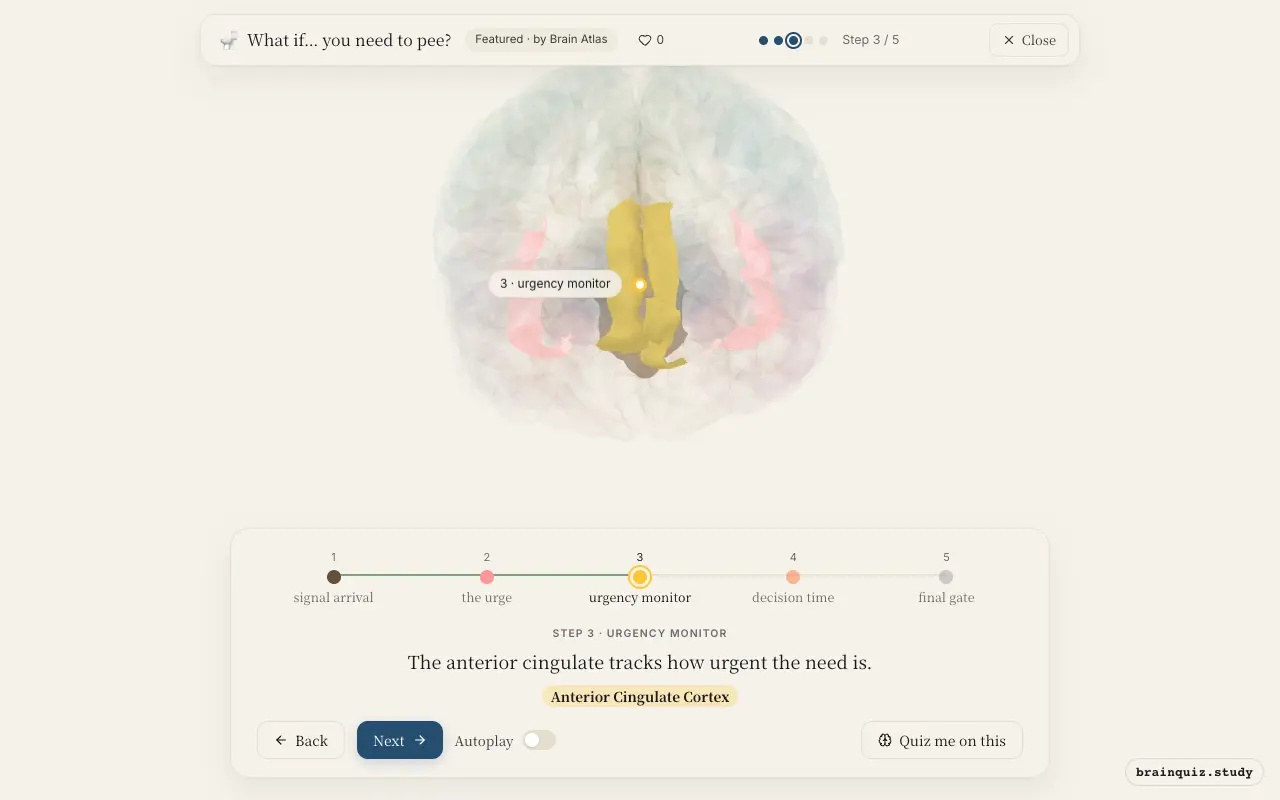
The anterior cingulate cortex is thought to monitor the intensity of the bladder signal and any conflict between the urge and social context. It helps motivate you to seek a restroom as urgency rises.
4. Prefrontal Cortex: decision time
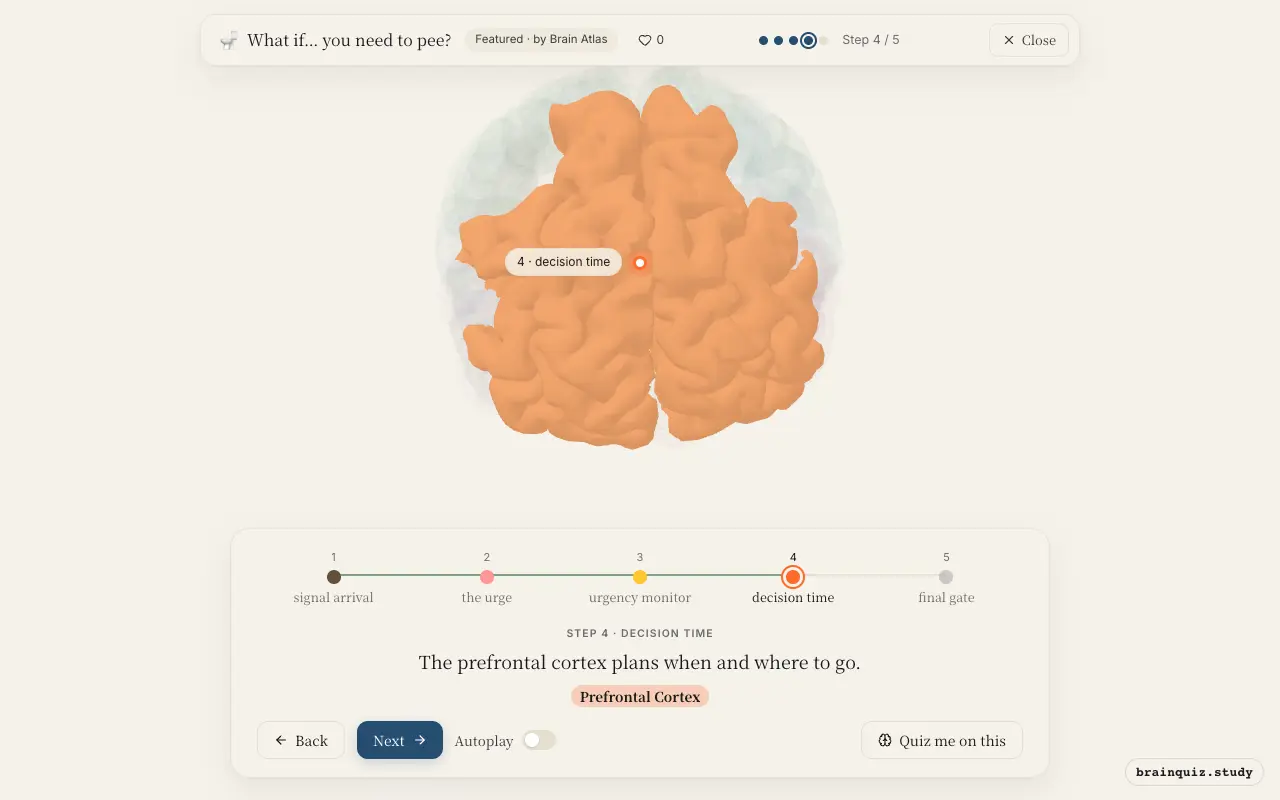
The prefrontal cortex, particularly the dorsolateral and ventromedial areas, evaluates the situation, suppresses the urge if necessary, and plans a route to an appropriate bathroom.
5. Periaqueductal Grey: final gate
The periaqueductal grey receives input from the prefrontal cortex and, if the decision is to go, activates the brainstem micturition center to relax the urethral sphincter and contract the bladder.
Good to know
- The pontine micturition center in the brainstem coordinates the actual voiding reflex.
- Studies suggest the insula's response to bladder fullness increases with the degree of distension.
- Children learn to control urination partly through prefrontal inhibition of the brainstem reflex.
Needing to pee vs. actually peeing
While needing to pee involves the insula and prefrontal cortex for awareness and decision-making, actually peeing shifts control to the brainstem and periaqueductal grey, which execute the reflex largely automatically once the prefrontal cortex gives the go-ahead.
Test yourself
Which brain region is primarily responsible for the conscious feeling of needing to pee?
What role does the prefrontal cortex play in urination?
Which region acts as the final gate for initiating urination?
0 of 3 answered · 0 correct
Simplified: many regions work together at once, and this shows the main players in the order they act.