What happens in your brain when you procrastinate?
Updated
Procrastination involves the amygdala signaling task-related anxiety, the nucleus accumbens seeking immediate rewards, the anterior cingulate detecting conflict, and the prefrontal cortex failing to override these impulses, while the posterior cingulate drifts into mind-wandering.
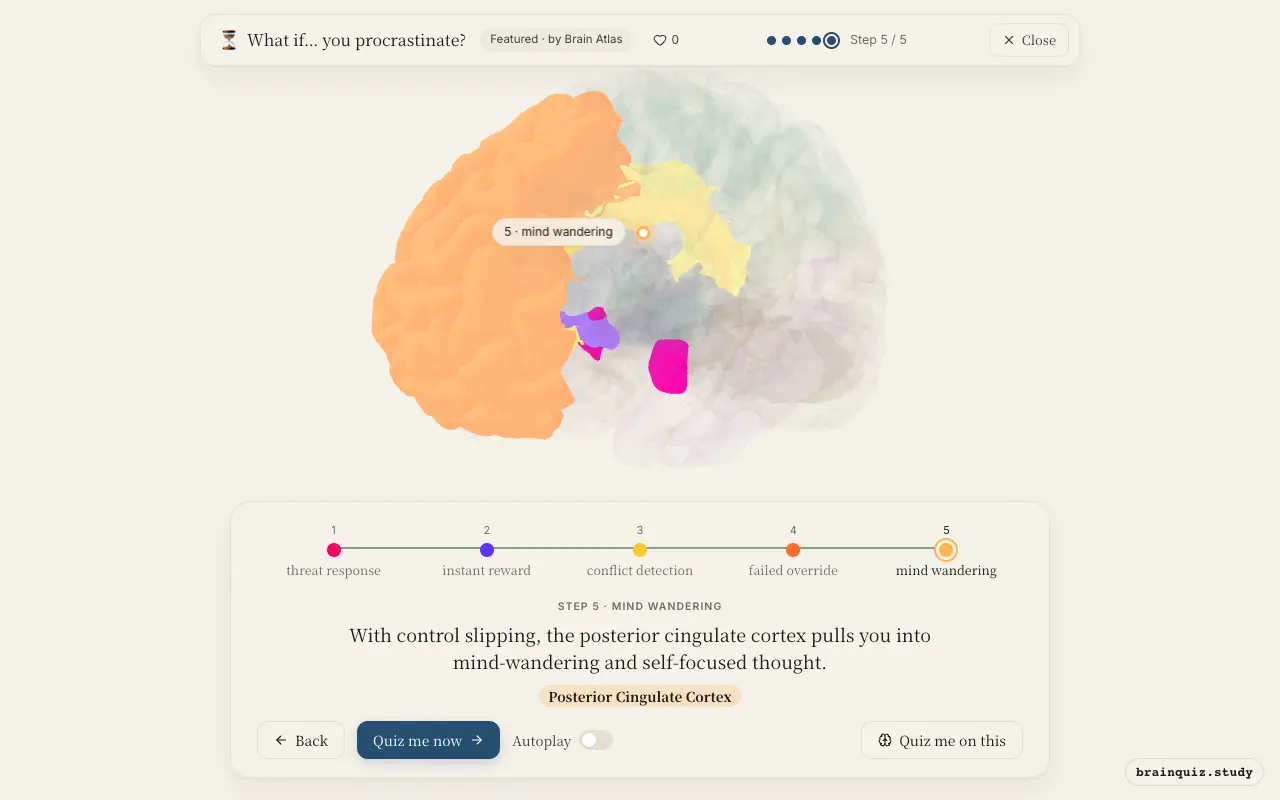
Watch it light up on the 3D brain
Brain regions that light up
| Order | Region | What it does here |
|---|---|---|
| 1 | Amygdala | The amygdala flags the task as unpleasant, triggering a fear response that makes you want to avoid it. |
| 2 | Nucleus Accumbens | The nucleus accumbens fires at the thought of immediate pleasures, like social media or snacks. |
| 3 | Anterior Cingulate Cortex | The anterior cingulate cortex detects the clash between your intention to work and the urge to avoid. |
| 4 | Prefrontal Cortex | The prefrontal cortex tries to exert self-control but often loses the battle against emotional urges. |
| 5 | Posterior Cingulate Cortex | With control slipping, the posterior cingulate cortex pulls you into mind-wandering and self-focused thought. |
1. Amygdala: threat response
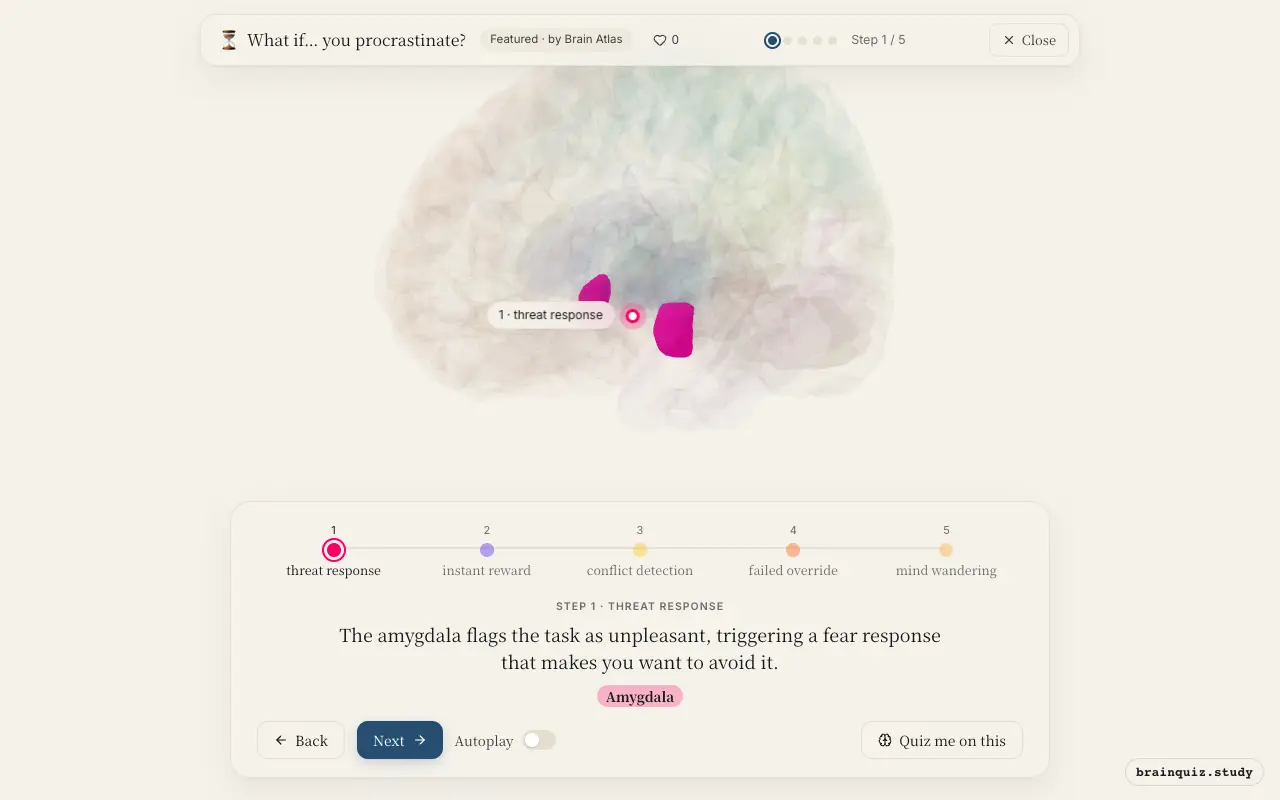
The amygdala processes emotional significance and reacts to tasks perceived as boring or difficult. Studies suggest that individuals who procrastinate show stronger amygdala reactivity to aversive tasks, promoting immediate avoidance. This emotional response can override rational planning.
2. Nucleus Accumbens: instant reward
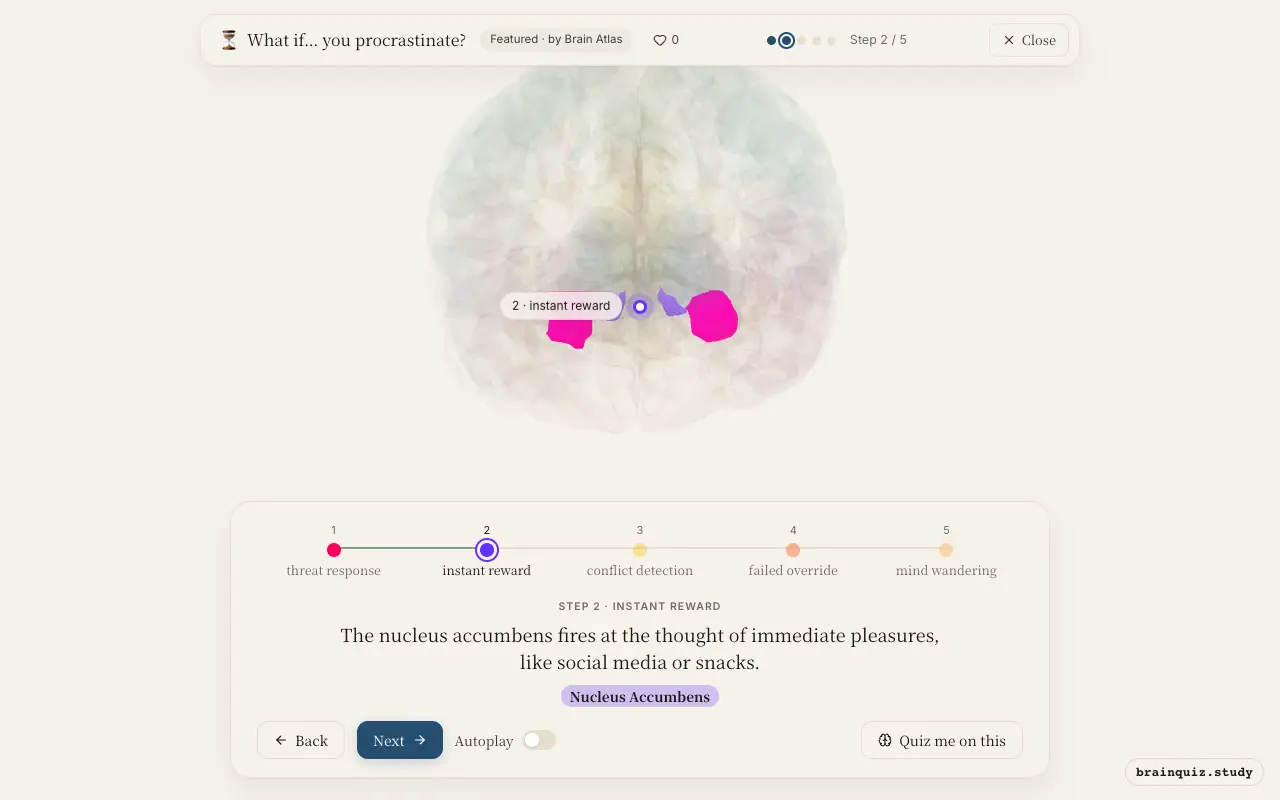
As part of the brain's reward system, the nucleus accumbens releases dopamine when anticipating quick, enjoyable activities. This makes distracting alternatives more appealing than the delayed, less certain reward of completing the task. Its activation biases decision-making toward short-term gratification.
3. Anterior Cingulate Cortex: conflict detection
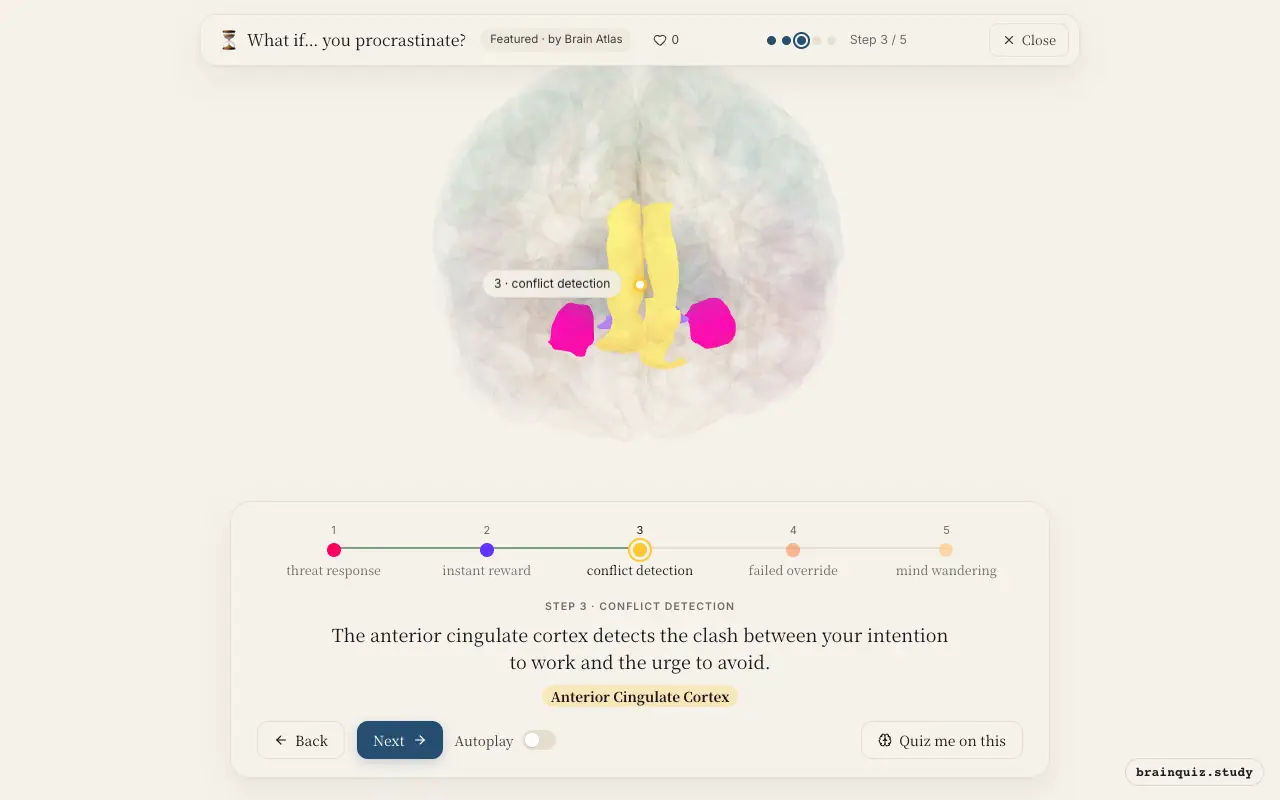
The anterior cingulate monitors conflicts between competing goals and signals the need for increased cognitive control. During procrastination, this conflict between task demands and avoidance impulses produces a feeling of unease. This discomfort may further motivate escape if control fails.
4. Prefrontal Cortex: failed override
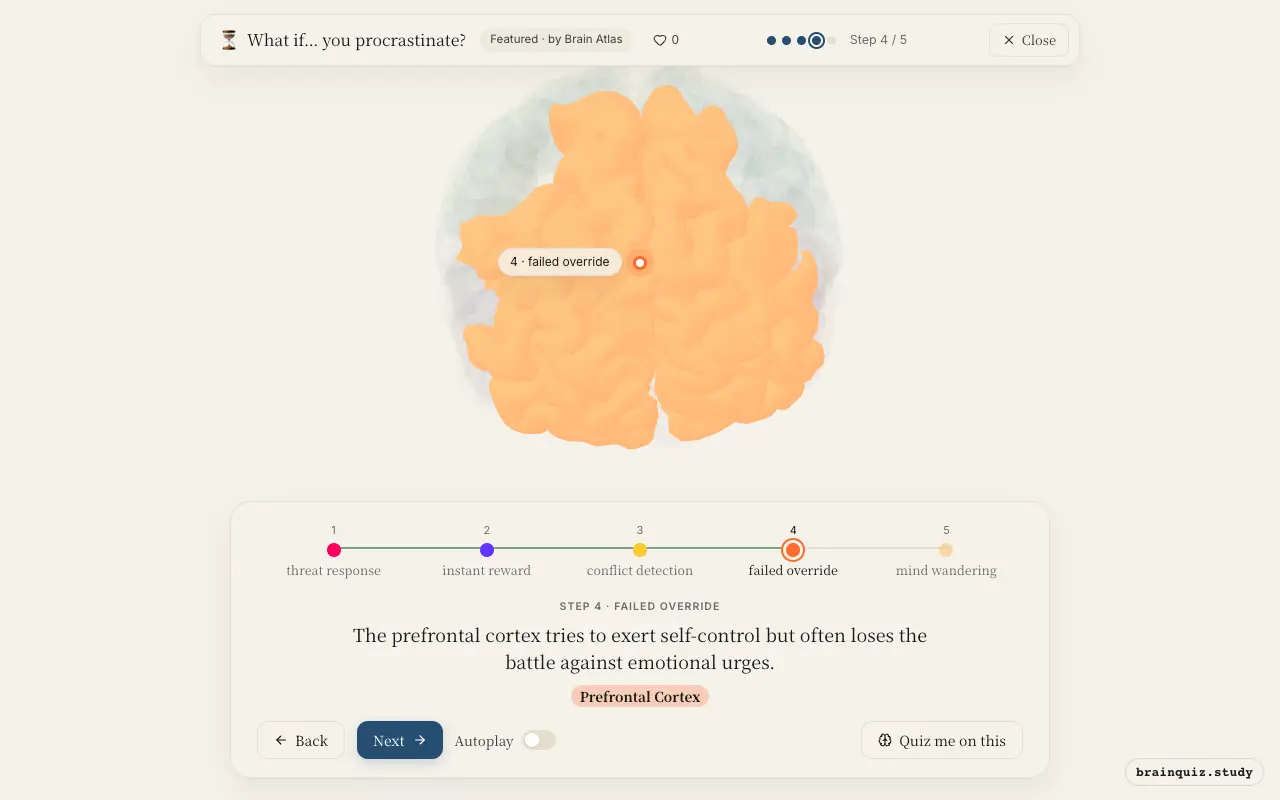
The prefrontal cortex is responsible for executive functions like planning, inhibition, and delaying gratification. In procrastination, its top-down control is weakened or insufficient to overcome the limbic system's drive for immediate relief. Studies suggest that procrastinators show lower prefrontal activation when facing tasks.
5. Posterior Cingulate Cortex: mind wandering
The posterior cingulate is a hub of the default mode network, active during rest and internal mentation. Once you disengage from the task, this region promotes daydreaming, rumination, or thinking about unrelated personal concerns. This further reduces attention to the task and perpetuates procrastination.
Good to know
- Neuroimaging studies suggest that chronic procrastinators have a larger amygdala and weaker connections to the prefrontal cortex.
- The default mode network, including the posterior cingulate, becomes more active when attention shifts from external tasks to internal thought.
- The nucleus accumbens releases dopamine in anticipation of a reward, not just upon receiving it.
Procrastination vs. Focused Work
While procrastination shows amygdala and nucleus accumbens dominance with weak prefrontal control, focused work involves strong prefrontal activation that suppresses default mode and limbic responses. In focused states, the anterior cingulate resolves conflict by boosting task-related networks rather than avoidance.
Test yourself
Which brain region is primarily responsible for detecting the conflict between your intention to work and the urge to procrastinate?
During procrastination, the nucleus accumbens is most active when you are:
What role does the prefrontal cortex play in procrastination?
0 of 3 answered · 0 correct
Simplified: many regions work together at once, and this shows the main players in the order they act.