What happens in your brain when you quit caffeine?
Updated
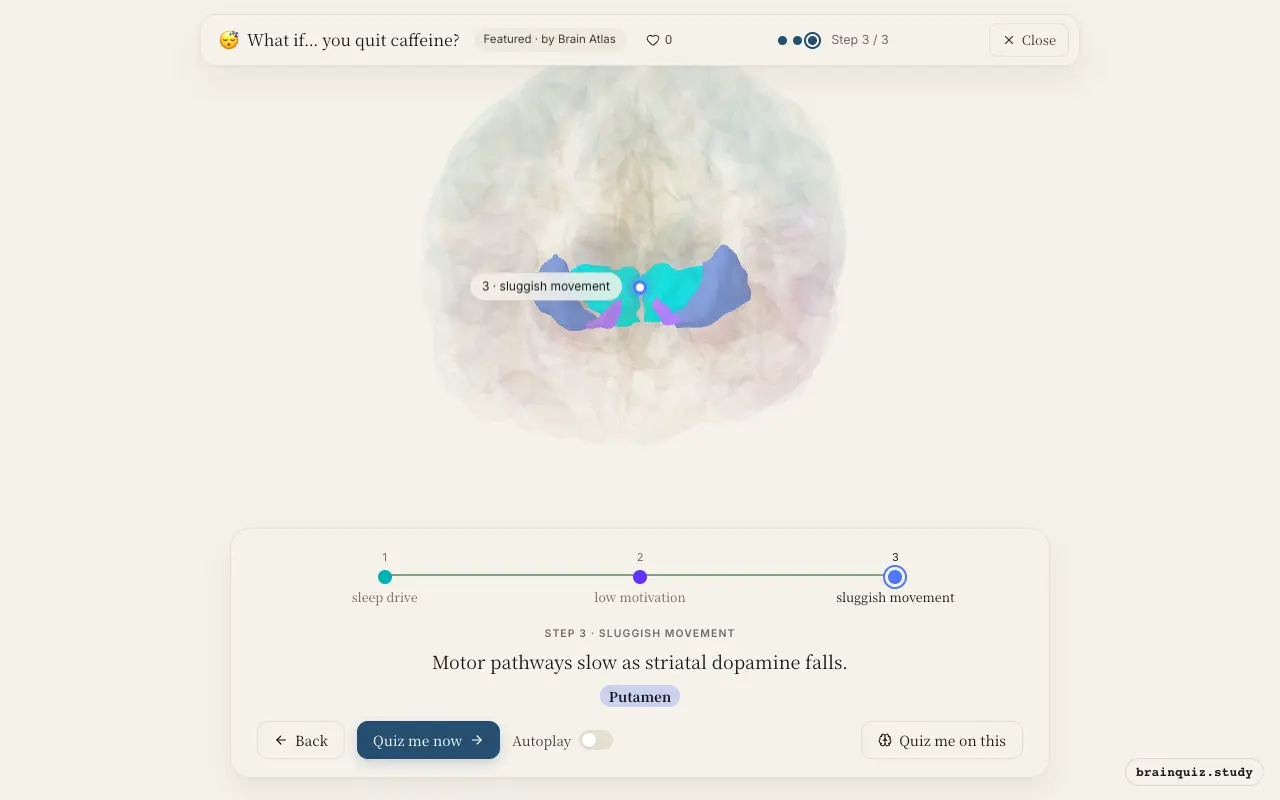
Quitting caffeine removes the blockade of adenosine receptors, now upregulated from chronic use. Excess adenosine signaling in the hypothalamus drives sleepiness, while reduced dopamine in the nucleus accumbens and putamen causes low motivation and sluggish movement.
Watch it light up on the 3D brain
Brain regions that light up
| Order | Region | What it does here |
|---|---|---|
| 1 | Hypothalamus | Adenosine floods the hypothalamus, inhibiting wake-promoting neurons. |
| 2 | Nucleus Accumbens | Dopamine release drops, dulling reward and drive. |
| 3 | Putamen | Motor pathways slow as striatal dopamine falls. |
1. Hypothalamus: sleep drive
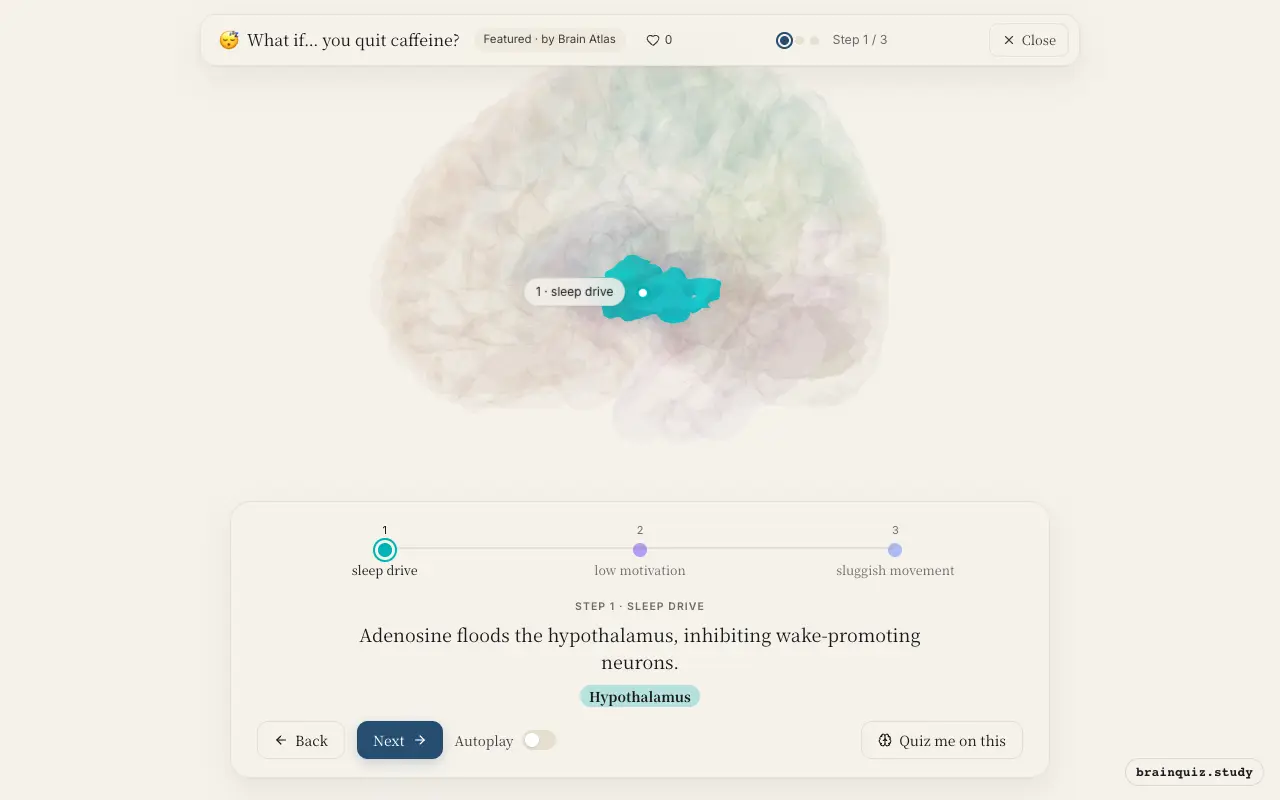
Chronic caffeine use has upregulated adenosine receptors here. Without caffeine's blockade, normal adenosine levels strongly activate these receptors, suppressing histamine and orexin pathways, producing intense sleepiness and fatigue.
2. Nucleus Accumbens: low motivation
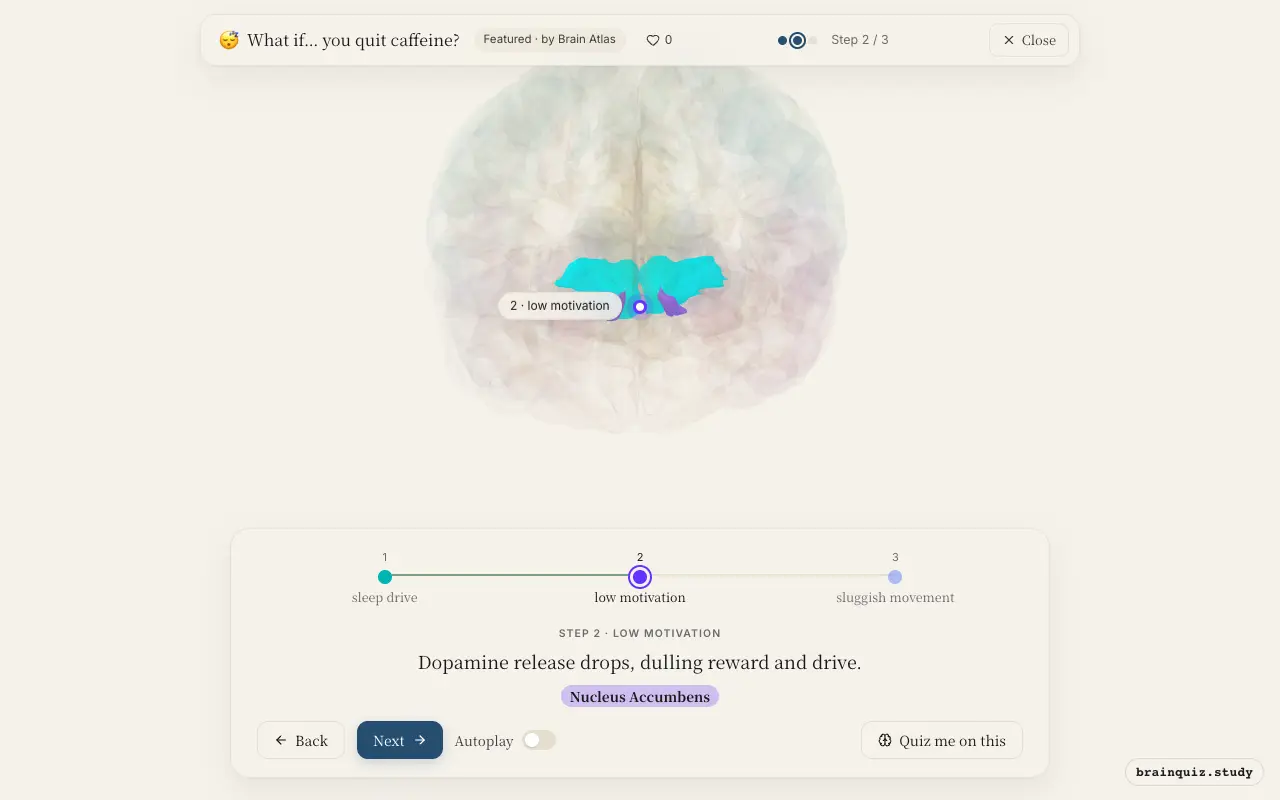
Adenosine A1 receptors in the nucleus accumbens inhibit dopamine release from ventral tegmental area terminals. Reduced dopamine signaling weakens the brain's reward response, causing anhedonia, lack of motivation, and depressed mood during withdrawal. This effect is a key neural basis for the 'blah' feeling many report.
3. Putamen: sluggish movement
The putamen, part of the dorsal striatum, relies on dopamine to facilitate movement. With adenosine A1 receptor activation inhibiting dopamine release, basal ganglia output becomes less permissive, leading to psychomotor retardation, sluggishness, and a heavy feeling in the limbs. This mirrors some aspects of Parkinsonian bradykinesia, though mild and reversible.
Good to know
- Caffeine withdrawal is recognized as a disorder in the DSM-5, with symptoms including headache, fatigue, and difficulty concentrating.
- Animal studies show that chronic caffeine administration increases the density of adenosine A1 and A2A receptors in the brain.
- Withdrawal symptoms typically resolve within 2-9 days, likely as adenosine receptors downregulate back to baseline.
Caffeine withdrawal vs. caffeine consumption
Consuming caffeine blocks adenosine receptors, increasing dopamine and alertness. Withdrawal unblocks upregulated receptors, so the same adenosine levels produce stronger inhibition: less dopamine in the striatum and more sleep pressure in the hypothalamus.
Test yourself
Which brain region is primarily responsible for the increased sleepiness during caffeine withdrawal?
Reduced dopamine in which region causes low motivation during caffeine withdrawal?
What happens to adenosine receptors after chronic caffeine use?
0 of 3 answered · 0 correct
Simplified: many regions work together at once, and this shows the main players in the order they act. For learning only, not medical advice.