What happens in your brain when you smell smoke?
Updated
The amygdala triggers a fast threat response. The hippocampus retrieves smoke-related memories. The orbitofrontal cortex identifies the smell and assesses danger. The insula creates bodily urgency, and the anterior cingulate cortex coordinates an action plan.
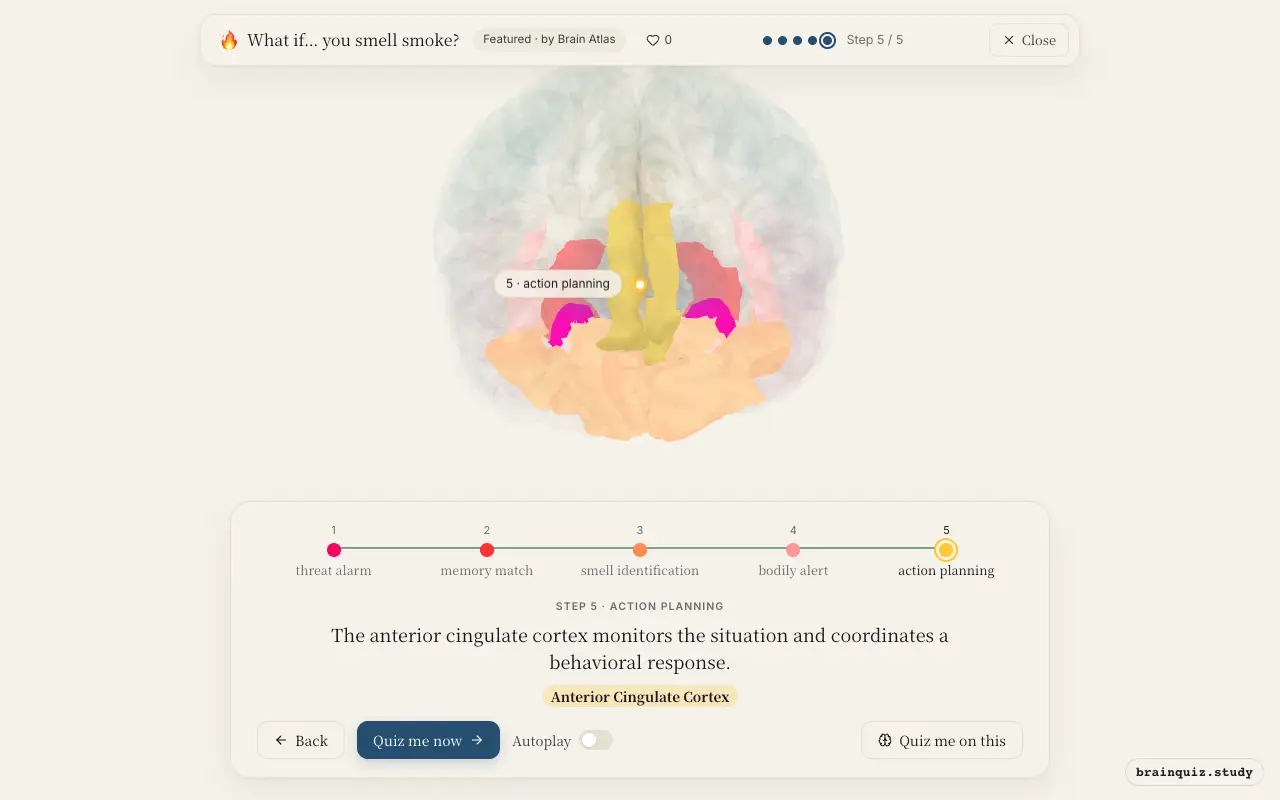
Watch it light up on the 3D brain
Brain regions that light up
| Order | Region | What it does here |
|---|---|---|
| 1 | Amygdala | The amygdala reacts to the smell as a potential danger signal. |
| 2 | Hippocampus | The hippocampus retrieves past experiences associated with the smell of smoke. |
| 3 | Orbitofrontal Cortex | The orbitofrontal cortex consciously identifies the smell and evaluates its source and danger. |
| 4 | Insula | The insula creates an internal sense of urgency and bodily awareness. |
| 5 | Anterior Cingulate Cortex | The anterior cingulate cortex monitors the situation and coordinates a behavioral response. |
1. Amygdala: threat alarm
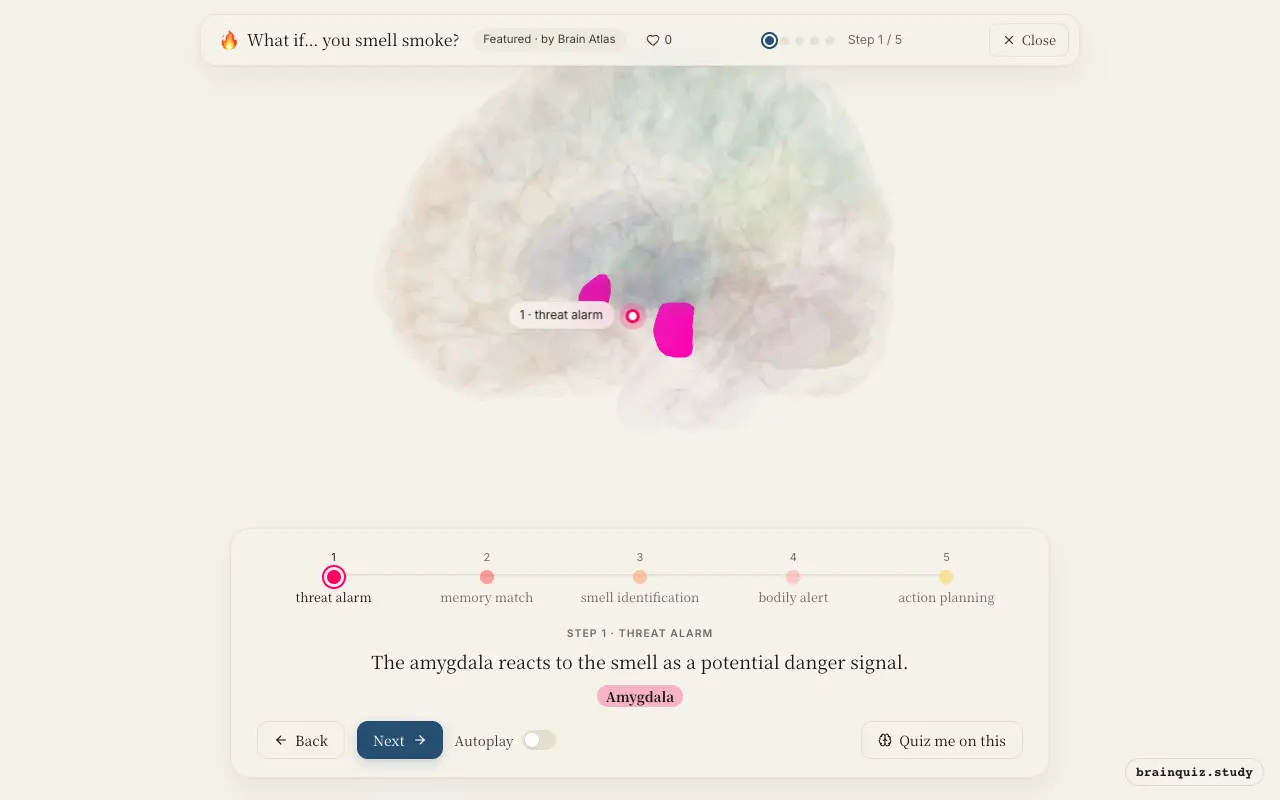
The amygdala is part of the brain's rapid threat detection system. It receives direct input from the olfactory bulb and triggers an immediate fear or alert response before conscious processing. This fast pathway helps you react quickly to potentially dangerous smells like smoke.
2. Hippocampus: memory match
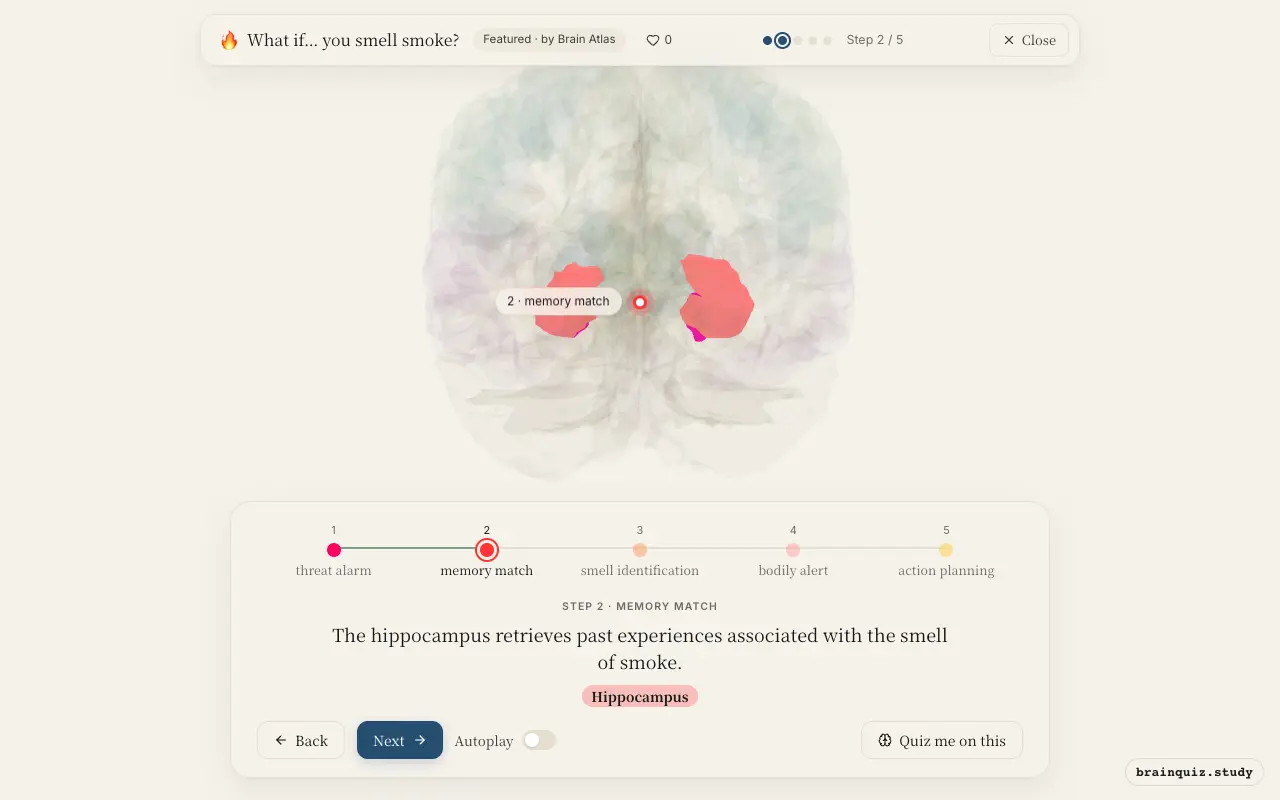
The hippocampus compares the current smell with stored memories, recognizing patterns from past encounters with smoke. This contextual memory helps determine whether the smoke is from a dangerous fire or a harmless source such as cooking. It provides the brain with learned associations to guide the response.
3. Orbitofrontal Cortex: smell identification
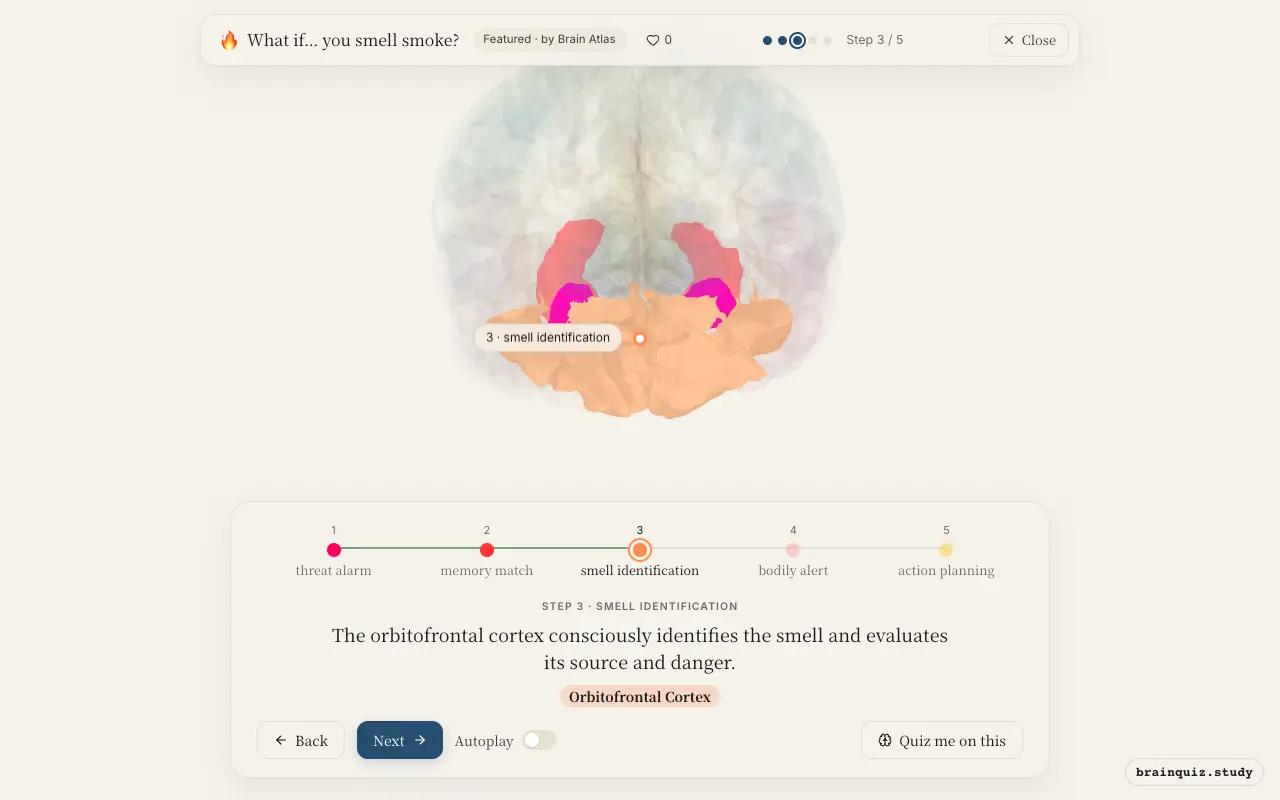
The orbitofrontal cortex integrates sensory information with reward and punishment values. It enables conscious perception of the smell as smoke and assesses whether the situation is threatening or benign. This region is key for making value-based decisions about how to respond.
4. Insula: bodily alert
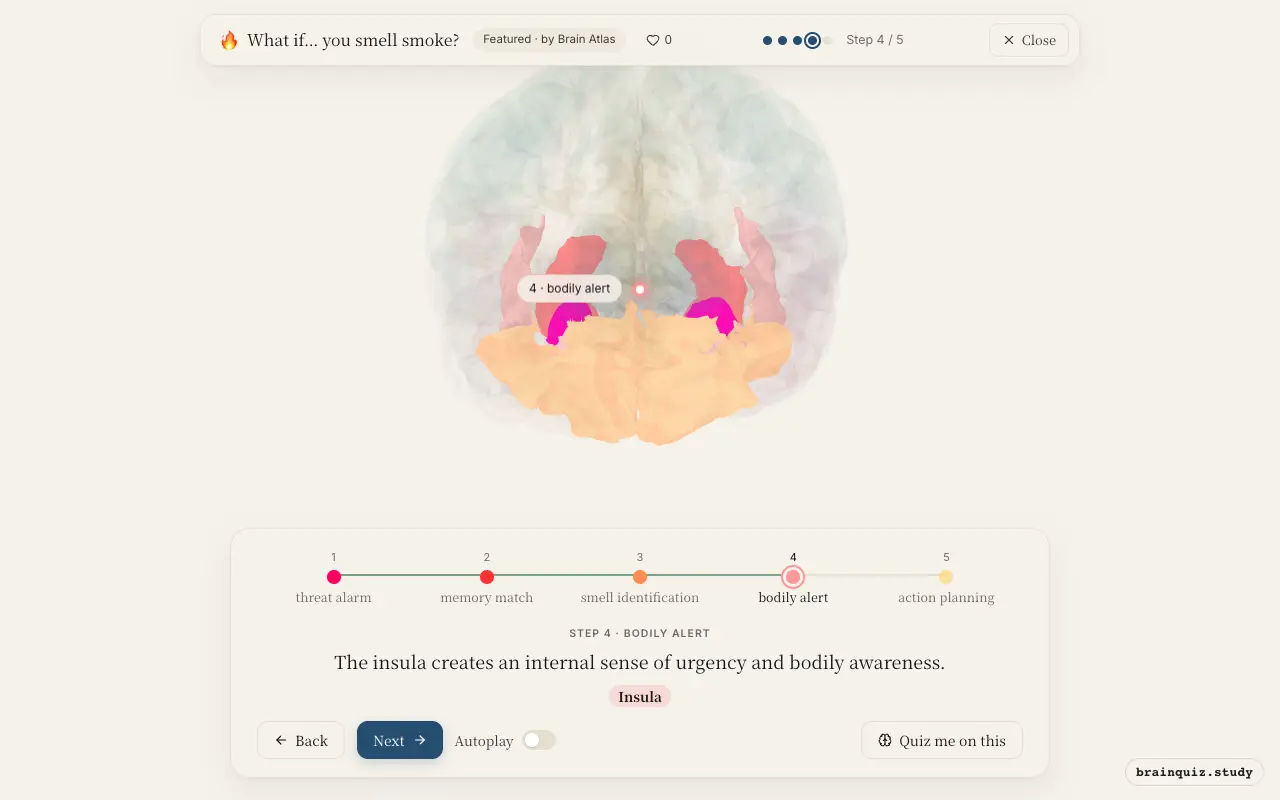
The insula processes interoceptive signals from the body, such as increased heart rate or breathing changes triggered by the smell. It contributes to the subjective feeling of alarm and the motivation to take action. The insula helps translate the external smell into an internal drive to escape or investigate.
5. Anterior Cingulate Cortex: action planning
The anterior cingulate cortex detects conflict between the current state and safety goals, and it helps select an appropriate action such as checking for fire or leaving the area. It is involved in error monitoring and motivational drive, ensuring a timely and effective response.
Good to know
- The sense of smell is unique because it has a direct anatomical route to the amygdala and hippocampus, bypassing the thalamus.
- Smell can evoke strong emotional memories due to the close connections between olfactory areas and the limbic system.
- The orbitofrontal cortex is where conscious perception of smell occurs, integrating it with context and past experience.
Smelling smoke vs. seeing smoke
Seeing smoke primarily engages the visual cortex and then the amygdala for threat detection, while smelling smoke activates the amygdala more directly via the olfactory pathway. The visual route involves more cortical processing before emotional response, whereas smell can trigger immediate limbic activation.
Test yourself
Which brain region provides the first rapid threat response to the smell of smoke?
What is the role of the orbitofrontal cortex in smelling smoke?
Which region links the smell of smoke to past experiences?
0 of 3 answered · 0 correct
Simplified: many regions work together at once, and this shows the main players in the order they act.