What happens in your brain when you taste wine?
Updated
Thalamus relays taste signals to the insula, which encodes basic taste. Orbitofrontal cortex integrates taste, smell, and texture, evaluating reward. Amygdala adds emotional significance, while hippocampus retrieves memories. Nucleus accumbens signals pleasure if the wine is enjoyed.
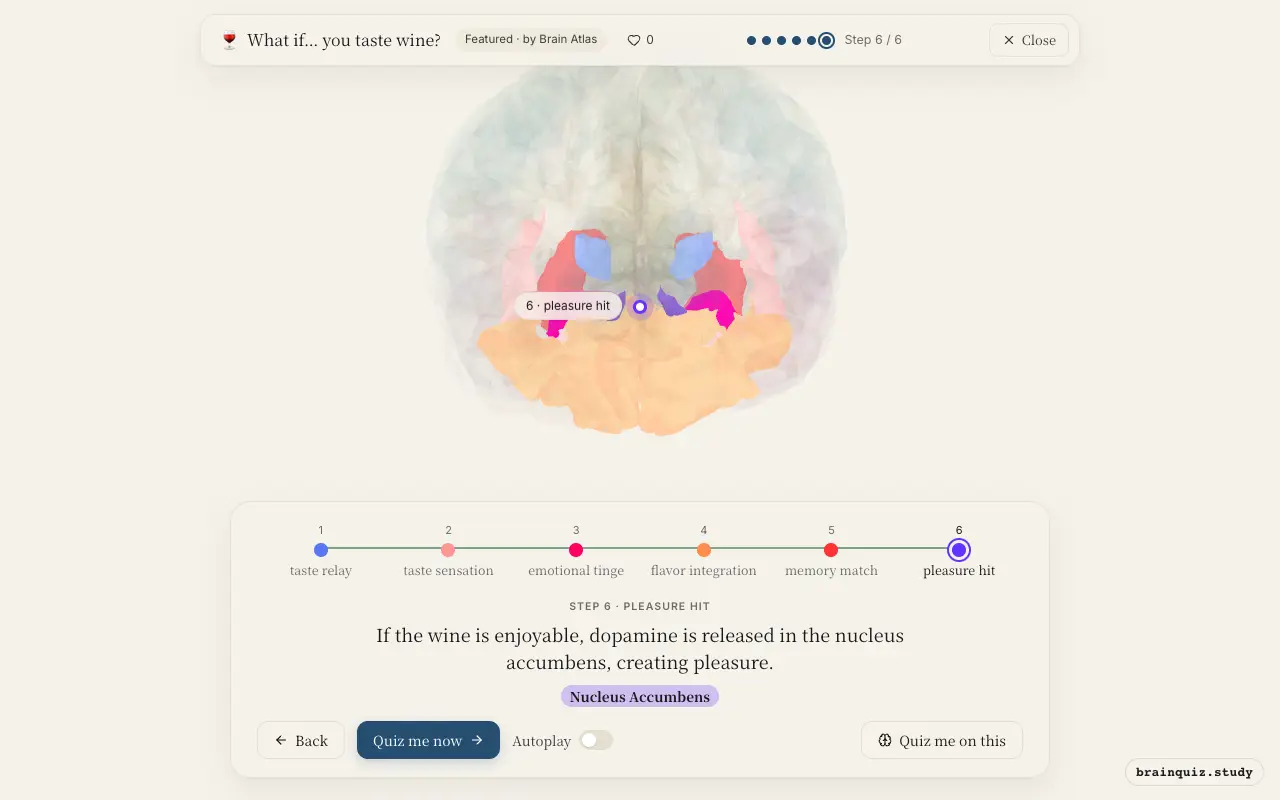
Watch it light up on the 3D brain
Brain regions that light up
| Order | Region | What it does here |
|---|---|---|
| 1 | Ventral Posterior / Ventrolateral Group | Taste signals from the tongue arrive at the thalamus, which relays them to the cortex. |
| 2 | Insula | The insula processes basic taste qualities like sweet, sour, and bitter. |
| 3 | Amygdala | The amygdala evaluates the wine's emotional significance, especially its aroma. |
| 4 | Orbitofrontal Cortex | The orbitofrontal cortex combines taste, smell, and texture to evaluate flavor and reward. |
| 5 | Hippocampus | The hippocampus retrieves memories of similar wines to compare and identify. |
| 6 | Nucleus Accumbens | If the wine is enjoyable, dopamine is released in the nucleus accumbens, creating pleasure. |
1. Ventral Posterior / Ventrolateral Group: taste relay
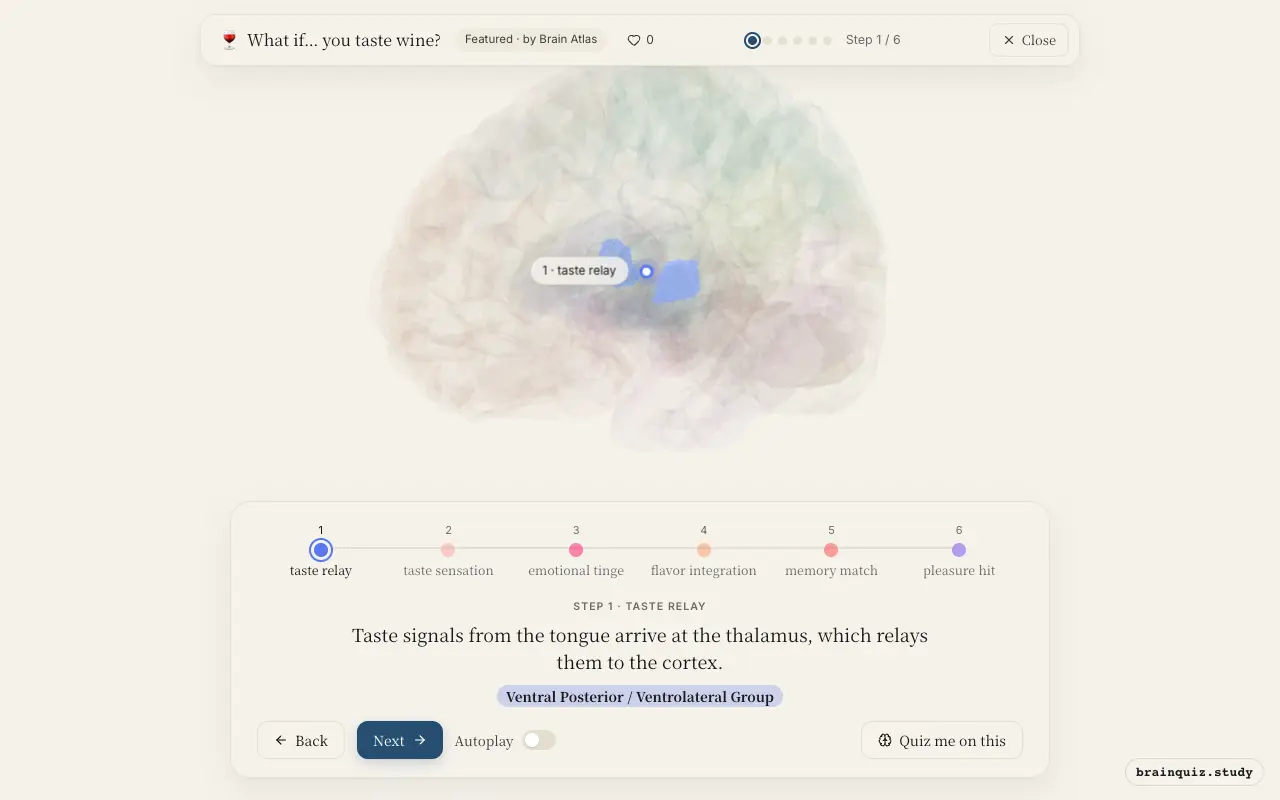
The ventral posterior medial nucleus of the thalamus receives taste information from the brainstem via the solitary nucleus and sends it to the primary gustatory cortex in the insula. This relay is essential for conscious perception of taste and occurs within milliseconds of the wine touching the tongue.
2. Insula: taste sensation
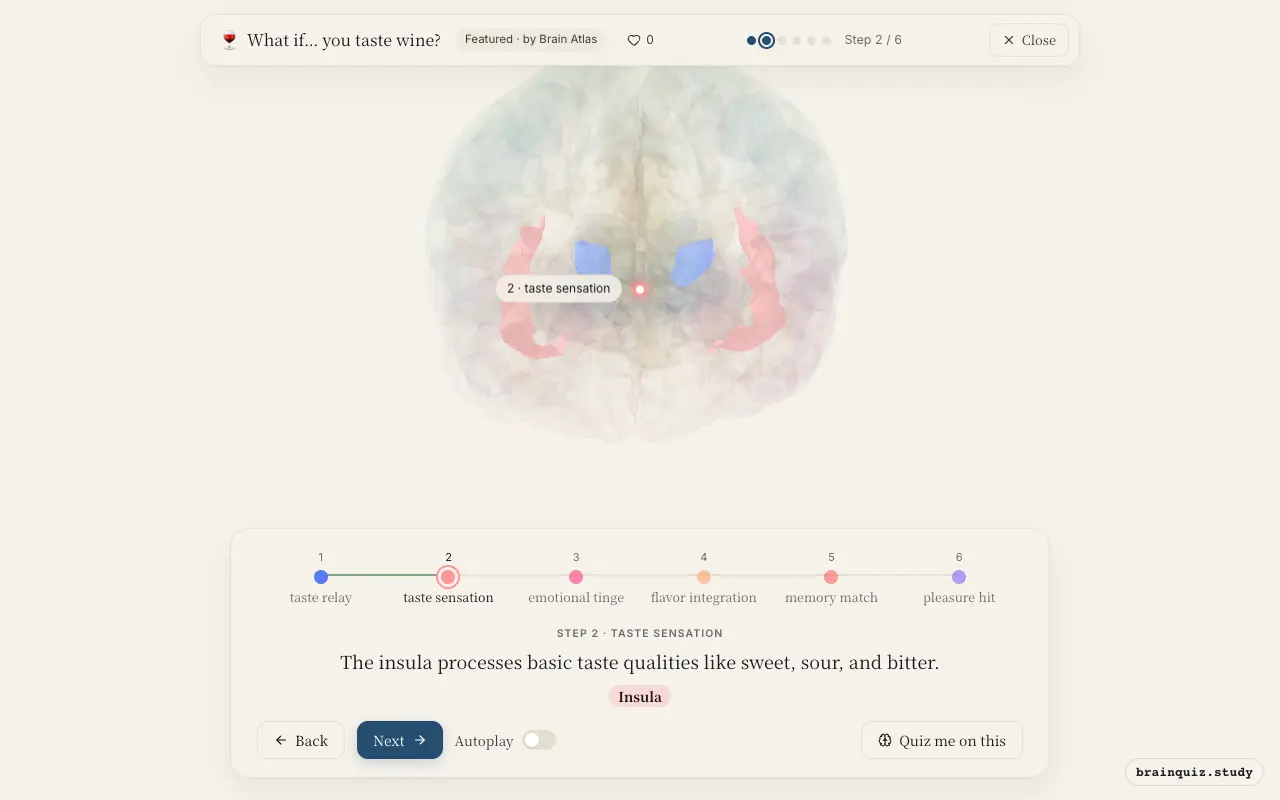
The insula contains the primary gustatory cortex, where neurons respond to different taste qualities. It also contributes to the subjective experience of taste and interoception, making you aware of the wine in your mouth.
3. Amygdala: emotional tinge
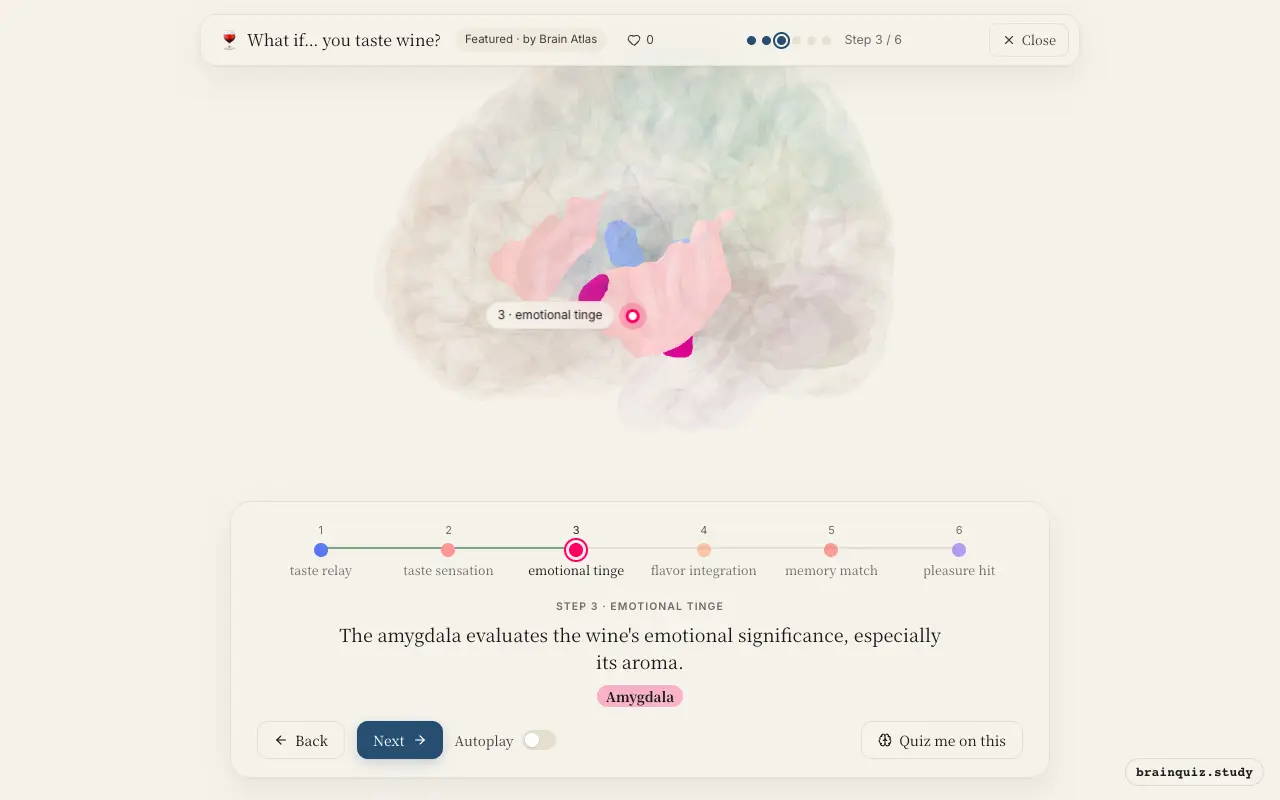
The amygdala receives direct input from the olfactory system and responds to the hedonic value of smells. It can trigger emotional memories or reactions to the wine's bouquet, coloring the tasting experience.
4. Orbitofrontal Cortex: flavor integration
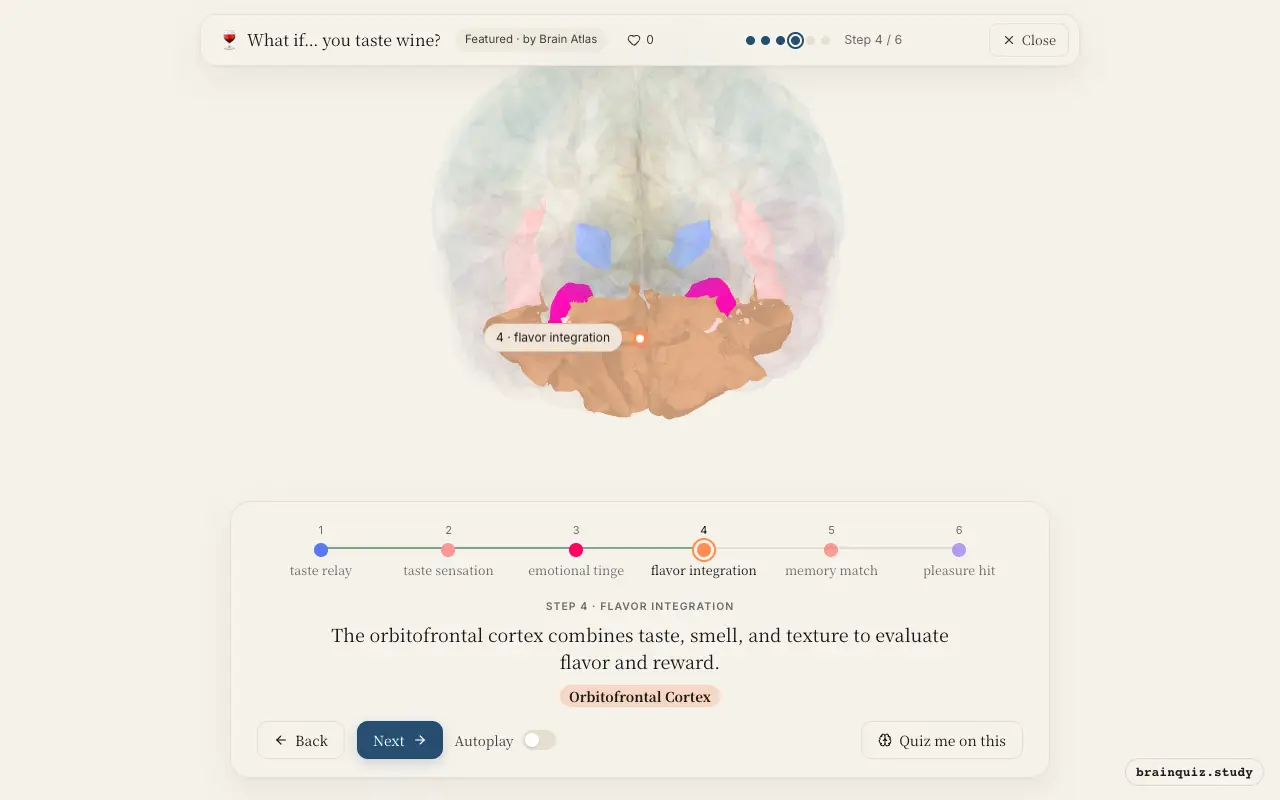
The orbitofrontal cortex is a key site for multisensory integration, receiving inputs from taste, olfactory, and somatosensory areas. It computes the pleasantness and reward value of the wine, guiding your liking or disliking.
5. Hippocampus: memory match
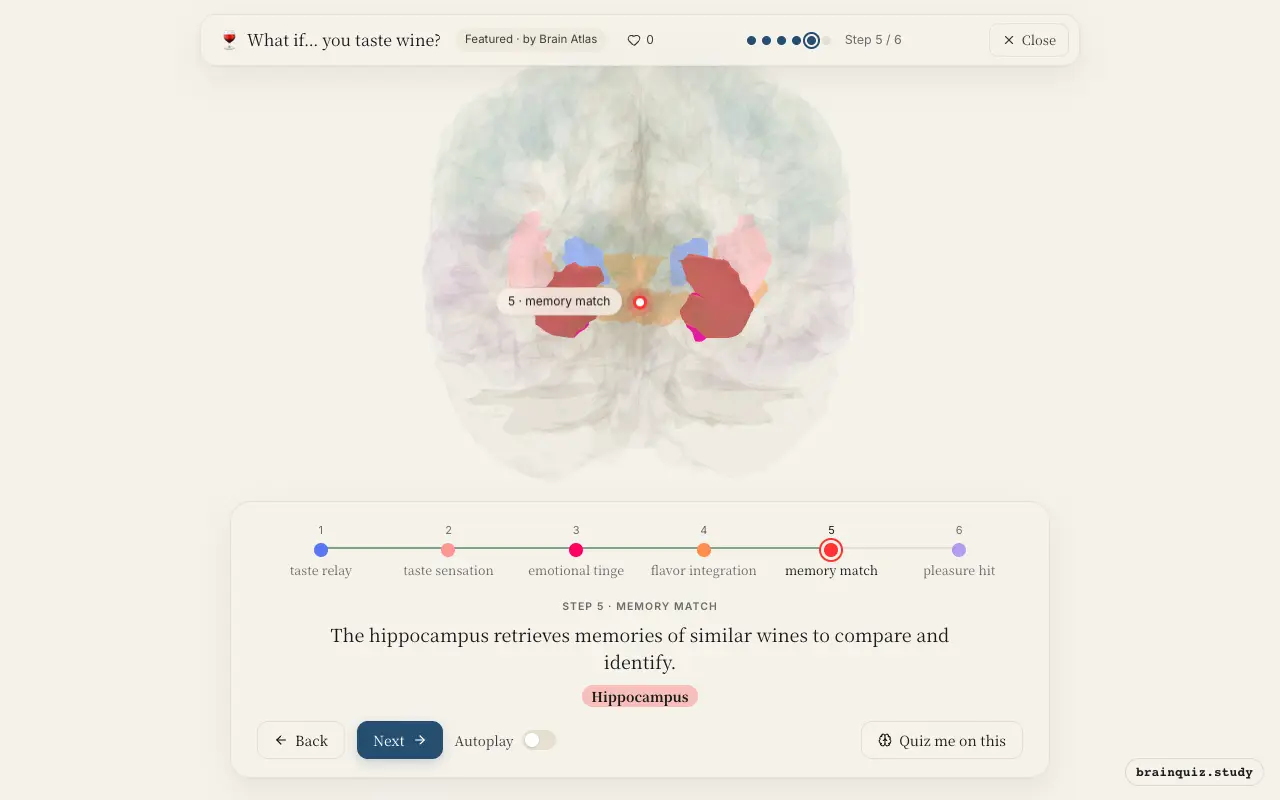
The hippocampus accesses stored memories about wine varieties, vintages, or contexts, allowing you to recognize and categorize the wine. This memory retrieval enriches the tasting experience with past knowledge.
6. Nucleus Accumbens: pleasure hit
The nucleus accumbens is a key component of the brain's reward circuit. It receives input from the orbitofrontal cortex and ventral tegmental area, and its activation signals hedonic pleasure, reinforcing the desire to drink more.
Good to know
- Most of what we perceive as wine's flavor comes from retronasal olfaction—aroma molecules reaching the olfactory receptors from the mouth.
- The orbitofrontal cortex is one of the few brain regions where taste and smell information converge.
- Wine tasting can activate the brain's reward system similarly to other pleasurable experiences, but individual responses vary.
Sniffing vs. sipping wine
Sniffing wine activates olfactory pathways and the amygdala, but sipping adds gustatory input via the thalamus to the insula. The orbitofrontal cortex then integrates both streams, producing the full flavor experience that smell alone cannot achieve.
Test yourself
Which brain region is considered the primary gustatory cortex?
Which region integrates taste and smell to evaluate flavor?
What role does the thalamus play in wine tasting?
0 of 3 answered · 0 correct
Simplified: many regions work together at once, and this shows the main players in the order they act.