What happens in your brain when you trust a stranger?
Updated
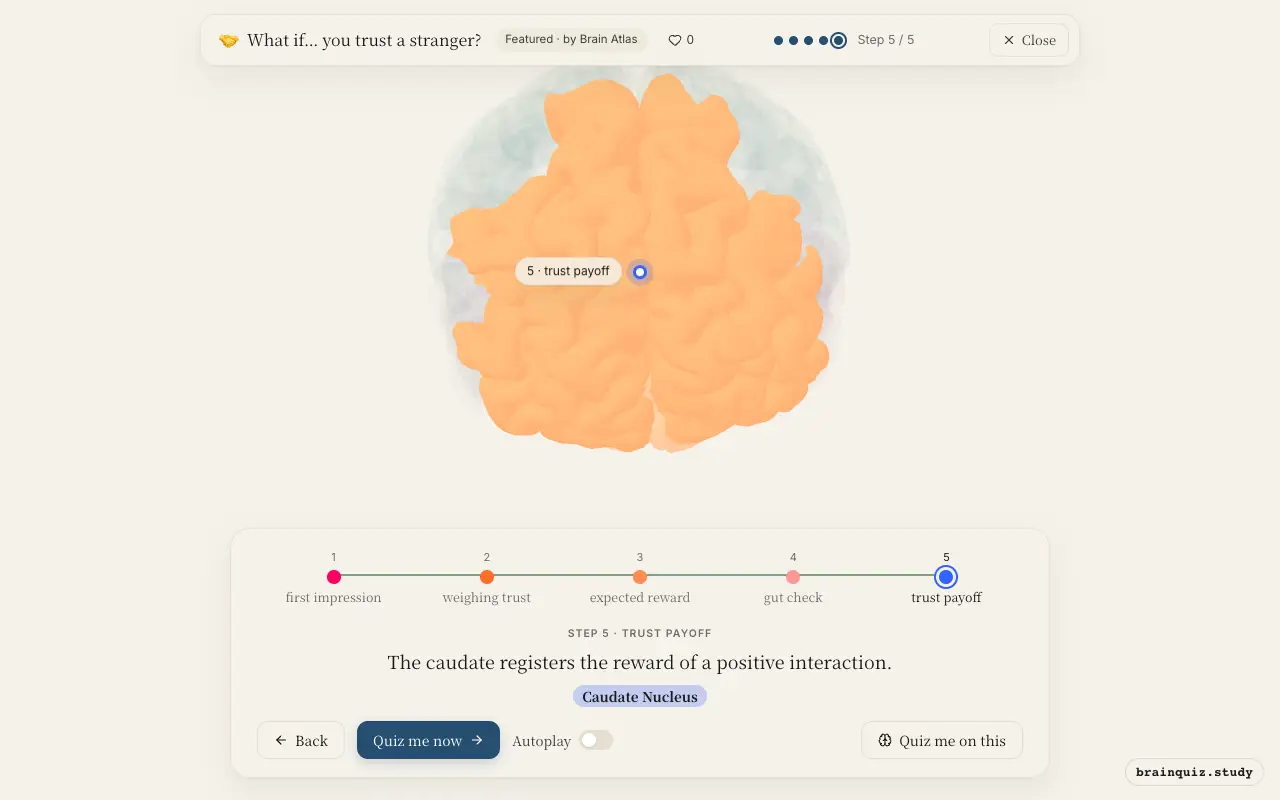
The amygdala alerts to potential danger, the prefrontal cortex evaluates trustworthiness, the orbitofrontal cortex weighs expected reward, the insula senses gut feelings, and the caudate processes reward if trust is repaid.
Watch it light up on the 3D brain
Brain regions that light up
| Order | Region | What it does here |
|---|---|---|
| 1 | Amygdala | The amygdala quickly gauges whether the stranger seems safe. |
| 2 | Prefrontal Cortex | The prefrontal cortex deliberates on signals like tone and eye contact. |
| 3 | Orbitofrontal Cortex | The orbitofrontal cortex computes whether trusting will bring reward. |
| 4 | Insula | The insula generates a bodily sense of unease or calm. |
| 5 | Caudate Nucleus | The caudate registers the reward of a positive interaction. |
1. Amygdala: first impression
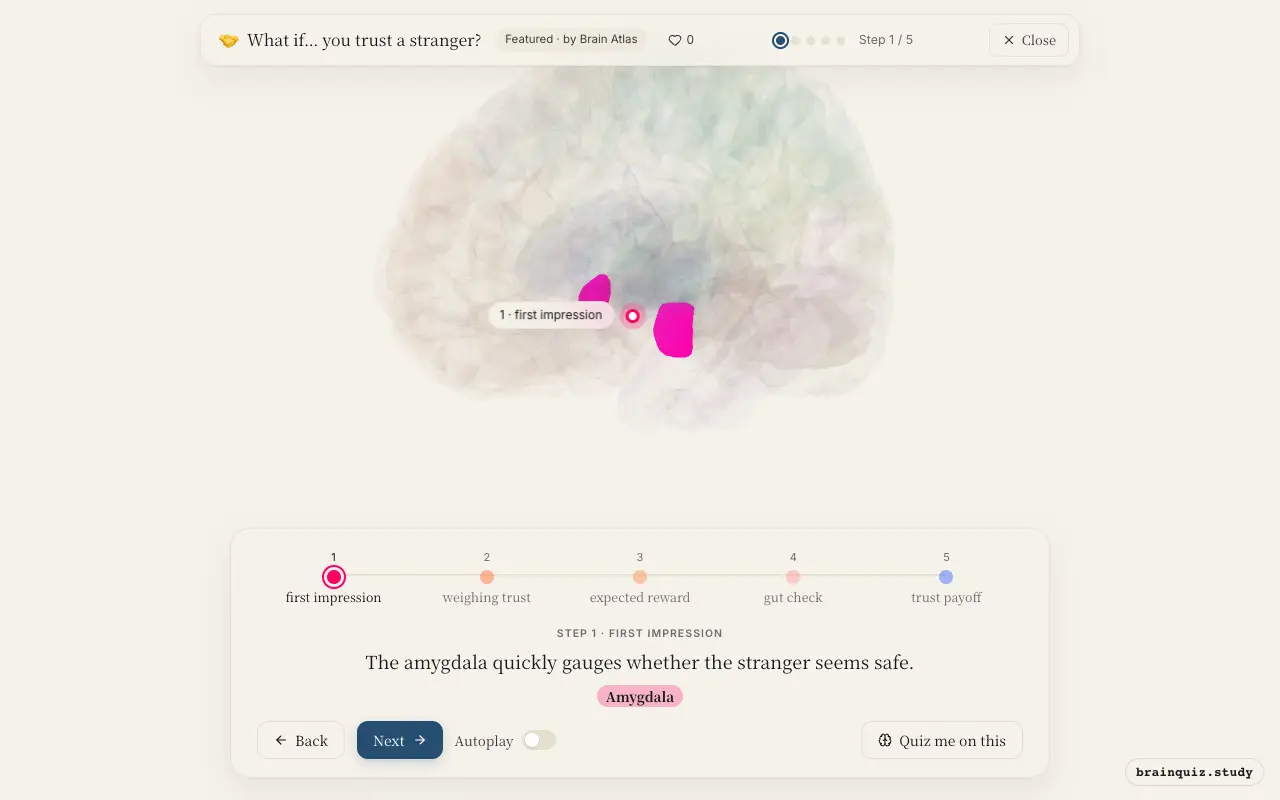
The amygdala processes facial expressions and social cues, triggering caution before conscious thought. Studies suggest it responds to untrustworthy faces within a fraction of a second, priming the brain for vigilance or approach.
2. Prefrontal Cortex: weighing trust
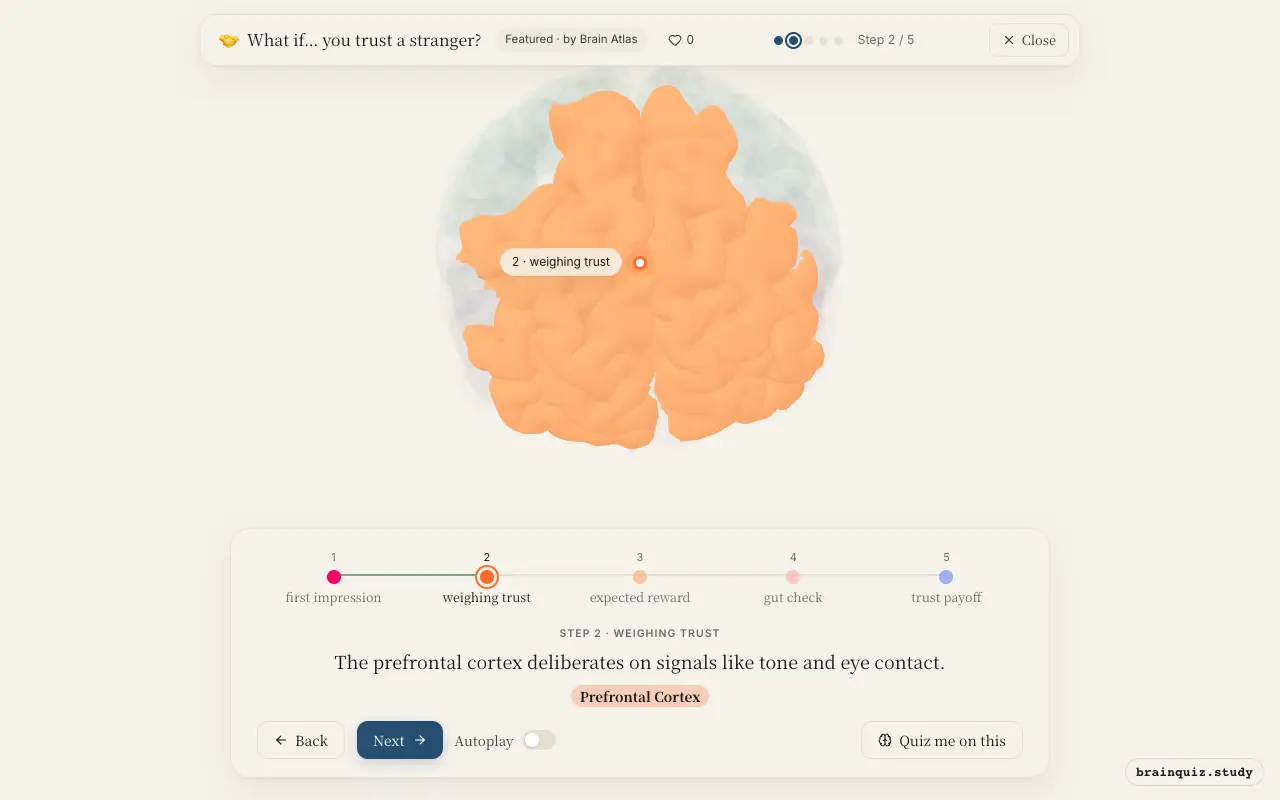
The prefrontal cortex integrates social information, past experience, and current context to judge reliability. It helps suppress impulsive reactions and allows for rational assessment of the stranger's intentions.
3. Orbitofrontal Cortex: expected reward
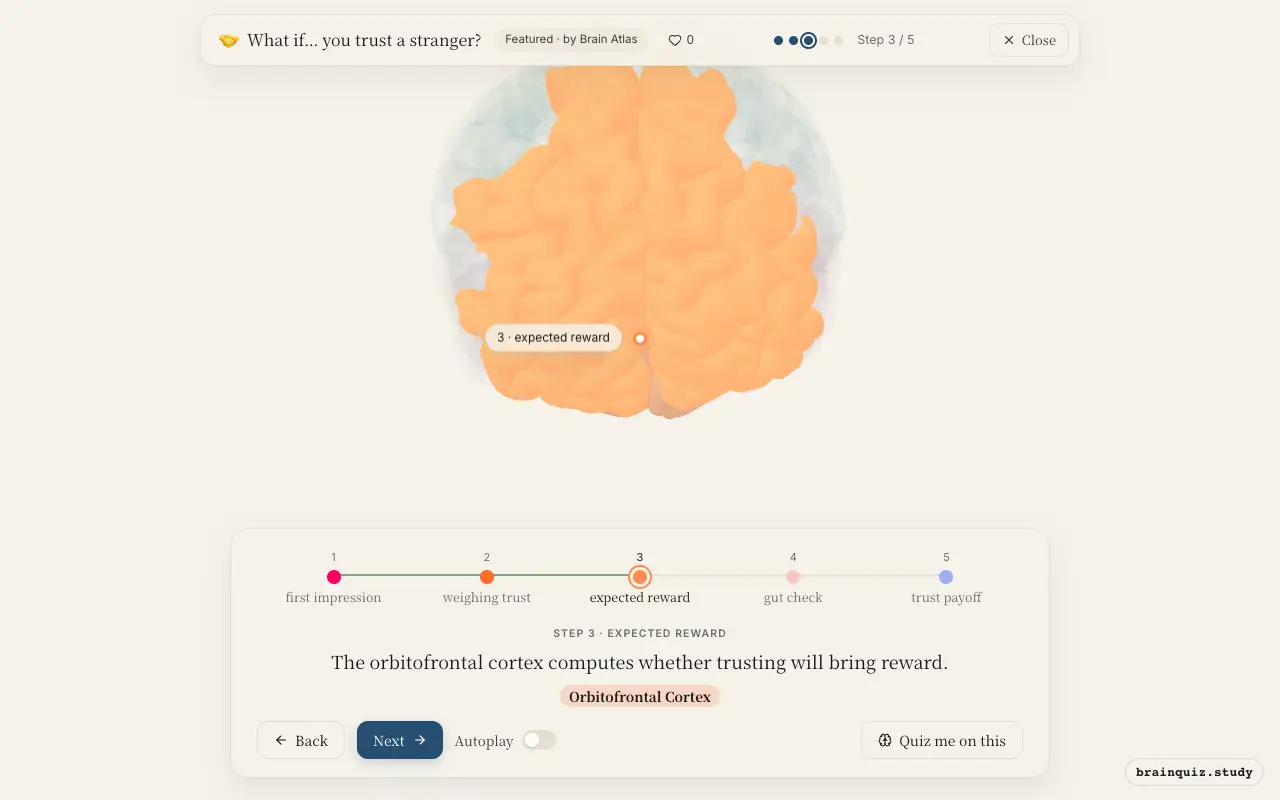
The orbitofrontal cortex assigns value to potential outcomes, signaling the possible gains from cooperation. It helps decide if the risk of trusting is worthwhile based on predicted positive or negative results.
4. Insula: gut check
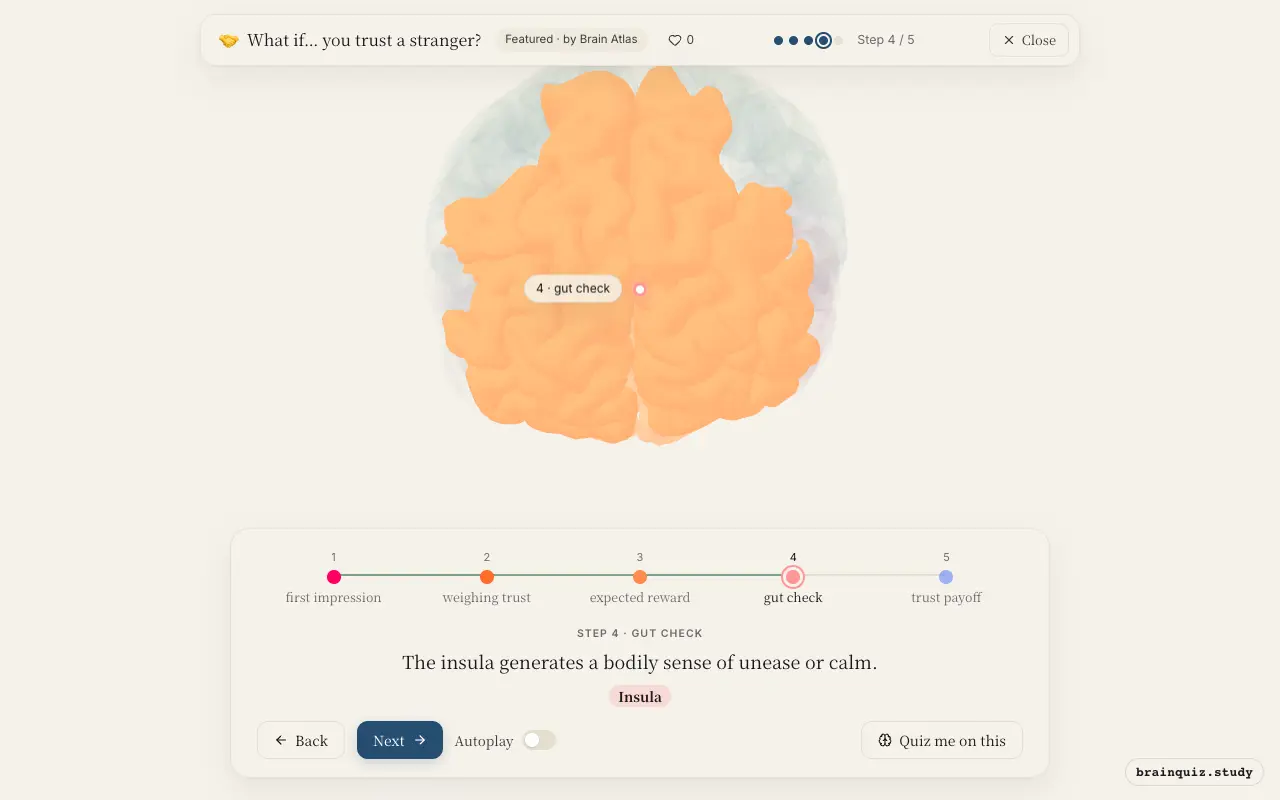
The insula maps internal body states, contributing to the feeling of rightness or distrust. It can bias decisions by signaling visceral discomfort, especially when social norms or fairness are violated.
5. Caudate Nucleus: trust payoff
The caudate nucleus is part of the brain's reward circuitry. When trust is reciprocated, it helps reinforce the decision, making it more likely you will trust this person again in the future.
Good to know
- Damage to the amygdala can impair the ability to recognize untrustworthy faces.
- The insula is activated when people detect unfair offers in economic games.
- The caudate and putamen are part of the brain's reward system, implicated in learning from social outcomes.
Trust vs. Distrust of a Stranger
Distrust shows higher amygdala and insula activation, reflecting threat and unease, while trust engages more orbitofrontal and caudate reward circuitry. The prefrontal cortex is active in both but suppresses caution when trust is chosen.
Test yourself
Which brain region is most responsible for the initial rapid assessment of a stranger's trustworthiness?
The orbitofrontal cortex contributes to trusting a stranger by...?
If trust is reciprocated, which region is likely involved in processing the positive outcome?
0 of 3 answered · 0 correct
Simplified: many regions work together at once, and this shows the main players in the order they act.