What happens in your brain when you breathe laughing gas at the dentist?
Updated
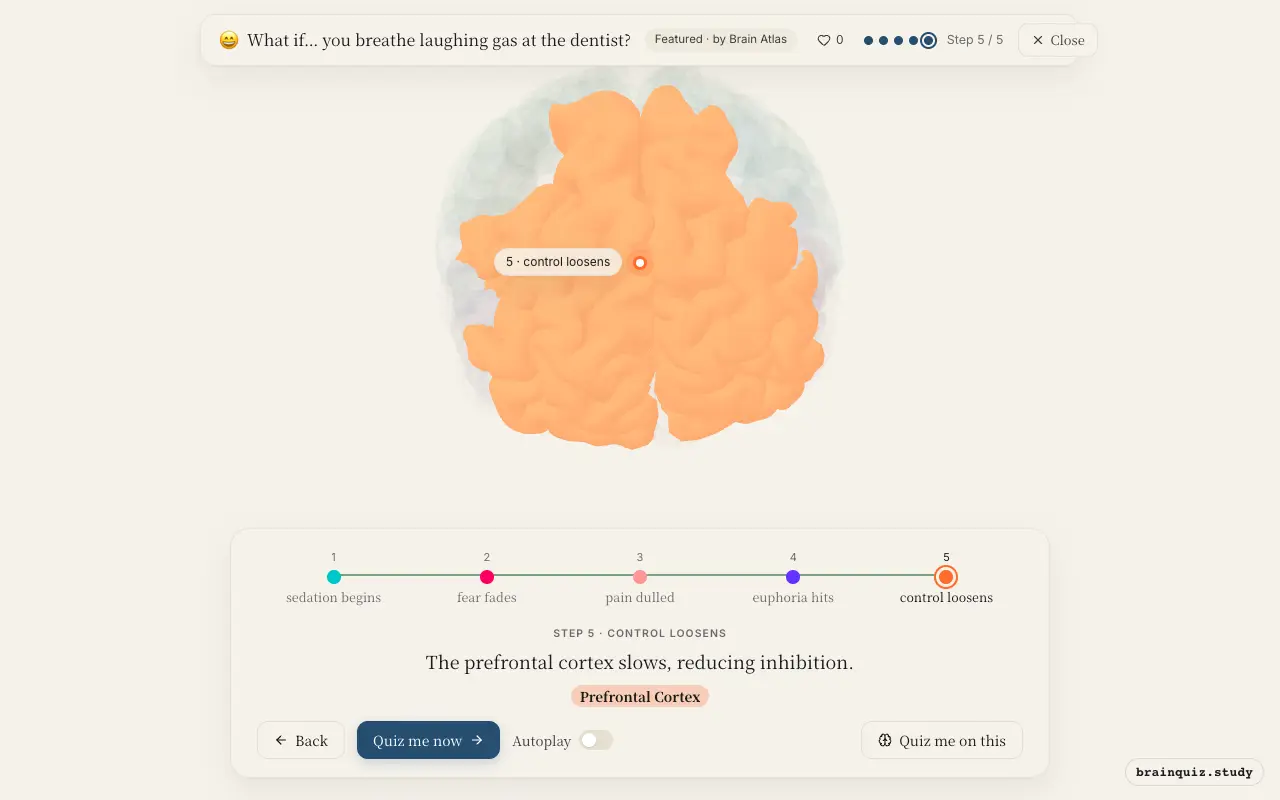
Nitrous oxide quiets the thalamus (sedation), calms the amygdala (anxiolysis), dulls the insula (pain relief), triggers dopamine in the nucleus accumbens (euphoria), and slows the prefrontal cortex (disinhibition).
Watch it light up on the 3D brain
Brain regions that light up
| Order | Region | What it does here |
|---|---|---|
| 1 | Thalamus | The thalamus reduces sensory relay and arousal. |
| 2 | Amygdala | The amygdala's threat response is suppressed. |
| 3 | Insula | The insula's pain and body awareness signals decrease. |
| 4 | Nucleus Accumbens | Dopamine surges in the nucleus accumbens. |
| 5 | Prefrontal Cortex | The prefrontal cortex slows, reducing inhibition. |
1. Thalamus: sedation begins
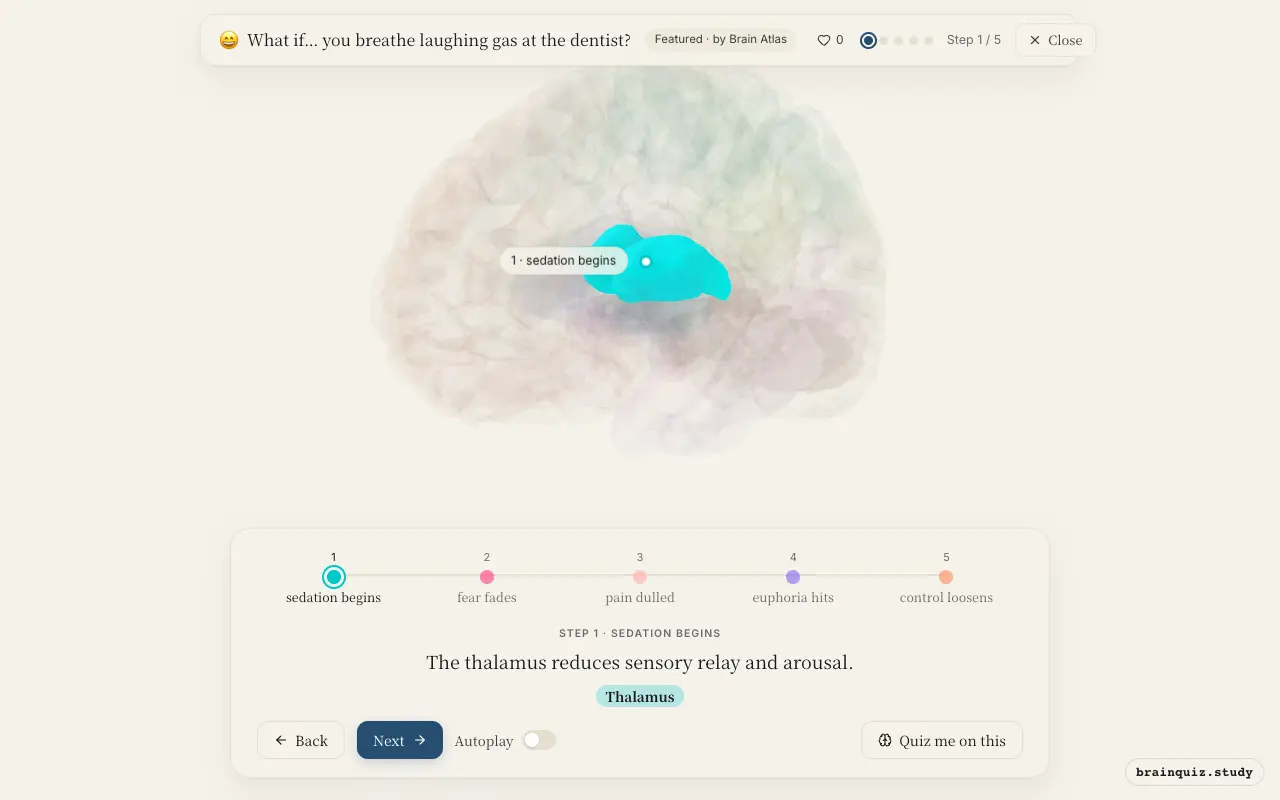
Nitrous oxide inhibits NMDA receptors and enhances GABA-A receptors in the thalamus, decreasing its activity. This reduces the flow of sensory information to the cortex and lowers consciousness, contributing to sedation and a sense of detachment from the environment.
2. Amygdala: fear fades
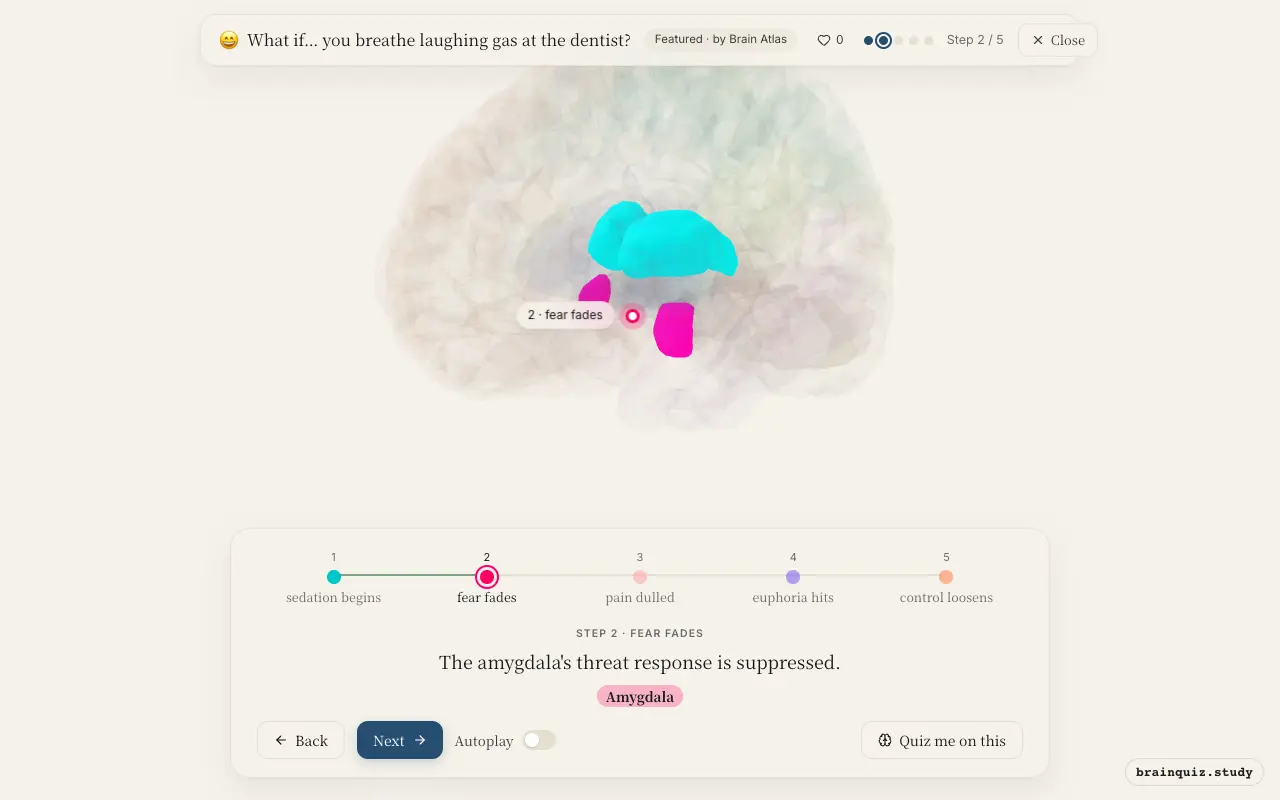
Reduced excitatory input to the amygdala dampens its fear and anxiety output. Patients feel calm and less worried about the dental procedure, a key anxiolytic effect of nitrous oxide.
3. Insula: pain dulled
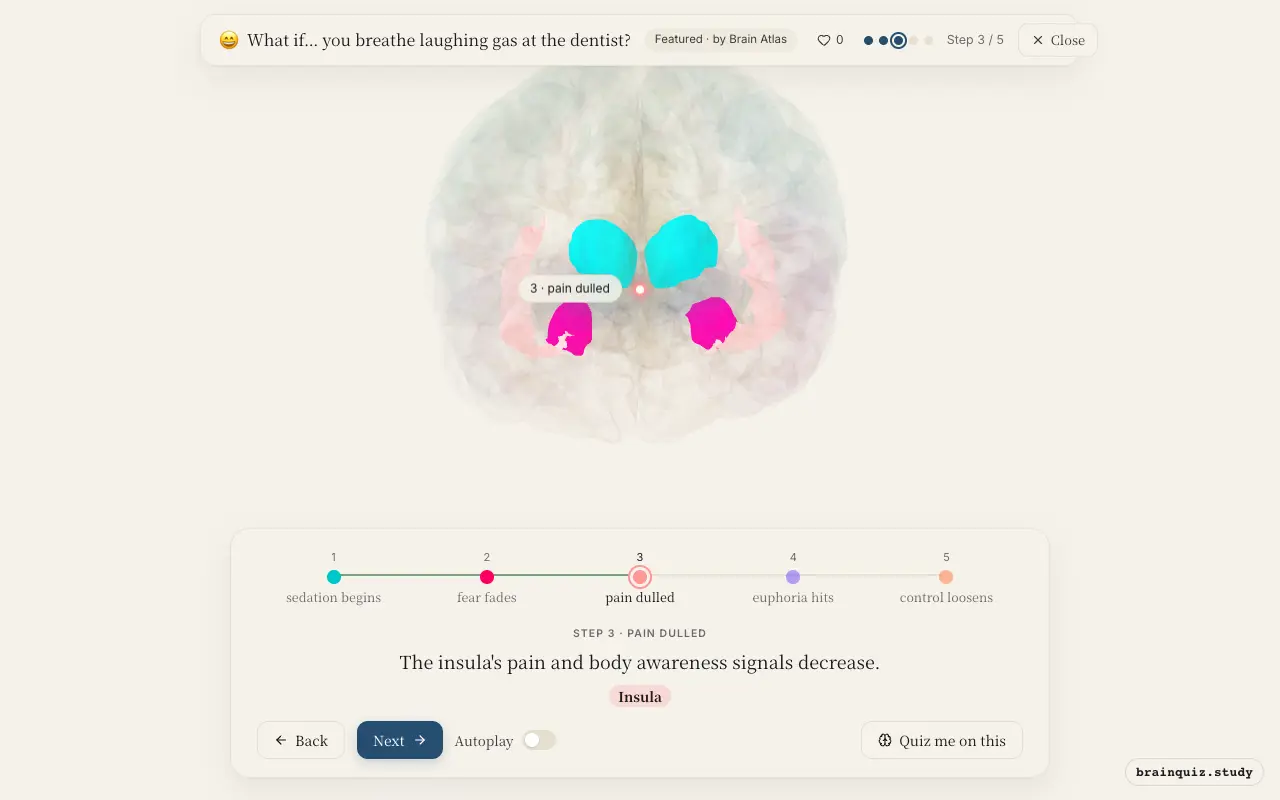
The insula processes pain and interoception. Nitrous oxide reduces insular activity, weakening the perception of painful stimuli from the dentist's tools, providing analgesia without total loss of consciousness.
4. Nucleus Accumbens: euphoria hits
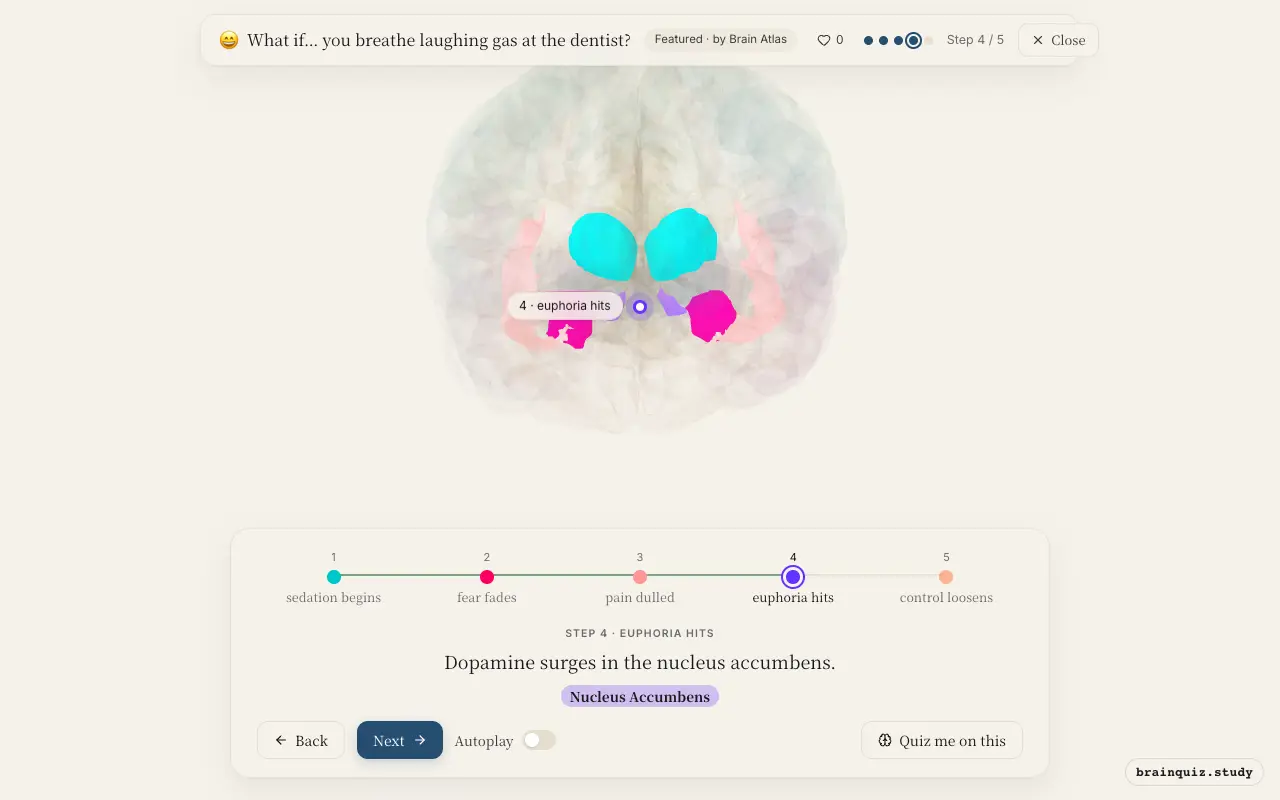
Nitrous oxide indirectly activates dopaminergic neurons in the ventral tegmental area, likely increasing dopamine release in the nucleus accumbens. This produces feelings of pleasure, euphoria, and sometimes laughter, hence the name laughing gas.
5. Prefrontal Cortex: control loosens
The prefrontal cortex normally exerts top-down control over emotions and behavior. Nitrous oxide reduces its activity, leading to disinhibition, silly behavior, and altered judgment. This contributes to the giggling and talkativeness patients may show.
Good to know
- Nitrous oxide has been used in dentistry since the 1840s.
- It is an NMDA receptor antagonist and a positive allosteric modulator of GABA-A receptors.
- Its analgesic effect is partly mediated by opioid receptors in the periaqueductal grey.
Laughing gas vs general anesthesia
Unlike general anesthetics that suppress the brainstem's arousal centers to cause unconsciousness, nitrous oxide primarily quiets cortical and limbic areas while preserving airway reflexes and responsiveness. Patients remain awake but sedated and pain-free.
Test yourself
Which brain region's reduced activity is most directly responsible for the pain-relieving effect of nitrous oxide?
The euphoric "laughing" effect of nitrous oxide is primarily due to increased dopamine in which region?
Which receptor system is a major target of nitrous oxide that explains its sedative and analgesic effects?
0 of 3 answered · 0 correct
Simplified: many regions work together at once, and this shows the main players in the order they act. For learning only, not medical advice.