What happens in your brain when you buy something on impulse?
Updated
In impulsive buying, the orbitofrontal cortex quickly assigns value, the nucleus accumbens signals reward, the amygdala adds emotional urgency, the anterior cingulate detects conflict, and the prefrontal cortex fails to exert control, leading to a purchase.
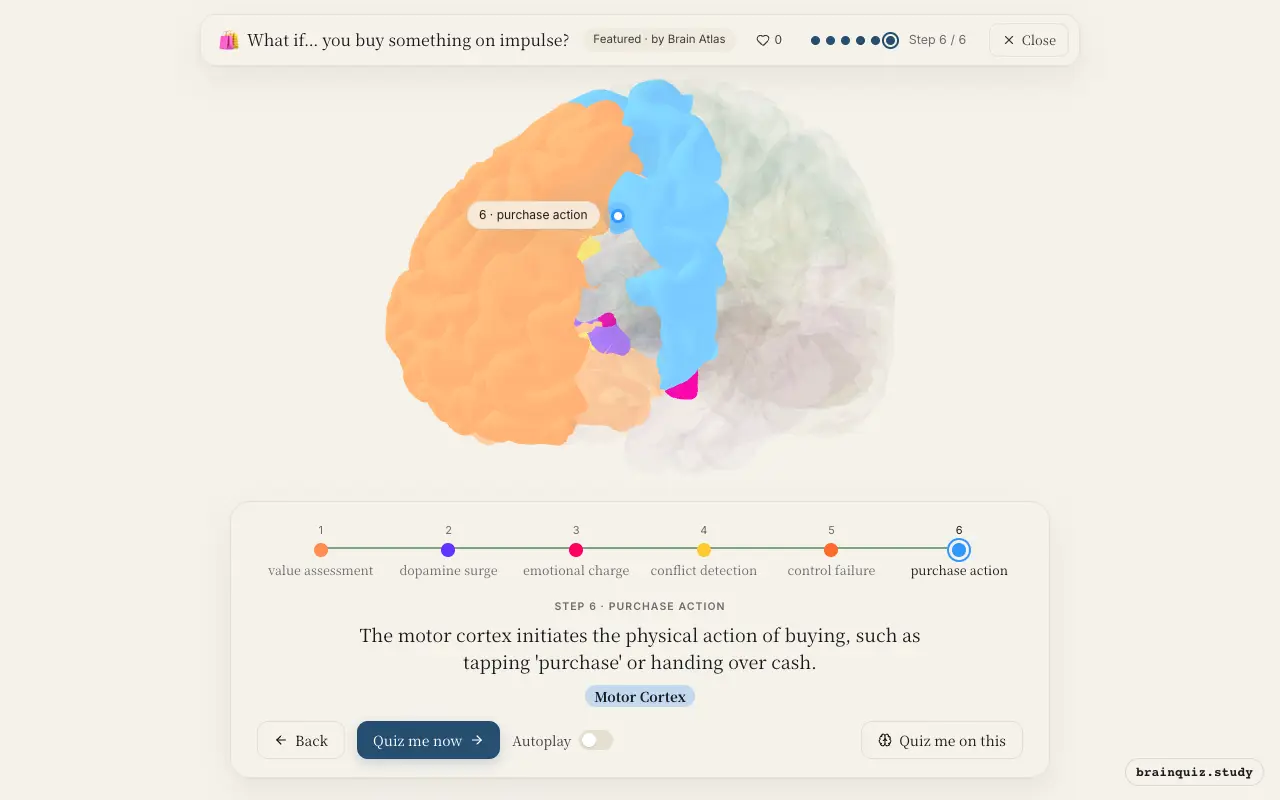
Watch it light up on the 3D brain
Brain regions that light up
| Order | Region | What it does here |
|---|---|---|
| 1 | Orbitofrontal Cortex | The orbitofrontal cortex rapidly evaluates the item's immediate reward value. |
| 2 | Nucleus Accumbens | The nucleus accumbens releases dopamine, creating a strong urge to acquire the item. |
| 3 | Amygdala | The amygdala tags the item with emotional salience, intensifying desire. |
| 4 | Anterior Cingulate Cortex | The anterior cingulate cortex detects conflict between the impulse and your long-term goals. |
| 5 | Prefrontal Cortex | The prefrontal cortex attempts to inhibit the impulse but is overwhelmed. |
| 6 | Motor Cortex | The motor cortex initiates the physical action of buying, such as tapping 'purchase' or handing over cash. |
1. Orbitofrontal Cortex: value assessment
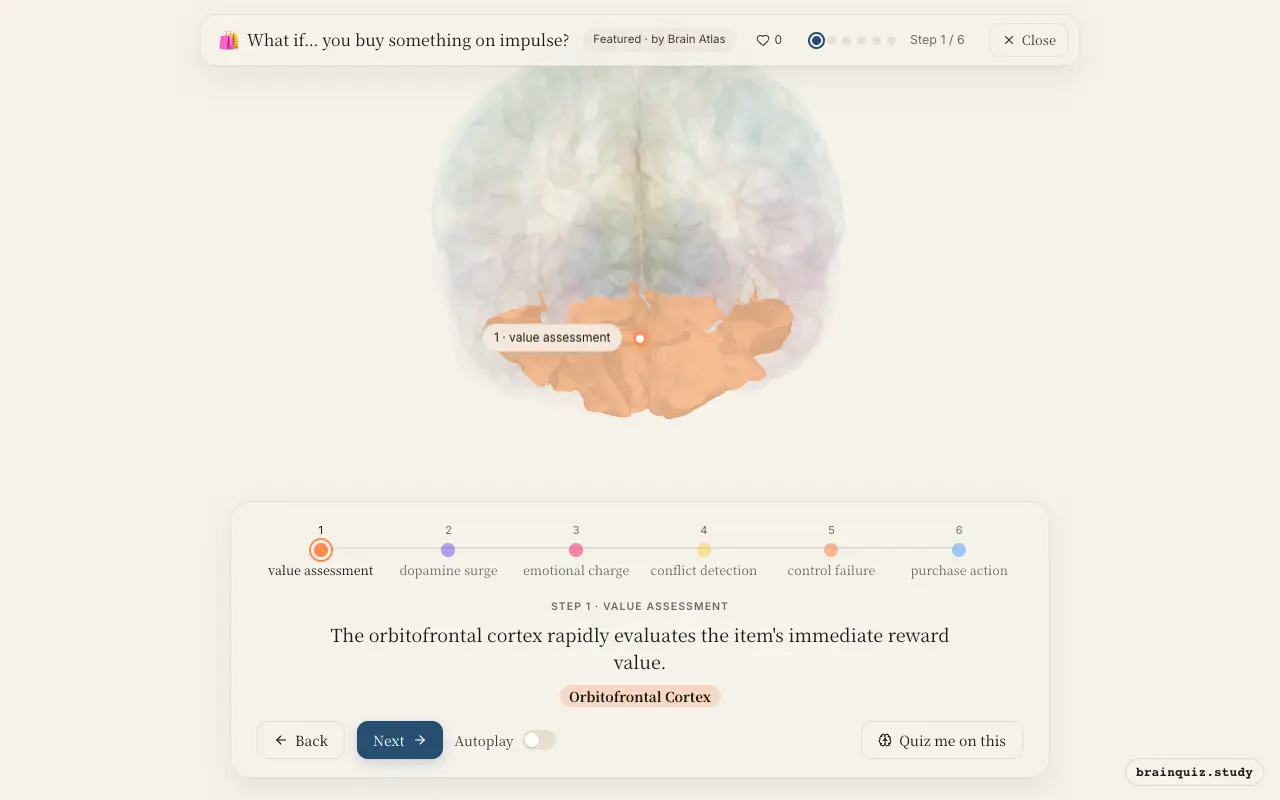
This region integrates sensory information with expected outcomes to compute subjective value. In impulse buying, it may overweight immediate pleasure over long-term consequences, biasing the decision toward purchase.
2. Nucleus Accumbens: dopamine surge
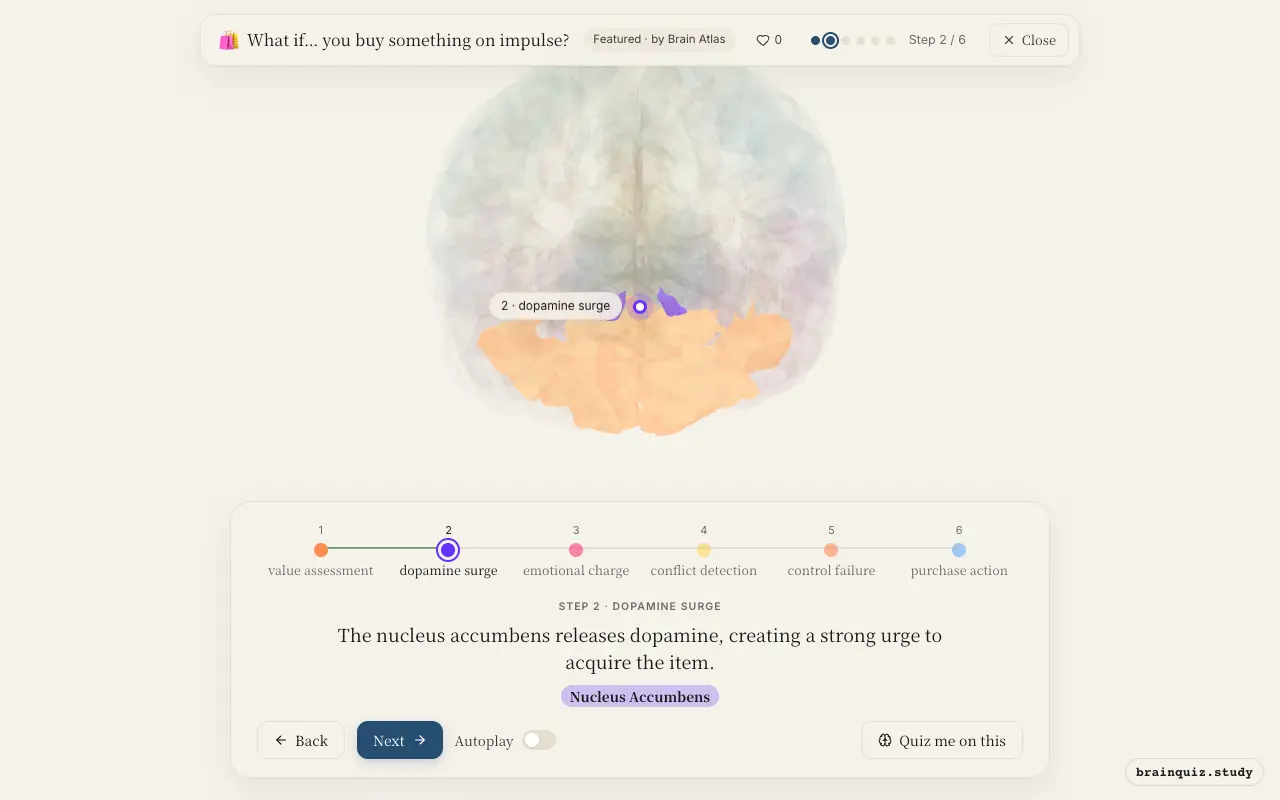
As part of the brain's reward circuit, the nucleus accumbens signals the anticipation of pleasure. Dopamine release here is associated with wanting, driving motivation to obtain the reward immediately.
3. Amygdala: emotional charge
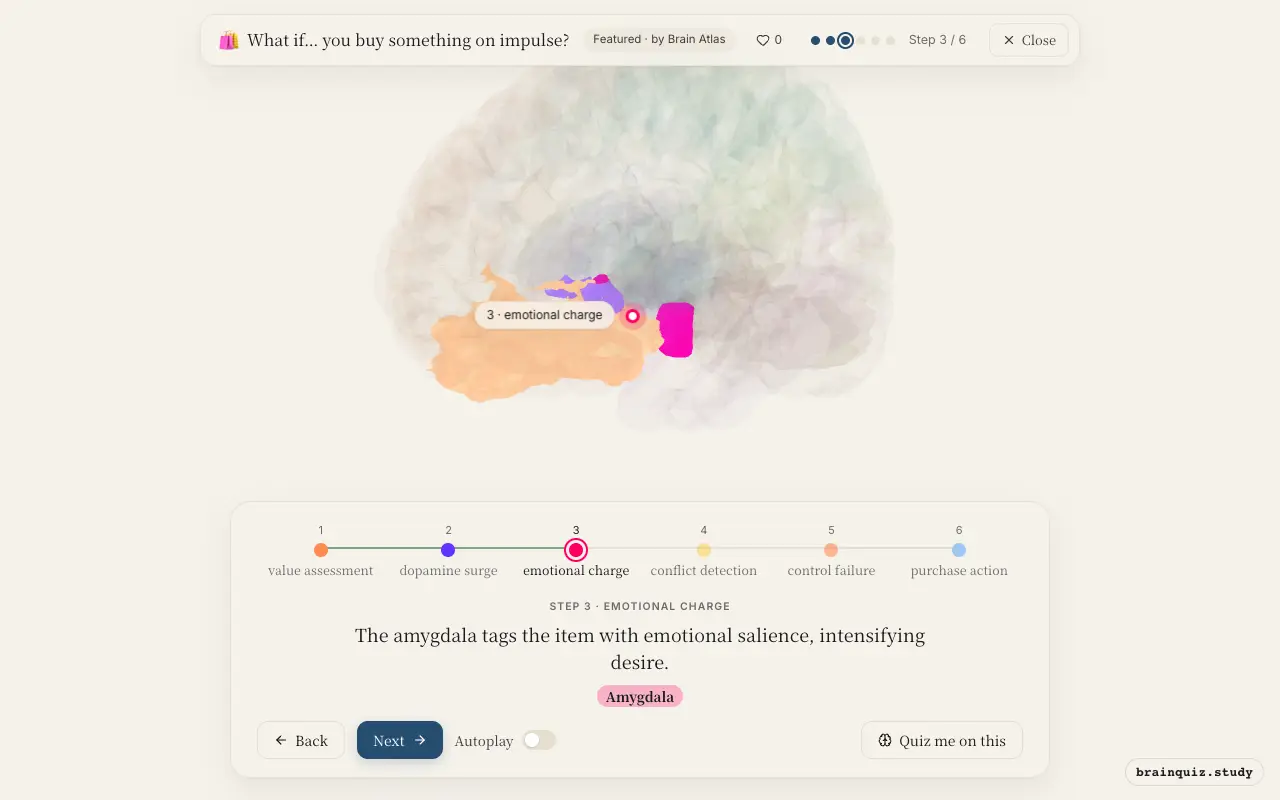
The amygdala processes emotional significance, making the purchase feel urgent and exciting. This emotional response can override rational evaluation, especially when the item is linked to positive memories or social status.
4. Anterior Cingulate Cortex: conflict detection
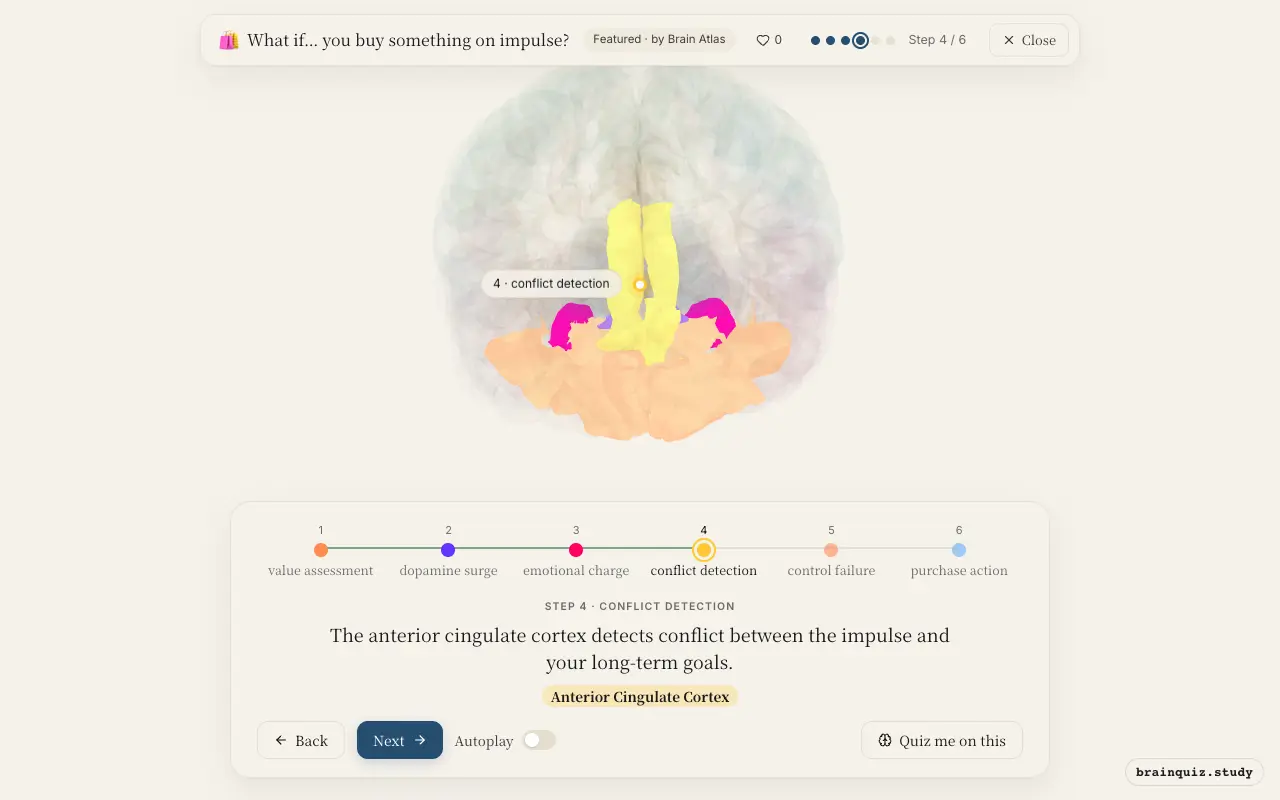
This region monitors for errors and conflicting signals. When the impulse to buy clashes with budgetary or self-control goals, it generates a feeling of unease that normally prompts reconsideration.
5. Prefrontal Cortex: control failure
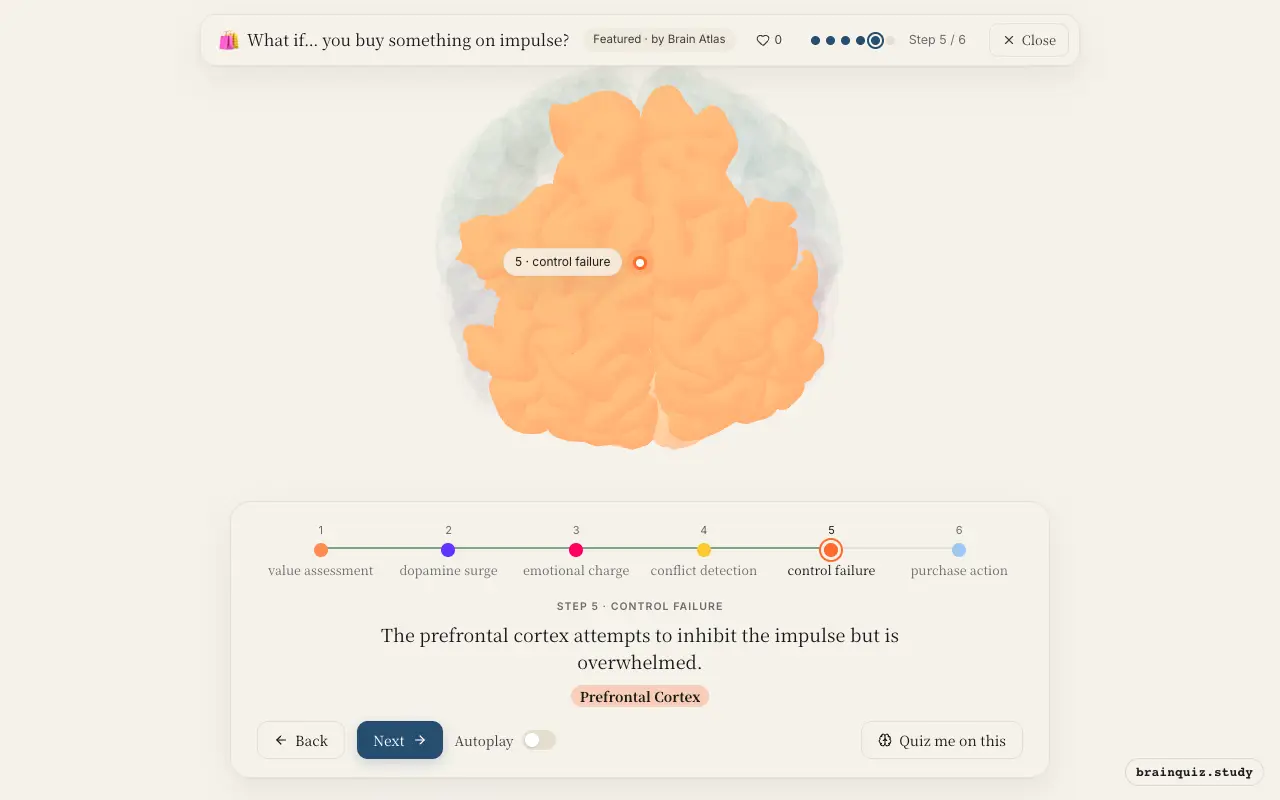
The prefrontal cortex is responsible for executive control and delaying gratification. During impulsive buying, its activity is often reduced or its influence is bypassed, allowing the emotional and reward systems to dominate.
6. Motor Cortex: purchase action
Once the decision is made, the motor cortex plans and executes the motor sequence for the transaction. This step is the culmination of the neural processes that overcame inhibitory control.
Good to know
- Studies suggest impulse buying is associated with higher activation in the nucleus accumbens and lower activation in the prefrontal cortex compared to deliberate purchases.
- The orbitofrontal cortex encodes the subjective value of goods, and its activity correlates with willingness to pay.
- Dopamine in the nucleus accumbens is released not only when receiving a reward but also when anticipating it, which may contribute to impulsive urges.
Impulse vs. Planned Purchase
Studies suggest planned purchases involve greater prefrontal cortex activity and less amygdala and nucleus accumbens reactivity. In planned buying, the prefrontal cortex evaluates options against long-term goals, keeping reward regions in check, whereas impulse buying allows immediate emotional and reward signals to dominate.
Test yourself
Which brain region is most directly responsible for the feeling of wanting an item during impulse buying?
What role does the prefrontal cortex play in impulse buying?
Which region detects the conflict between the urge to buy and long-term goals?
0 of 3 answered · 0 correct
Simplified: many regions work together at once, and this shows the main players in the order they act.