What happens in your brain when you dance?
Updated
As you dance, the auditory cortex processes the beat, the premotor and motor cortices plan and execute moves, the basal ganglia maintains rhythm, the cerebellum coordinates timing, and the nucleus accumbens fuels enjoyment.
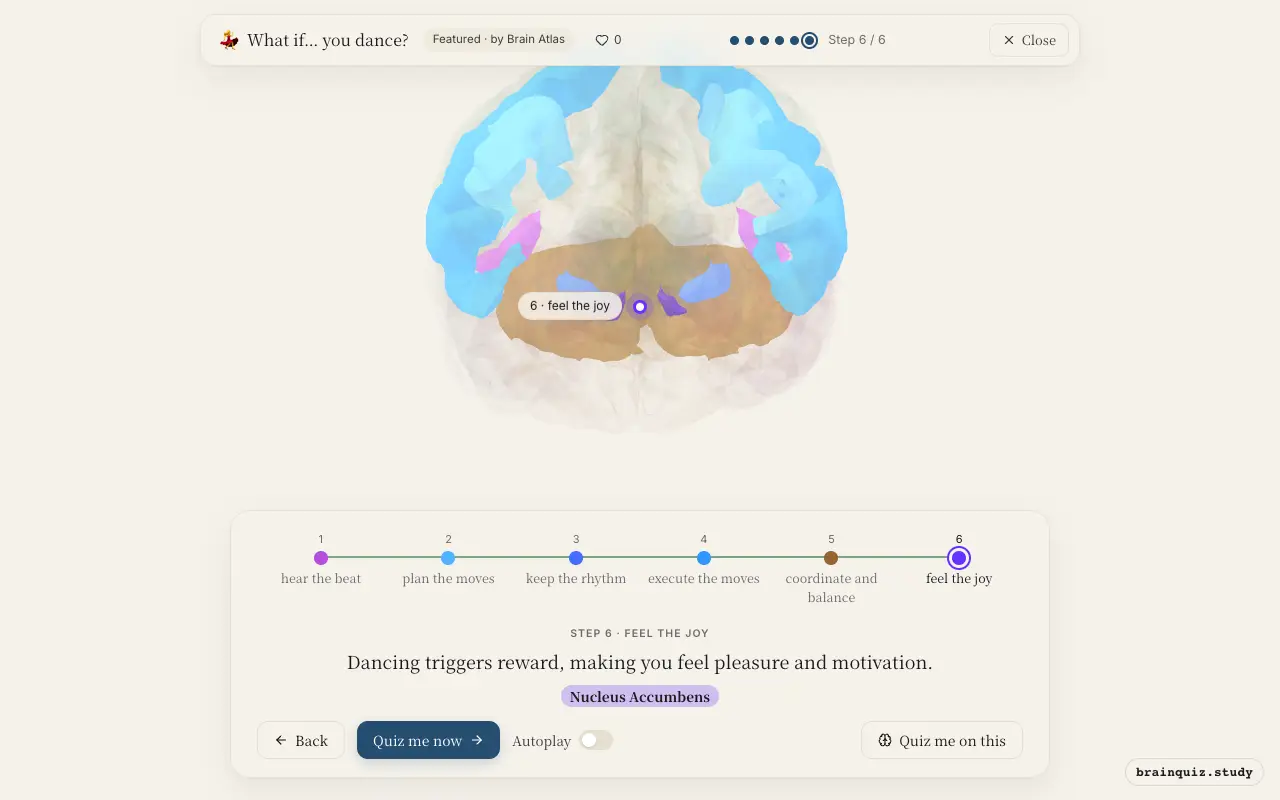
Watch it light up on the 3D brain
Brain regions that light up
| Order | Region | What it does here |
|---|---|---|
| 1 | Auditory Cortex | Your auditory cortex breaks the music into rhythm, timing, and pitch. |
| 2 | Premotor Cortex | The premotor cortex maps the steps into a sequence before you move. |
| 3 | Basal Ganglia | The basal ganglia locks onto the beat and automates the dance steps. |
| 4 | Motor Cortex | The motor cortex fires commands to your muscles to perform each step. |
| 5 | Cerebellum | The cerebellum fine-tunes each move, keeping you balanced and on time. |
| 6 | Nucleus Accumbens | Dancing triggers reward, making you feel pleasure and motivation. |
1. Auditory Cortex: hear the beat
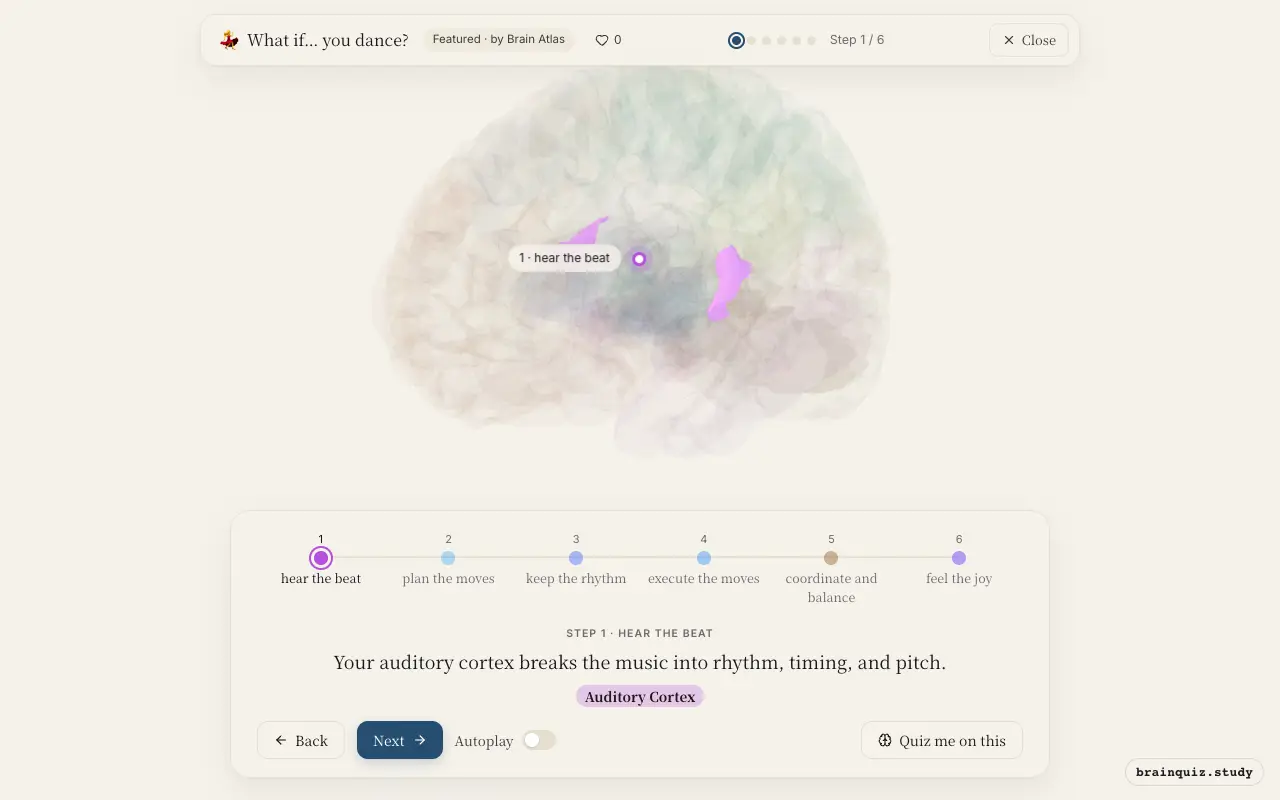
The auditory cortex analyzes the music's rhythm, melody, and timing, creating a neural representation of the beat. This information is then passed to motor planning areas, allowing the dancer to anticipate and synchronize movements with the music. Strong beats enhance this processing, making it easier to move in time.
2. Premotor Cortex: plan the moves
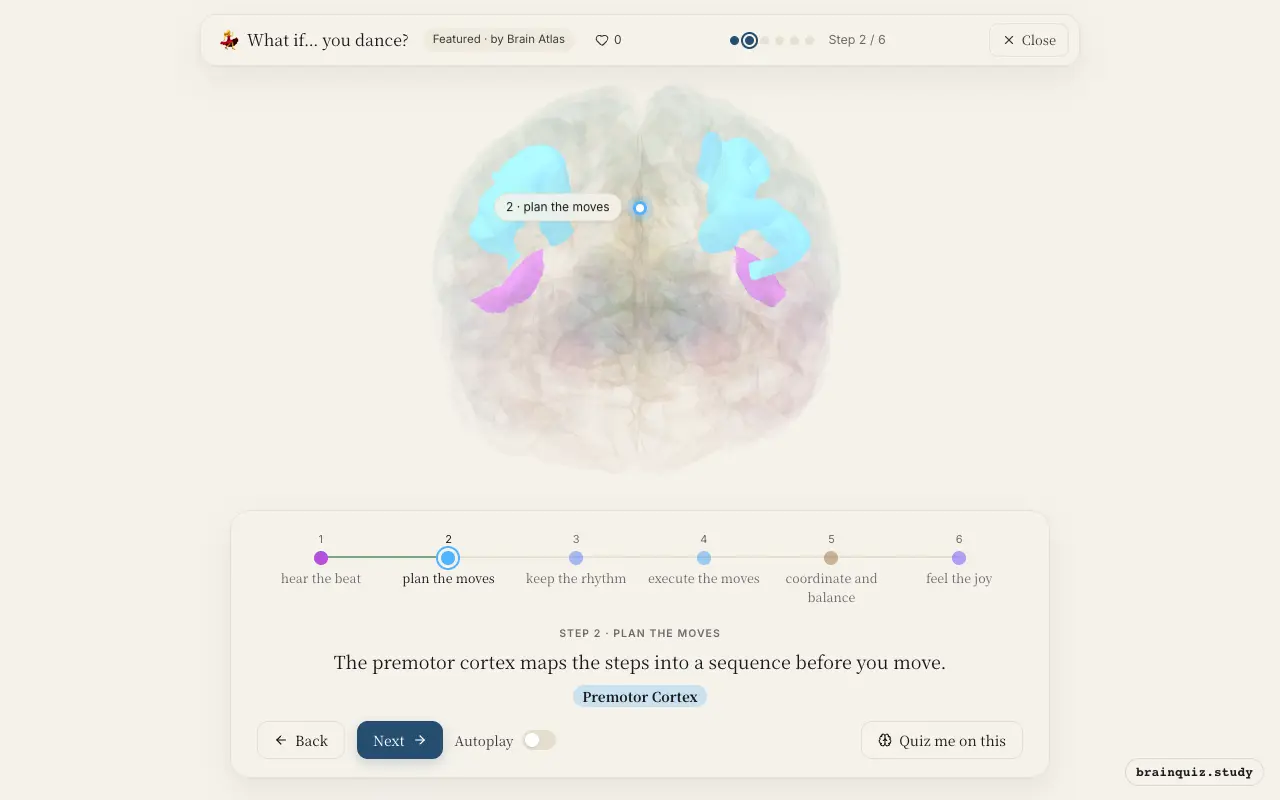
The premotor cortex organizes movements into a coherent sequence, drawing on learned choreography or improvised patterns. It works with the basal ganglia to select the appropriate motor program for each beat. This planning occurs just before the action, often in response to the next musical phrase.
3. Basal Ganglia: keep the rhythm
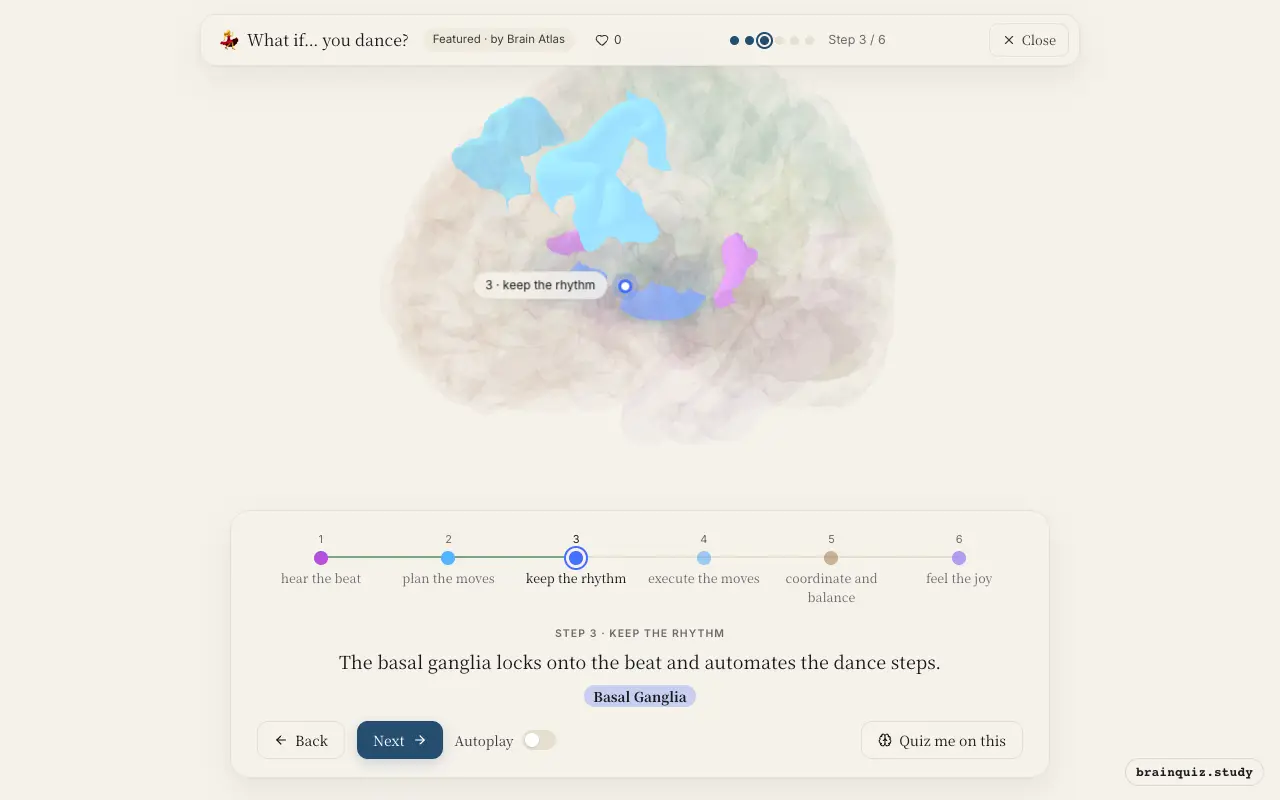
The basal ganglia, especially the putamen, supports rhythm perception and the execution of well-practiced movements. It helps the dancer stay on beat without consciously thinking about each step, turning the dance into a smooth habit. This automation frees up cognitive resources for creative expression.
4. Motor Cortex: execute the moves
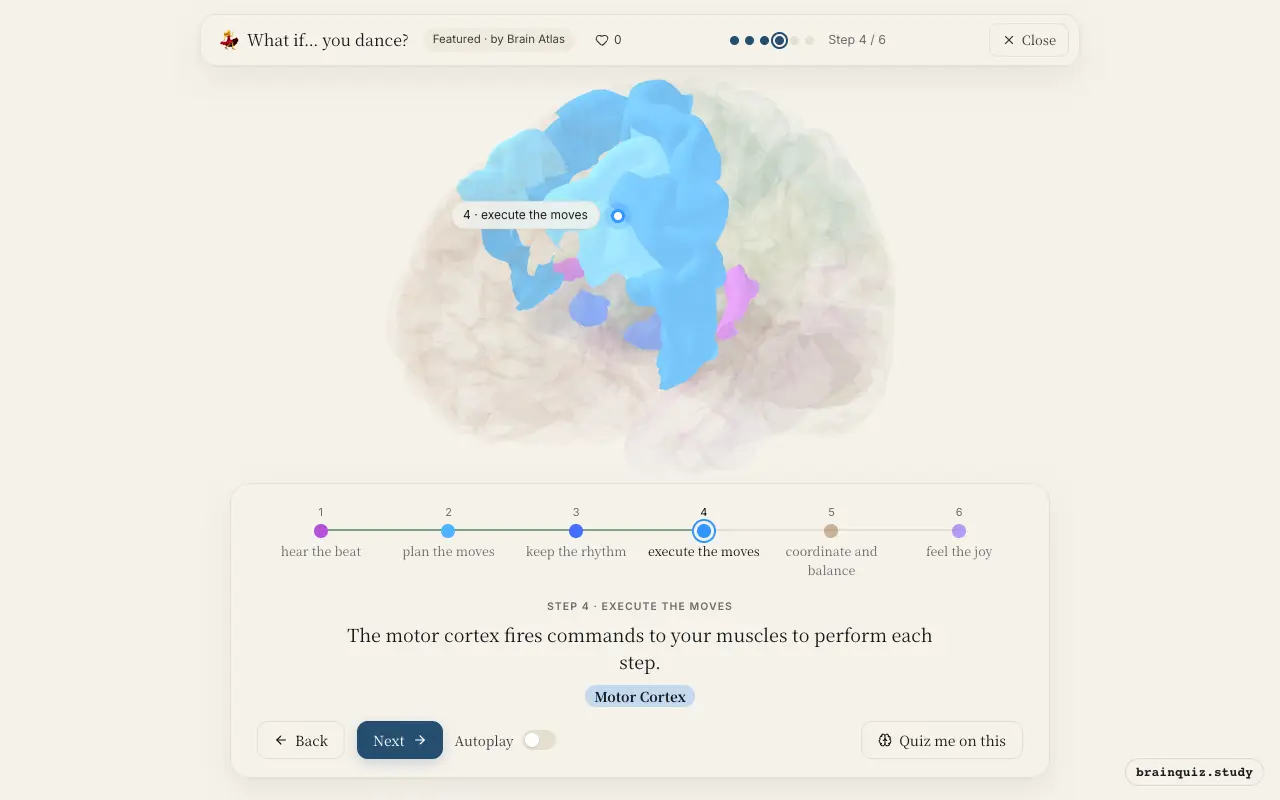
The primary motor cortex sends signals down the spinal cord to activate muscles in the legs, arms, and torso. It precisely controls the force and timing of each contraction, translating the planned sequence into physical movement. Large muscle groups are recruited first, followed by finer adjustments.
5. Cerebellum: coordinate and balance
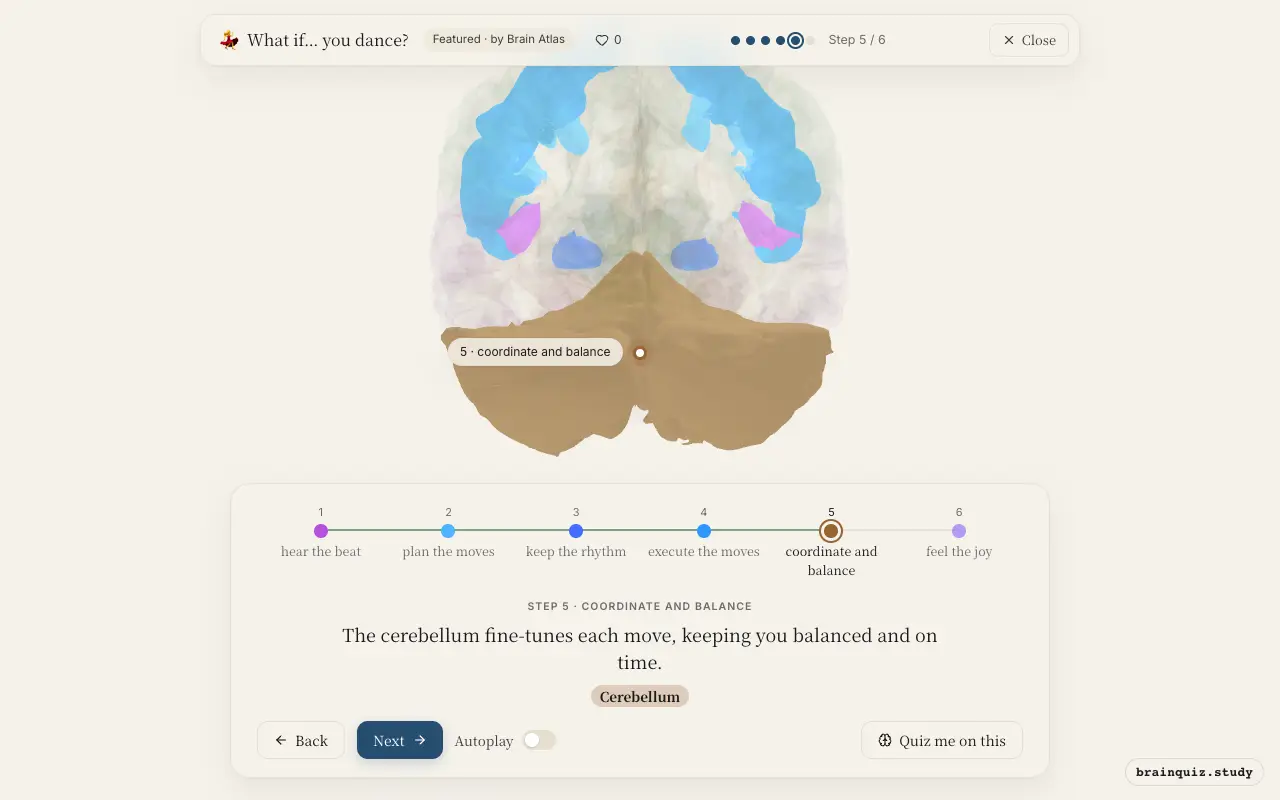
The cerebellum receives sensory feedback from the body and adjusts motor commands in real time. It ensures smooth coordination, accurate timing, and postural stability, especially during complex footwork and turns. This continuous correction allows dancers to perform rapid spins without losing balance.
6. Nucleus Accumbens: feel the joy
The nucleus accumbens releases dopamine when you enjoy dancing, reinforcing the behavior. This reward signal makes dancing feel good and encourages you to keep moving, especially in social or expressive settings. Over time, this reward pathway strengthens the association between music and movement.
Good to know
- The cerebellum contains nearly half of the brain's neurons, underscoring its critical role in motor coordination and timing.
- Music with a clear beat activates the basal ganglia and can help people with Parkinson's disease initiate movement.
Dance vs. Listening to Music
While listening to music primarily engages the auditory cortex, dancing adds activation in the premotor and motor cortices, basal ganglia, and cerebellum. Dancing also recruits the nucleus accumbens for reward, making it more physically and emotionally engaging.
Test yourself
Which brain region processes the beat of the music while you dance?
The basal ganglia primarily helps dancers by:
What role does the cerebellum play in dancing?
0 of 3 answered · 0 correct
Simplified: many regions work together at once, and this shows the main players in the order they act.