What happens in your brain when you do yoga?
Updated
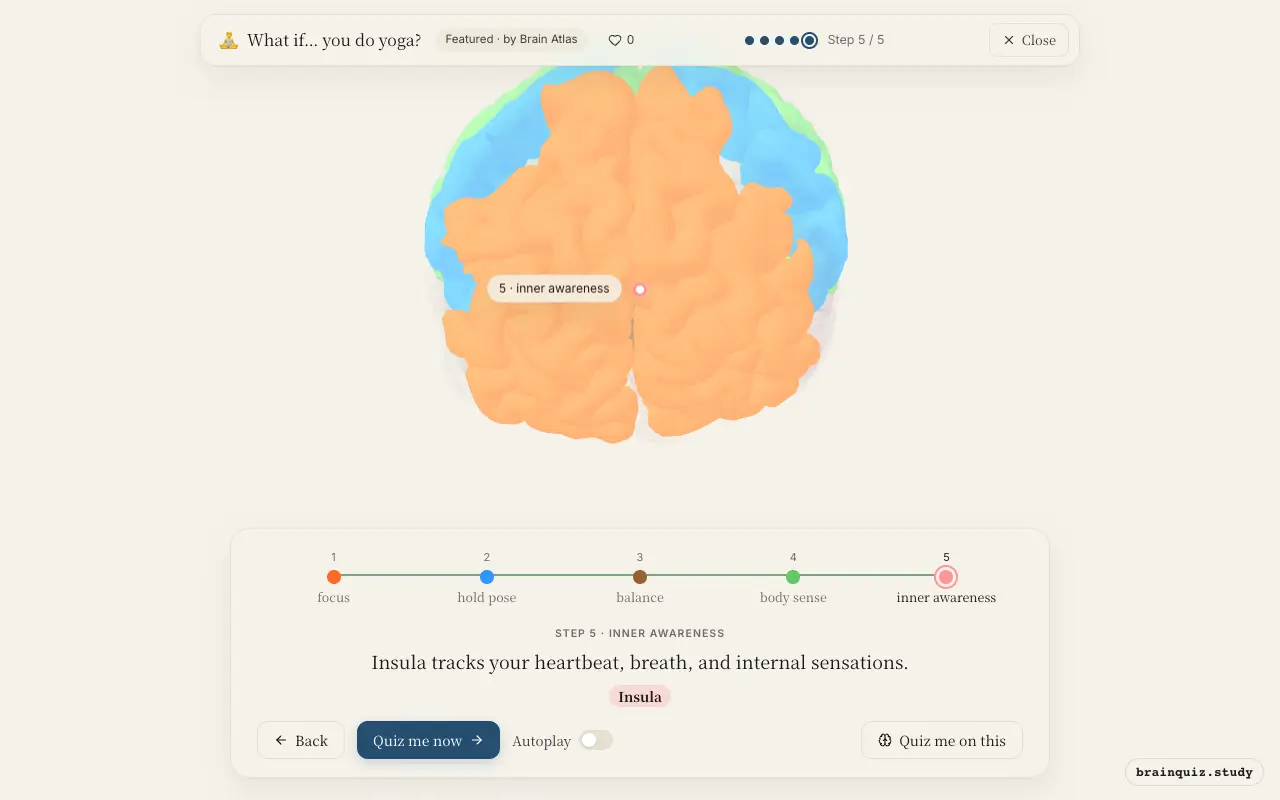
Yoga engages prefrontal cortex for attention, motor cortex to hold poses, cerebellum for balance, somatosensory cortex for body feedback, and insula for interoceptive awareness.
Watch it light up on the 3D brain
Brain regions that light up
| Order | Region | What it does here |
|---|---|---|
| 1 | Prefrontal Cortex | Your prefrontal cortex directs attention to your breath and body alignment. |
| 2 | Motor Cortex | Motor cortex sends signals to muscles to move into and hold each posture. |
| 3 | Cerebellum | Cerebellum fine-tunes muscle activity to keep you stable. |
| 4 | Somatosensory Cortex | Somatosensory cortex processes stretch and pressure from muscles and joints. |
| 5 | Insula | Insula tracks your heartbeat, breath, and internal sensations. |
1. Prefrontal Cortex: focus
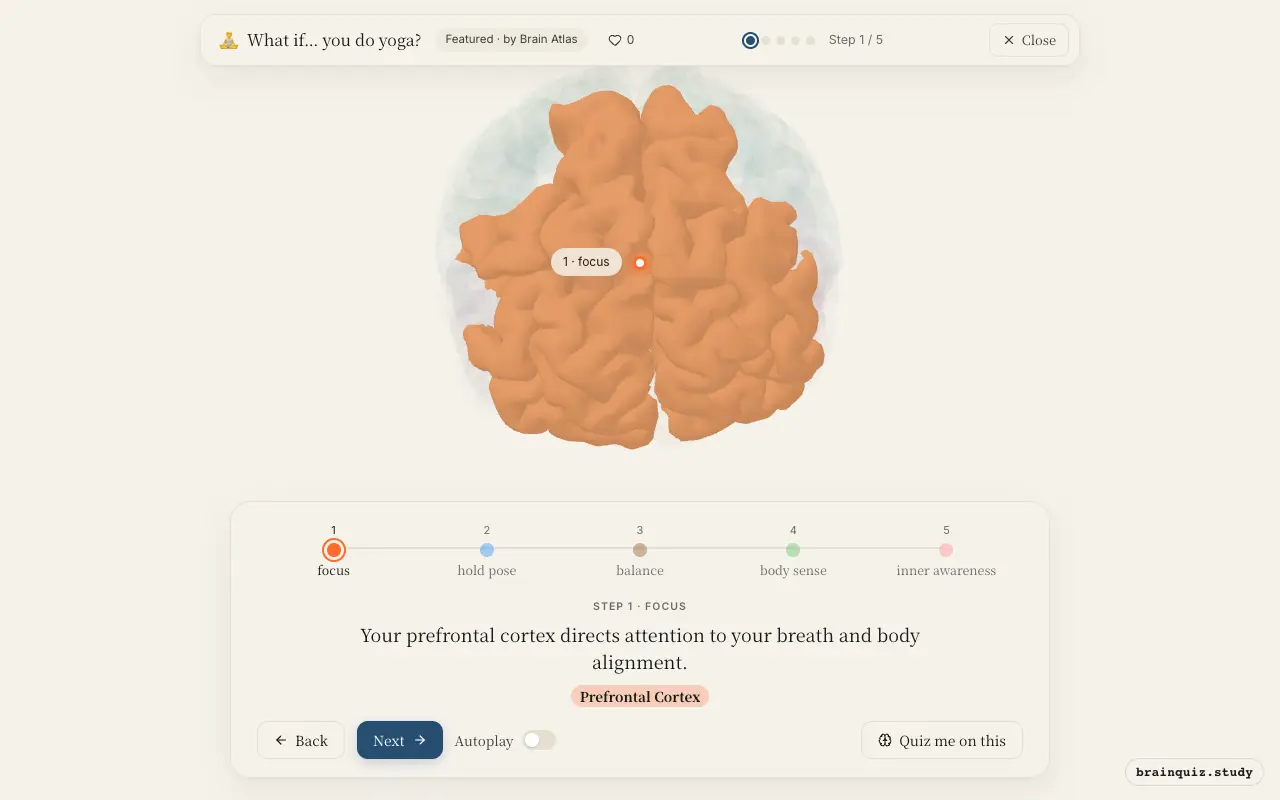
The prefrontal cortex is central to executive control, including selective attention and working memory. During yoga, it maintains focus on the present moment and the specific cues from the instructor, suppressing distractions. This sustained attentional effort is a form of top-down regulation that shapes the entire practice.
2. Motor Cortex: hold pose
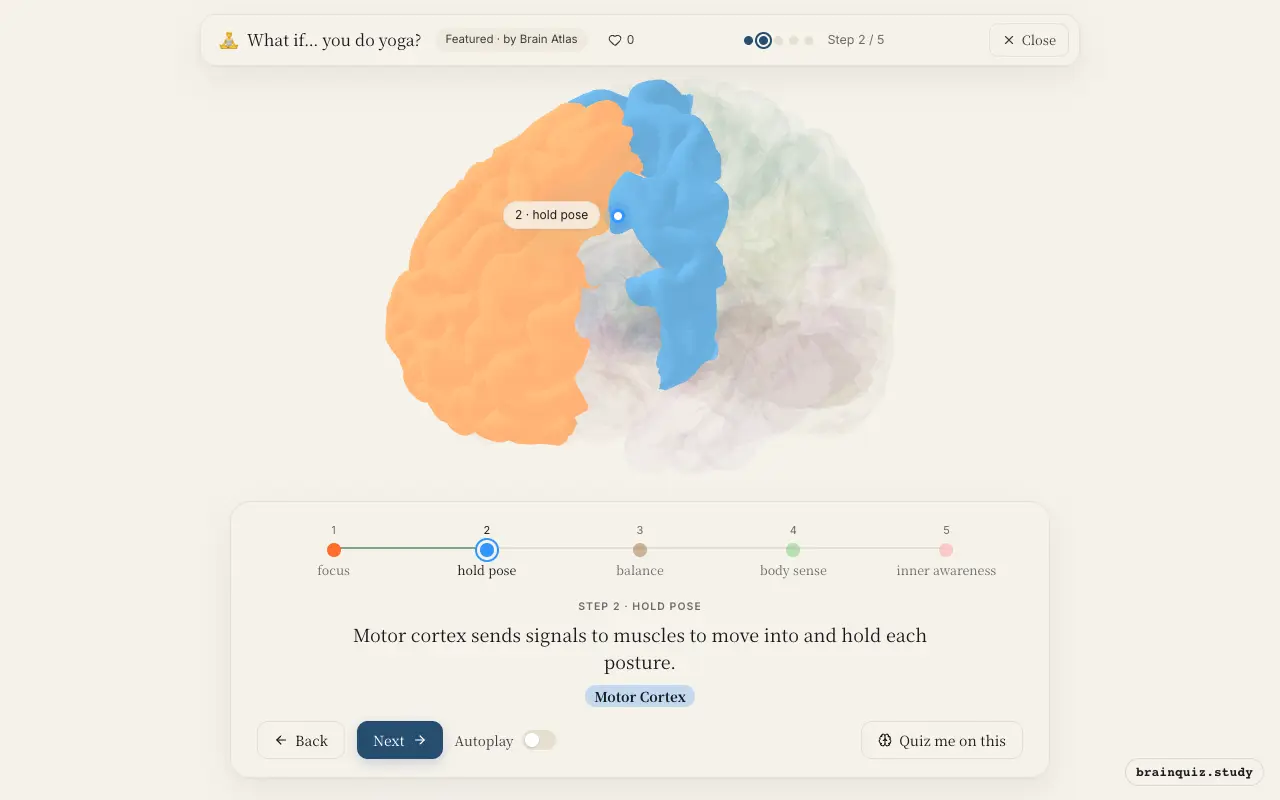
The primary motor cortex initiates voluntary movements by sending commands down the corticospinal tract. In yoga, it activates the specific muscle groups needed for each asana, such as the quadriceps in warrior pose. Holding a pose requires tonic motor output, which the motor cortex sustains through ongoing firing.
3. Cerebellum: balance
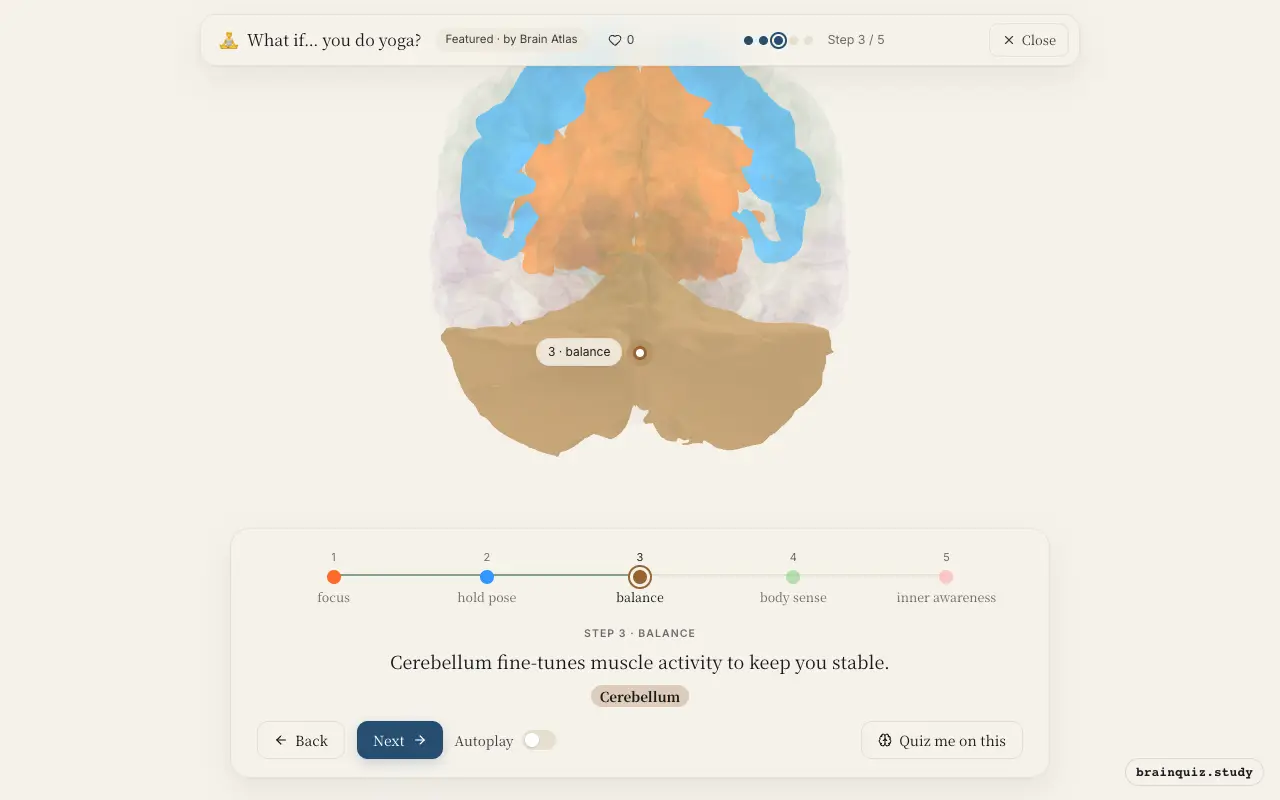
The cerebellum compares intended movements with actual sensory feedback, adjusting motor commands in real time. During balancing poses like tree pose, it constantly corrects small shifts in weight distribution. Without this cerebellar error correction, maintaining posture would be jerky and unstable.
4. Somatosensory Cortex: body sense
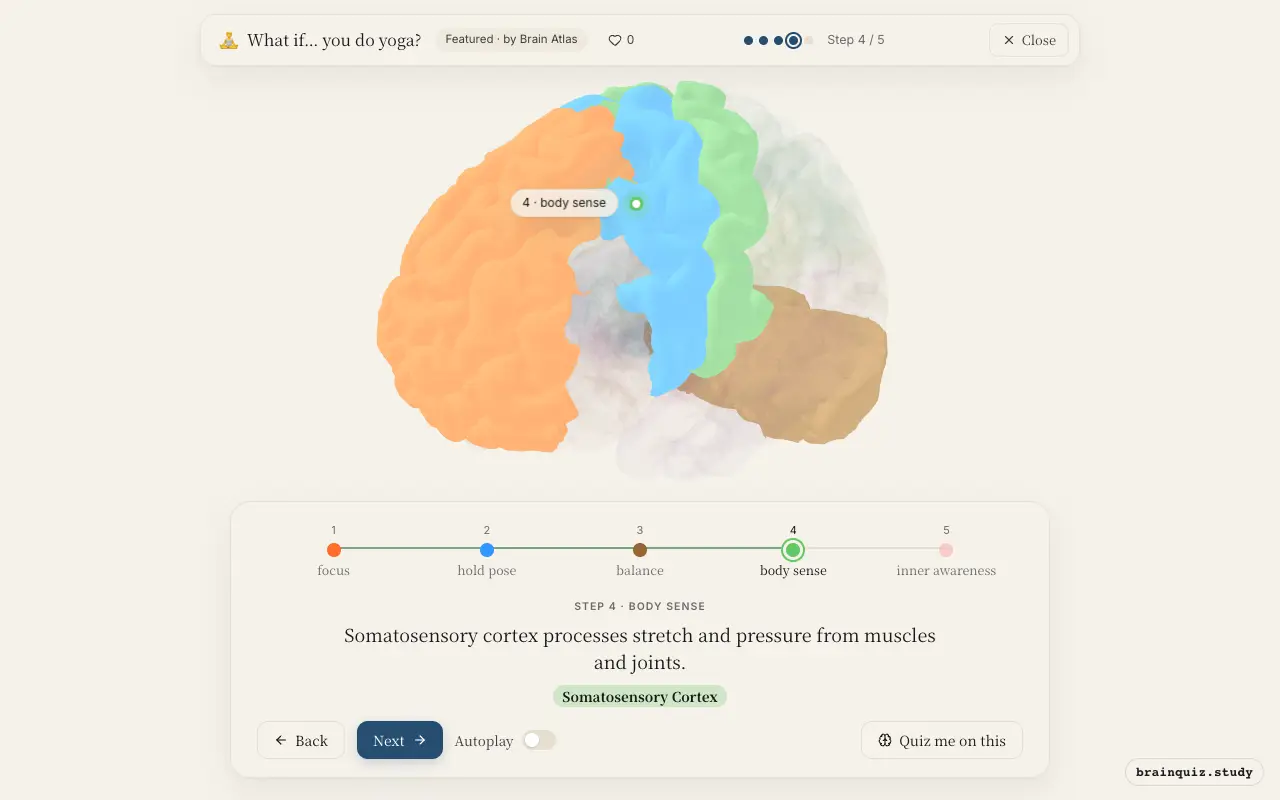
Proprioceptors in muscles, tendons, and joints send signals about limb position and force to the somatosensory cortex. This region creates a body map, telling you where your arms and legs are without looking. This feedback is essential for aligning the pose correctly.
5. Insula: inner awareness
The insula is the primary cortical region for interoception, the sense of the body's internal state. During yoga, it monitors breathing depth, heart rate, and feelings of stretch. This awareness is linked to emotional regulation and may underlie yoga's calming effects.
Good to know
- Proprioceptive signals travel through the dorsal column-medial lemniscus pathway to reach the somatosensory cortex.
- The insula receives visceral afferents from the brainstem, allowing conscious perception of heartbeat and breath.
- The cerebellum integrates sensory feedback with motor commands to correct errors in real time.
Yoga vs Weightlifting
Both involve motor cortex and cerebellum, but yoga emphasizes slow, held postures with strong insula and prefrontal engagement for interoception and attention. Weightlifting relies on rapid, forceful contractions that recruit basal ganglia and produce higher motor cortex output with less body awareness.
Test yourself
Which brain region is most critical for maintaining balance during a yoga pose?
What primary role does the insula play during yoga?
During yoga, the prefrontal cortex is most active when you:
0 of 3 answered · 0 correct
Simplified: many regions work together at once, and this shows the main players in the order they act.