What happens in your brain when you feel peer pressure?
Updated
Your temporal cortex reads the group's reaction, the anterior cingulate flags the mismatch with your own take, the insula makes standing out feel bad, the orbitofrontal cortex weighs the social cost, and the prefrontal cortex decides whether to conform or resist.
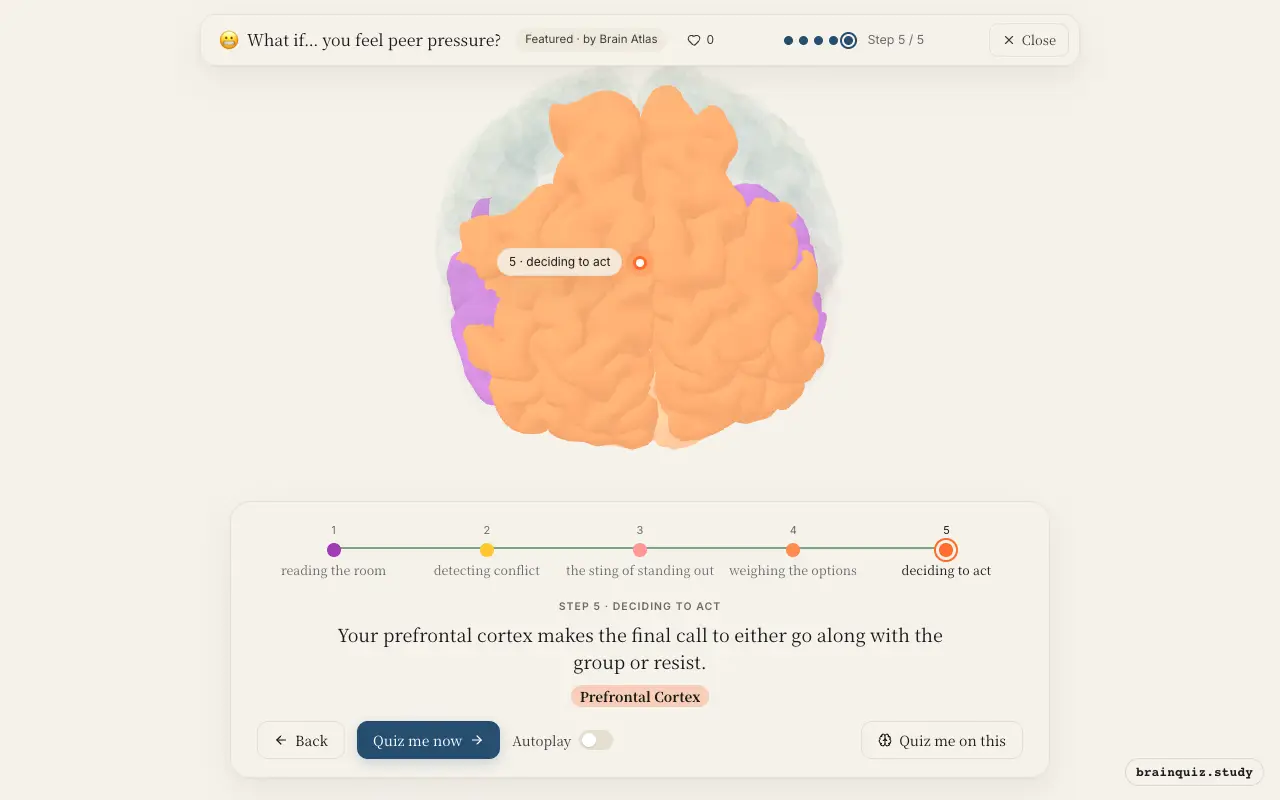
Watch it light up on the 3D brain
Brain regions that light up
| Order | Region | What it does here |
|---|---|---|
| 1 | Temporal Cortex | Your temporal cortex processes faces and voices to register the group's opinion. |
| 2 | Anterior Cingulate Cortex | The anterior cingulate flags that your own preference clashes with the group's. |
| 3 | Insula | Your insula generates an aversive feeling, making nonconformity feel risky. |
| 4 | Orbitofrontal Cortex | The orbitofrontal cortex calculates the value of conforming versus staying true to yourself. |
| 5 | Prefrontal Cortex | Your prefrontal cortex makes the final call to either go along with the group or resist. |
1. Temporal Cortex: reading the room
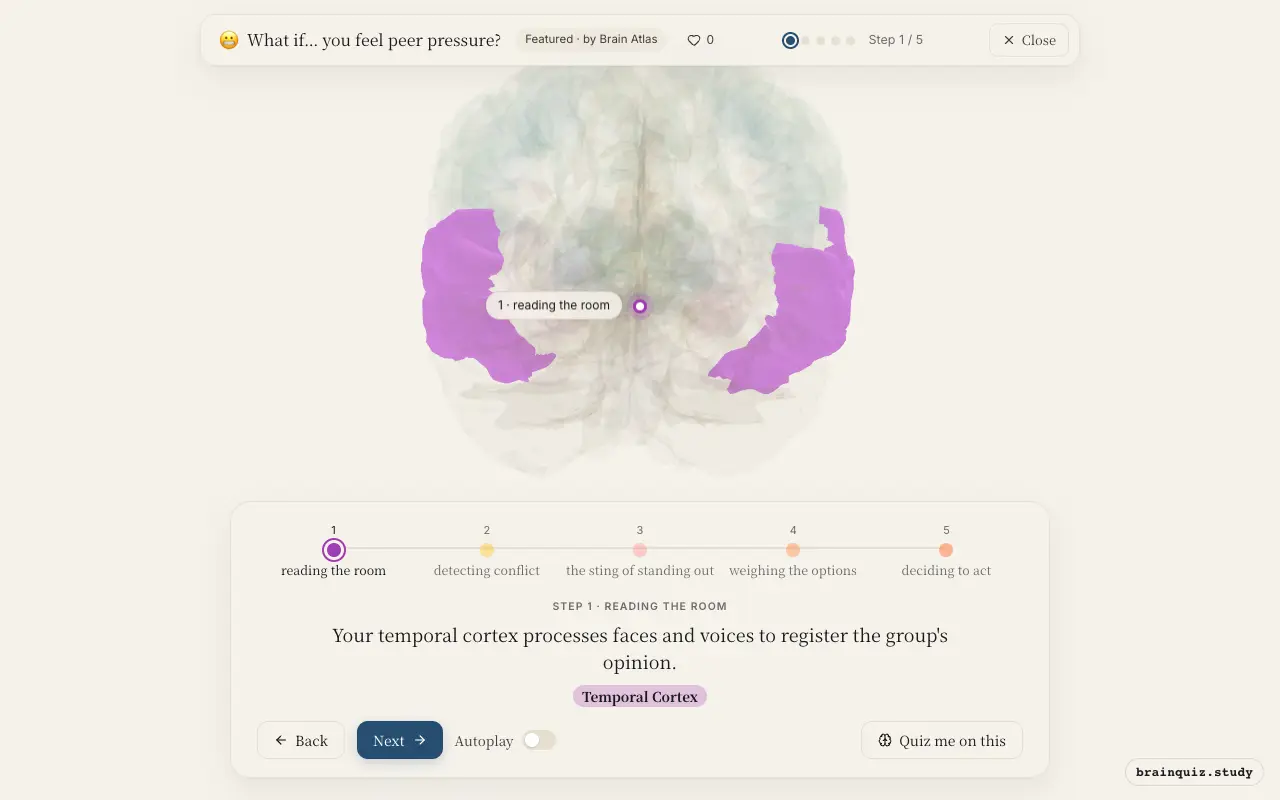
This region handles object and face recognition, helping you quickly gauge social cues like nods, frowns, or tone of voice. Its activation sets the stage for evaluating whether your view aligns with the group.
2. Anterior Cingulate Cortex: detecting conflict
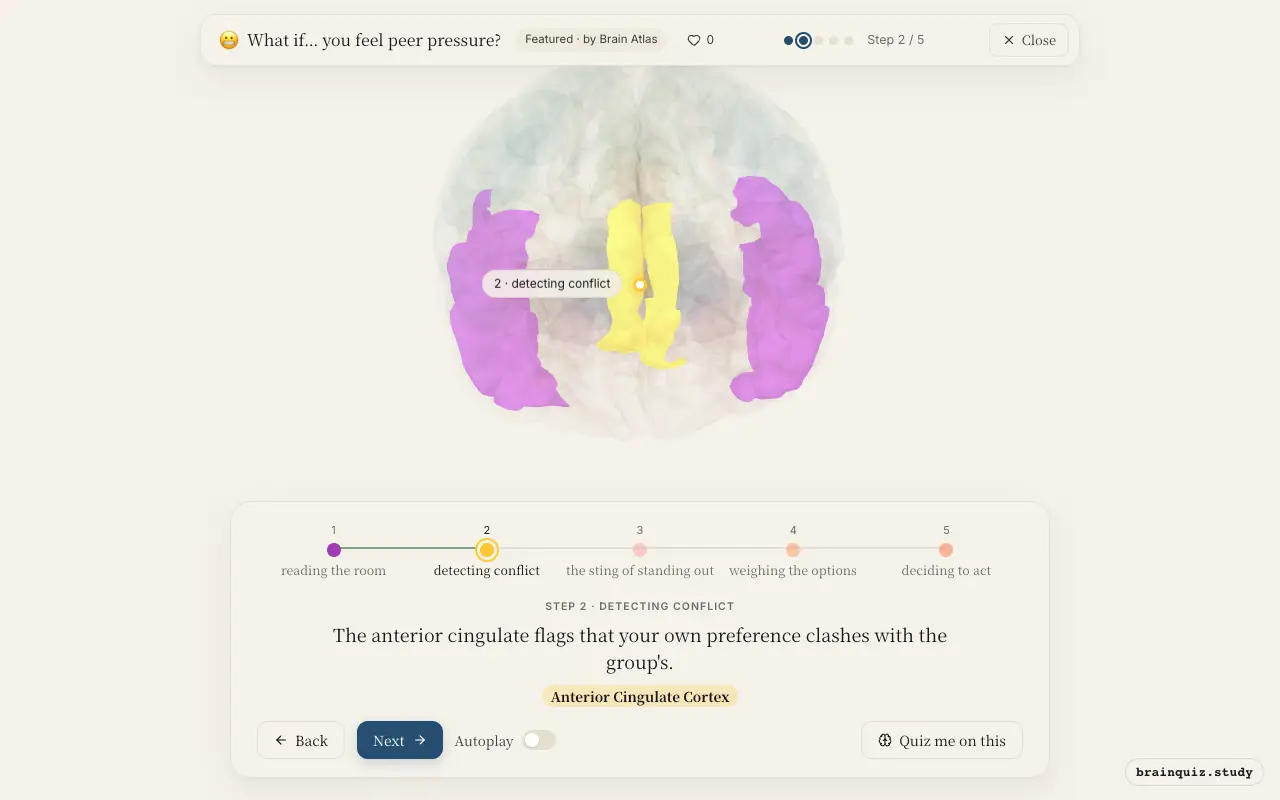
The anterior cingulate cortex monitors for errors and conflict, firing when your intended response deviates from what others are doing. This mismatch signal is a key trigger for the discomfort of peer pressure.
3. Insula: the sting of standing out
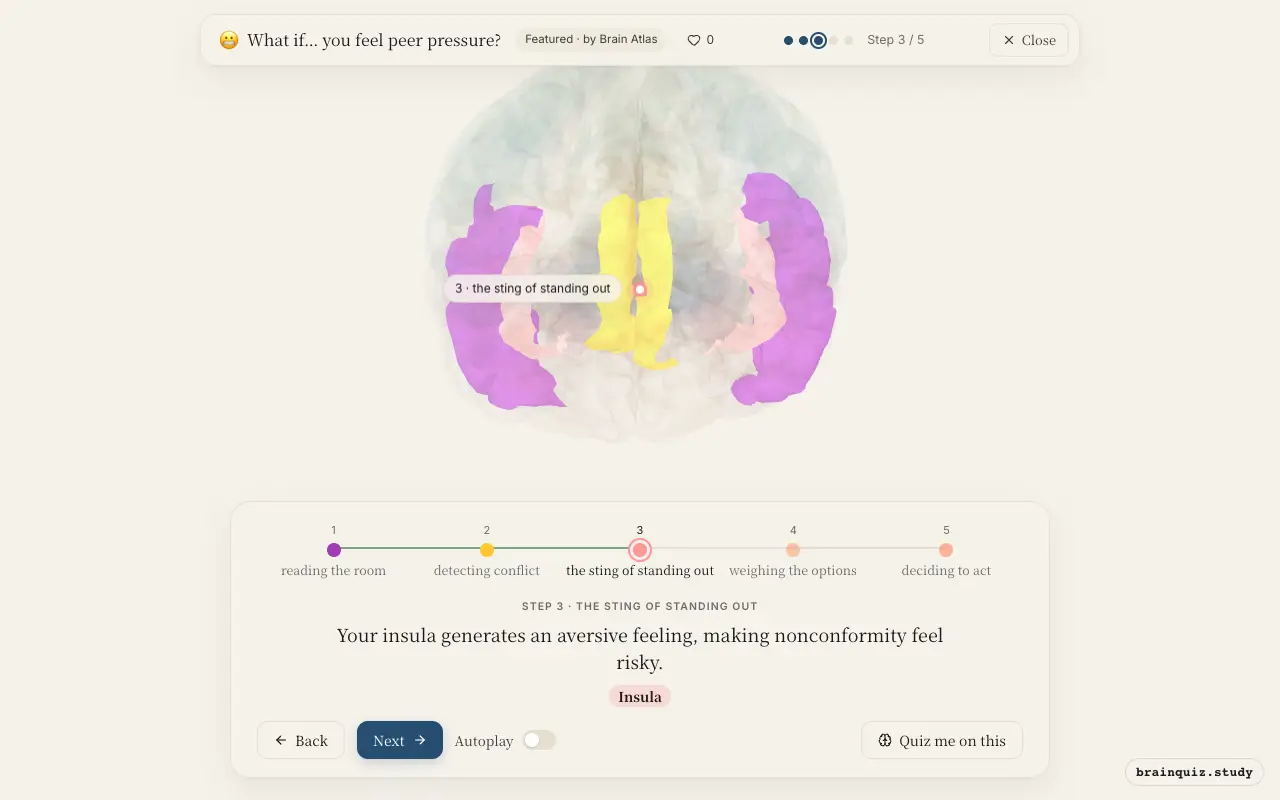
The insula tracks internal body states and is linked to negative emotions like disgust and social exclusion. Its activity when you anticipate disagreeing pushes you toward fitting in to avoid that unease.
4. Orbitofrontal Cortex: weighing the options
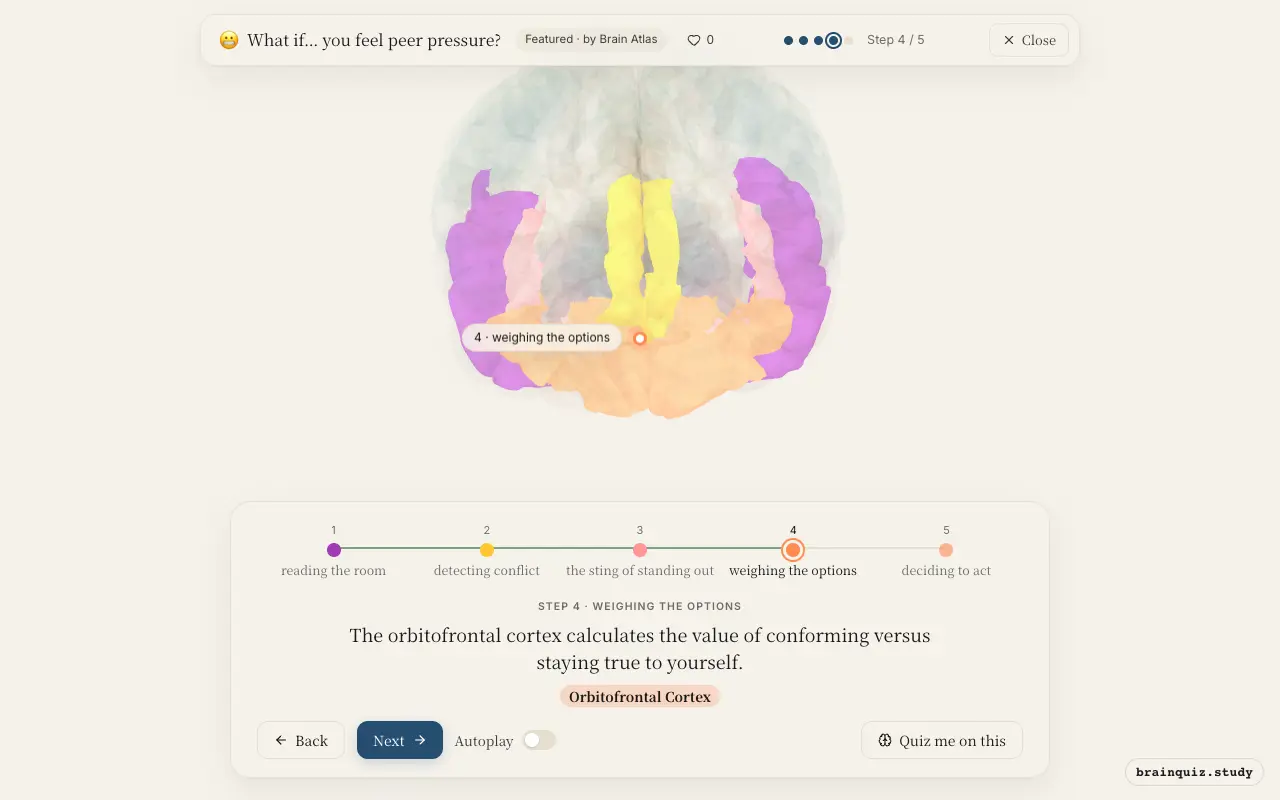
This region integrates reward and punishment expectations to guide value-based decisions. It evaluates the social gain of agreement against the personal cost of betraying your own judgment.
5. Prefrontal Cortex: deciding to act
As the executive control center, the prefrontal cortex overrides automatic impulses and enforces deliberate choices. Stronger engagement here helps you resist peer pressure when you believe the group is wrong.
Good to know
- Conforming to group opinion activates the brain's reward system, particularly the nucleus accumbens, which reinforces social alignment.
- Adolescents show heightened sensitivity to peer influence due to ongoing maturation of the prefrontal cortex relative to limbic regions.
- The anterior cingulate cortex is also active when you make errors, suggesting peer pressure taps into a general conflict-monitoring system.
Peer pressure vs. solo decision-making
When deciding alone, the prefrontal cortex and parietal cortex drive choice with less anterior cingulate conflict activity. Under peer pressure, the insula and orbitofrontal cortex add social-emotional weight, biasing you toward the group's preference even if it contradicts your own.
Test yourself
Which brain region is most directly responsible for detecting the mismatch between your own opinion and the group's?
The insula's role in peer pressure is best described as:
Damage to which area would most likely reduce your ability to resist peer pressure?
0 of 3 answered · 0 correct
Simplified: many regions work together at once, and this shows the main players in the order they act.