What happens in your brain when you feel your heart race?
Updated
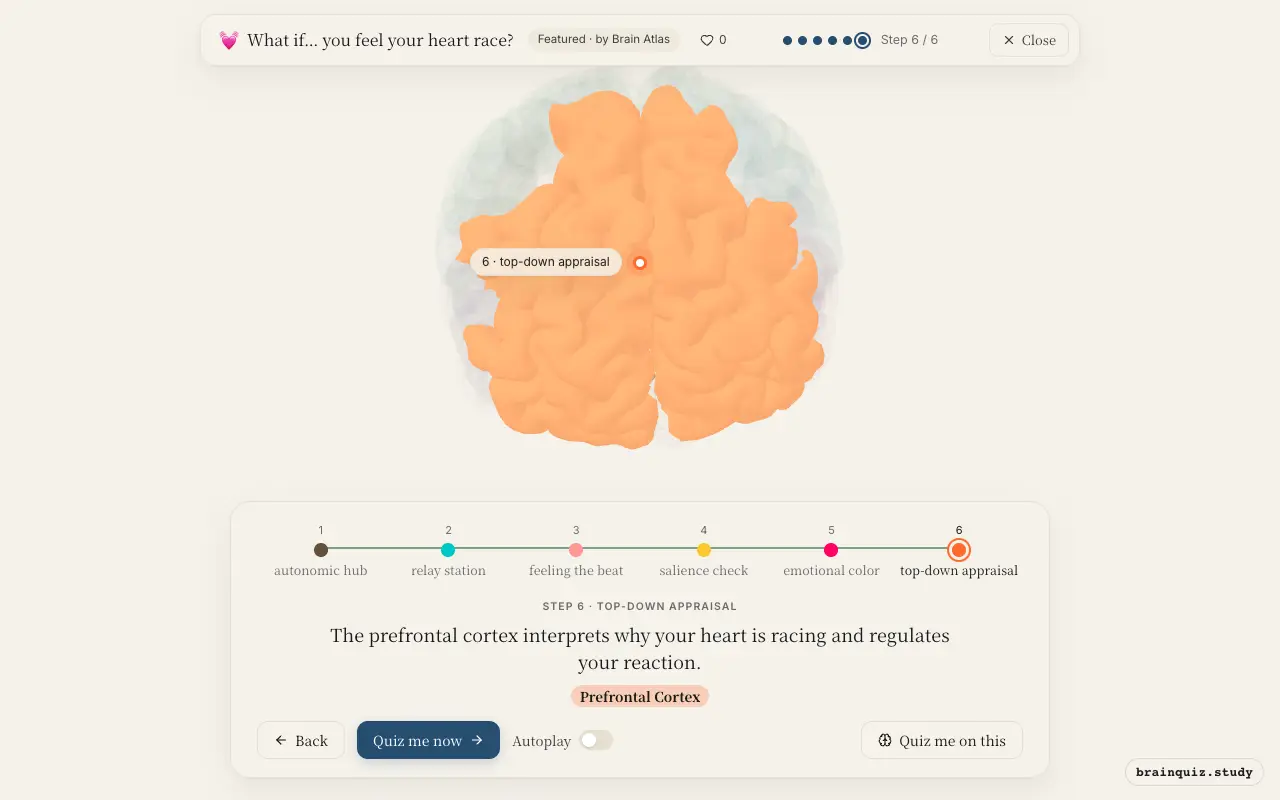
Brainstem detects and adjusts heart rate; thalamus relays signals to the insula, creating the feeling of racing. Anterior cingulate flags it as important, while amygdala adds emotional weight and prefrontal cortex appraises the cause.
Watch it light up on the 3D brain
Brain regions that light up
| Order | Region | What it does here |
|---|---|---|
| 1 | Brainstem | The brainstem receives signals from your racing heart and adjusts its output. |
| 2 | Thalamus | The thalamus routes the interoceptive signal to the insula and cingulate cortex. |
| 3 | Insula | The insula creates the conscious sensation of your heart pounding. |
| 4 | Anterior Cingulate Cortex | The anterior cingulate flags the racing heart as attention-worthy. |
| 5 | Amygdala | The amygdala evaluates the situation, adding fear or excitement. |
| 6 | Prefrontal Cortex | The prefrontal cortex interprets why your heart is racing and regulates your reaction. |
1. Brainstem: autonomic hub
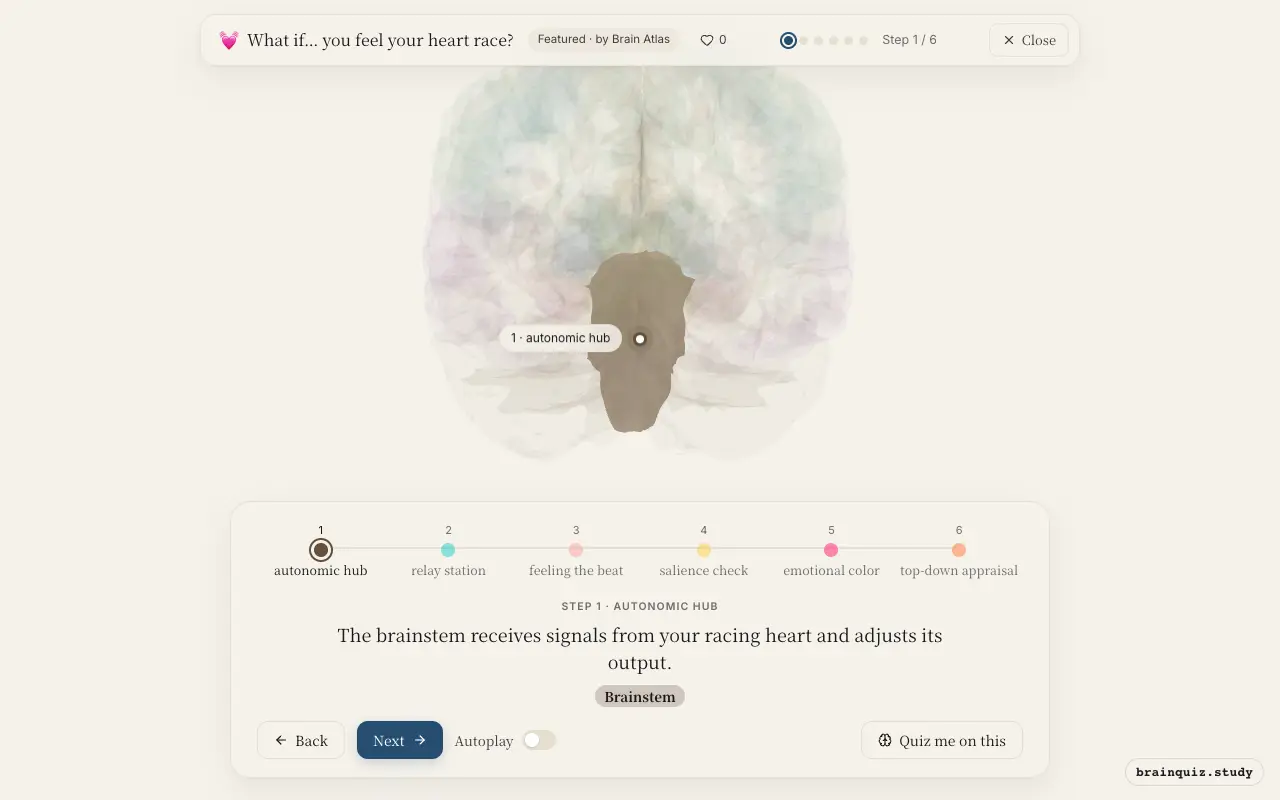
The brainstem houses nuclei that integrate visceral feedback and control heart rate via the autonomic nervous system. It sends ascending projections to the thalamus, beginning the pathway to conscious perception. Additionally, the brainstem modulates the strength of the heartbeat signal reaching the cortex.
2. Thalamus: relay station
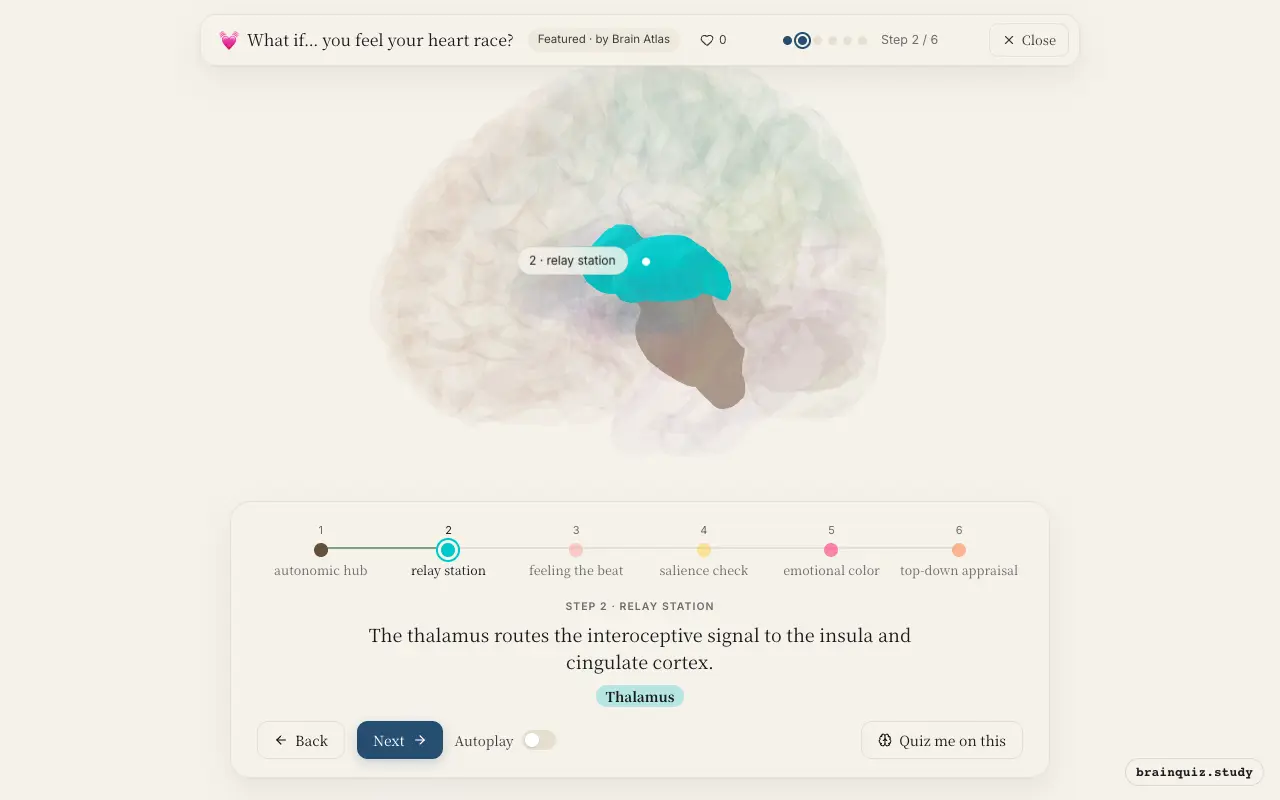
As the brain’s sensory relay, the thalamus filters and directs visceral information to cortical areas. It ensures the heartbeat signal reaches regions that can interpret its meaning. The thalamus also integrates this information with other sensory inputs to provide context.
3. Insula: feeling the beat
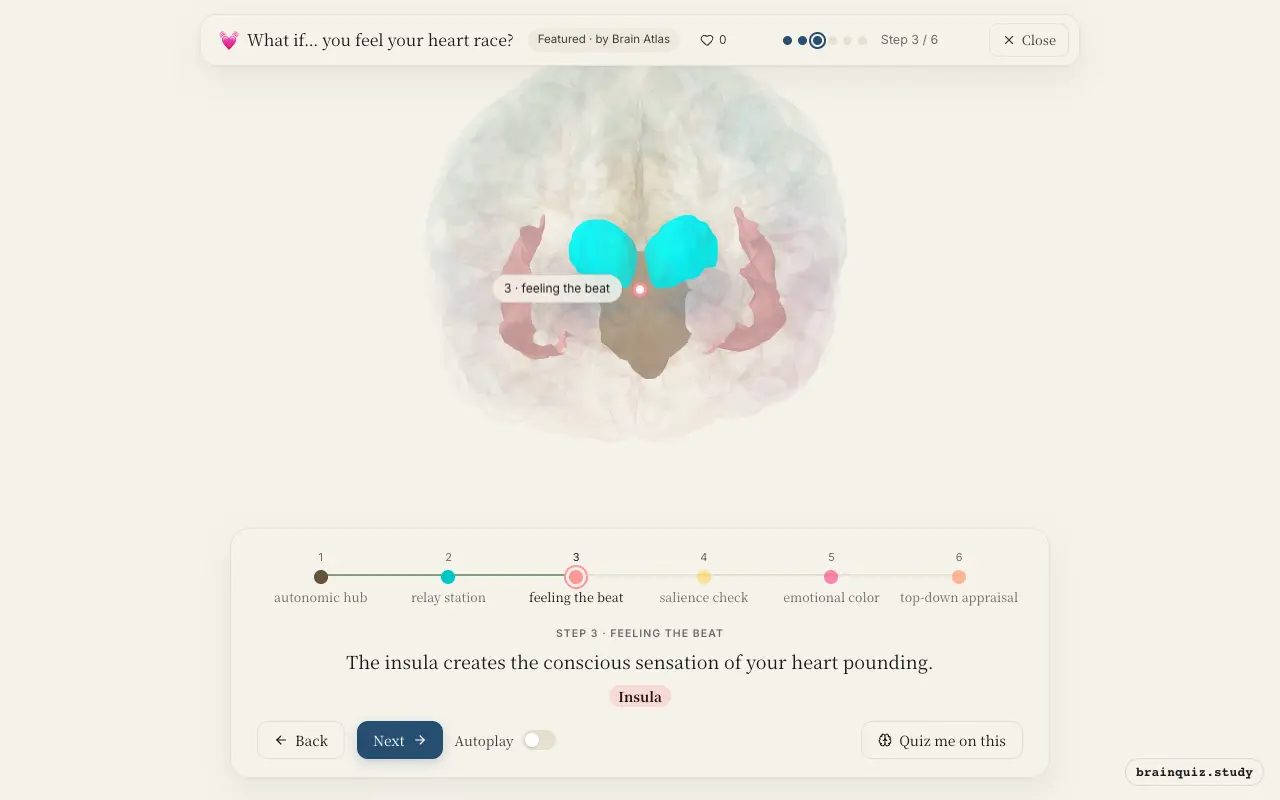
The insula is the primary interoceptive cortex, mapping internal body states. Activity here correlates with the intensity of perceived heartbeat, making you aware of the racing. The posterior insula encodes the sensory features, while the anterior insula integrates them with emotional and cognitive processes.
4. Anterior Cingulate Cortex: salience check
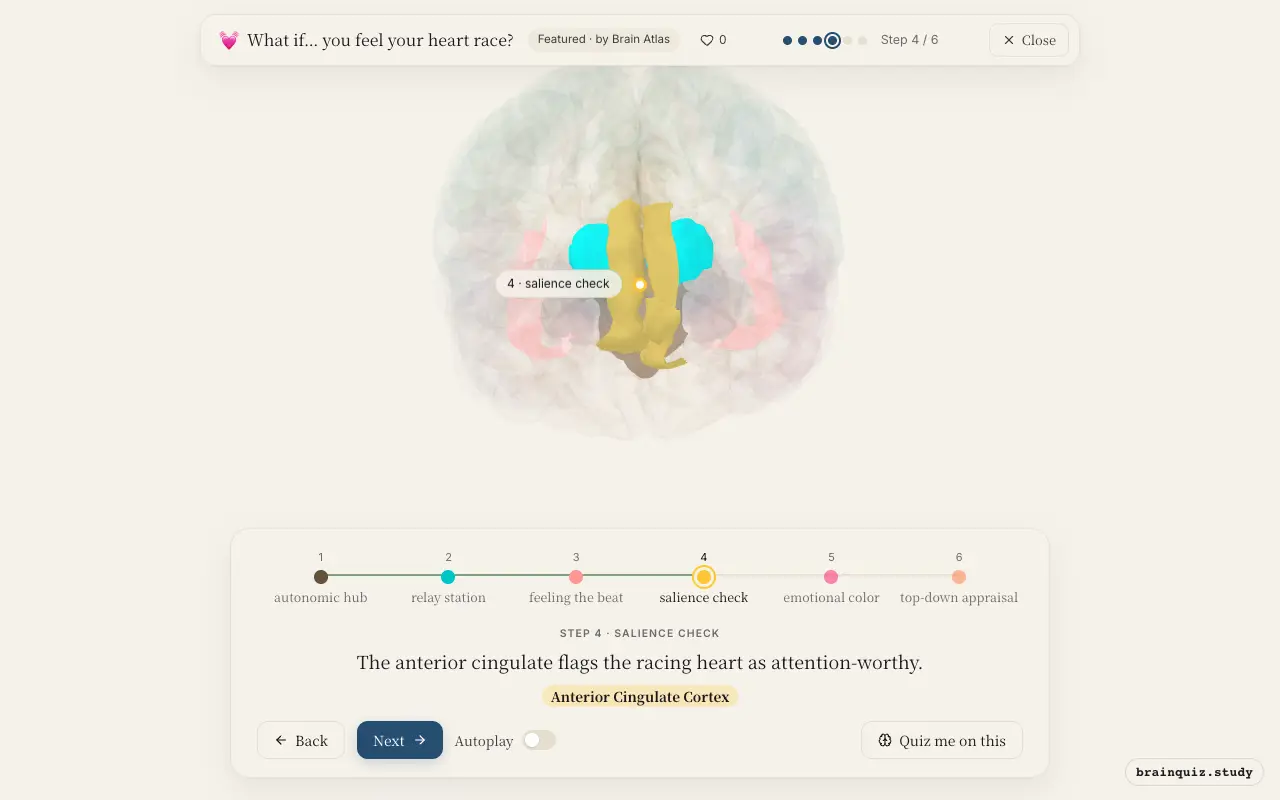
The ACC monitors for conflicts and salient events, directing cognitive resources toward the bodily change. This increases your focus on the sensation and prepares you to respond. The ACC is part of a salience network that includes the insula and amygdala.
5. Amygdala: emotional color
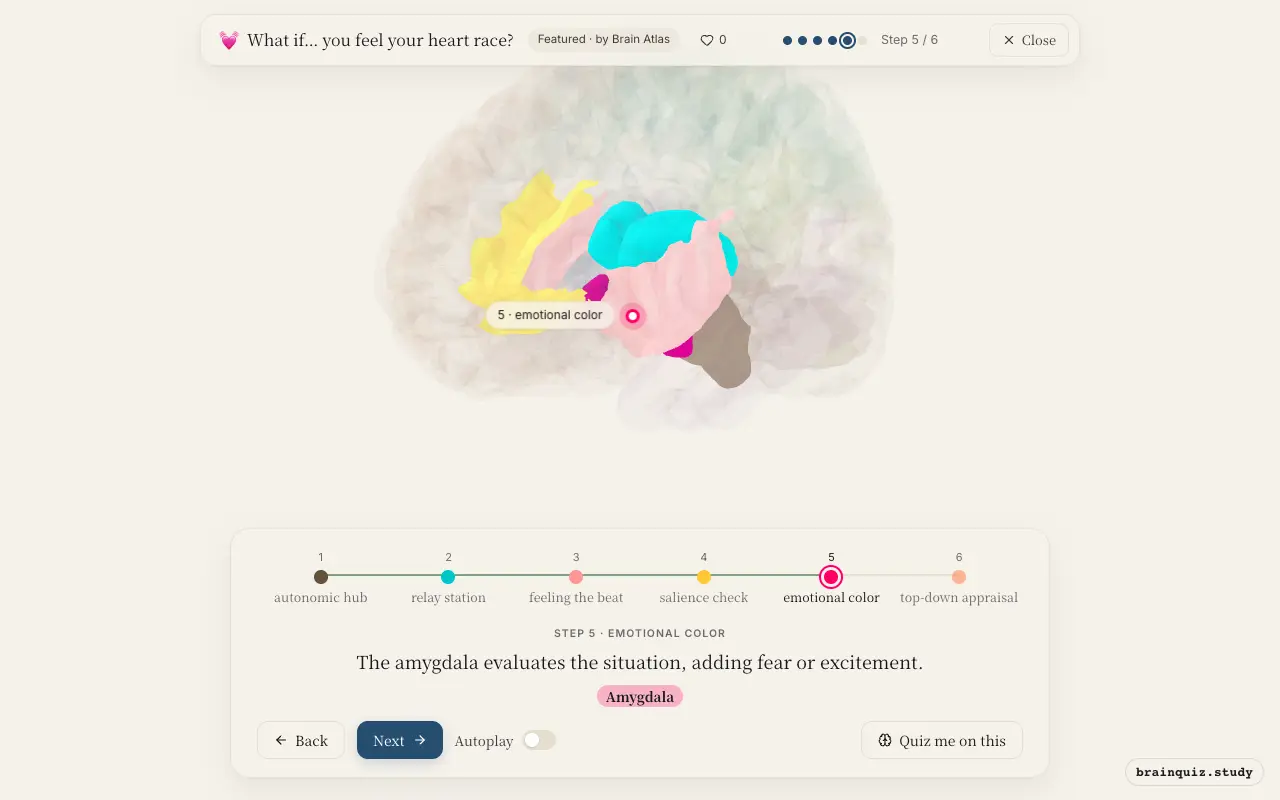
If the context is threatening, the amygdala activates a fear response, releasing stress hormones and increasing arousal. In positive settings, it may contribute to excitement, coloring the interoceptive experience. The amygdala receives direct input from the thalamus, allowing rapid emotional tagging.
6. Prefrontal Cortex: top-down appraisal
This region uses context and memory to determine the cause, then modulates the emotional response. It can dampen amygdala activity if the situation is benign, reducing anxiety. The ventromedial prefrontal cortex is particularly involved in regulating fear and autonomic responses.
Good to know
- The insula integrates signals from the heart and gut, providing a neural basis for 'gut feelings'.
- The anterior cingulate cortex and insula are often co-activated during tasks requiring interoceptive attention.
- Baroreceptors in blood vessels send signals via the vagus nerve to the brainstem, informing it of heart rate changes.
Fear vs. exercise
In fear, amygdala and prefrontal cortex activity is elevated as you assess threat. During exercise, motor cortex and cerebellum engage alongside the insula, and the racing heart is interpreted as expected and non-threatening.
Test yourself
Which brain region is most directly responsible for creating the conscious feeling of a racing heart?
What role does the anterior cingulate cortex play in feeling your heart race?
If your heart races during a scary movie, which region is most likely to enhance the fear response?
0 of 3 answered · 0 correct
Simplified: many regions work together at once, and this shows the main players in the order they act.