What happens in your brain when you get brain freeze?
Updated
Cold on the palate triggers the trigeminal nerve, sending signals through the brainstem and thalamus to the insula and anterior cingulate, causing sharp pain and discomfort.
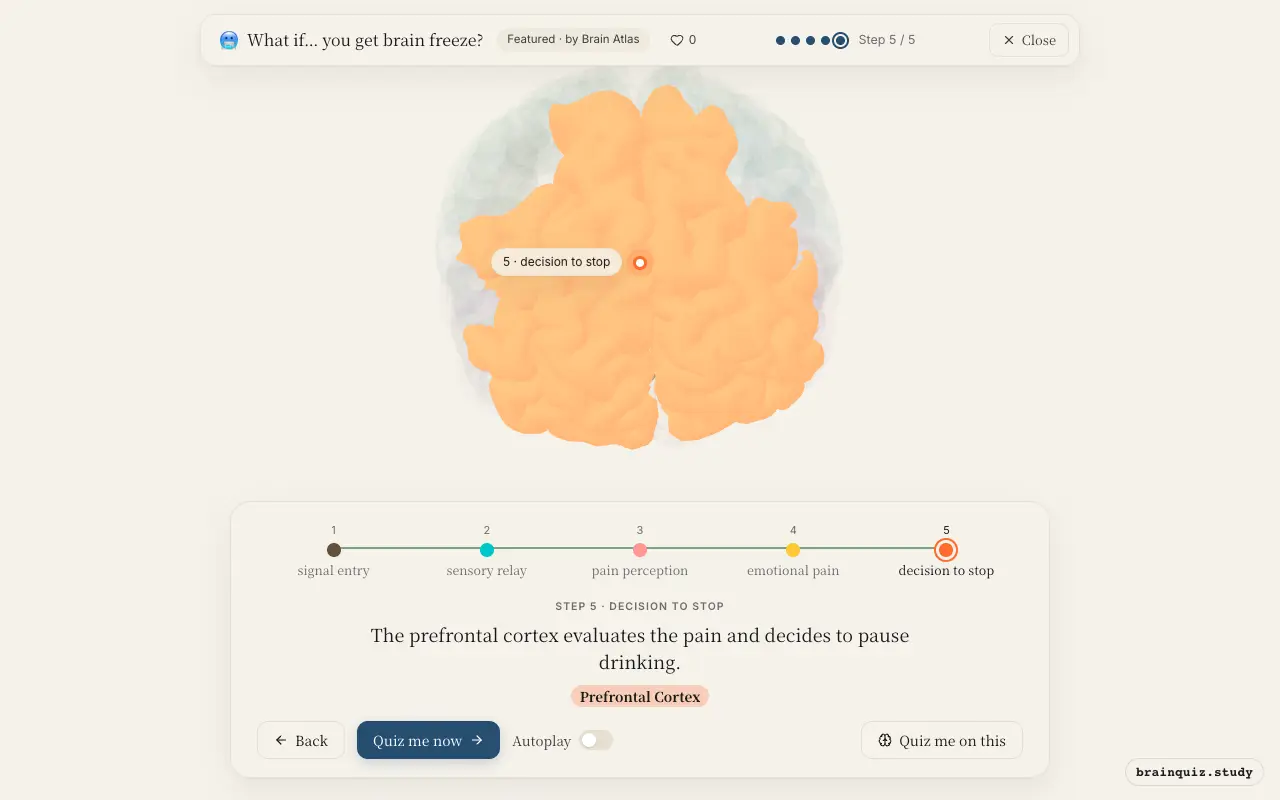
Watch it light up on the 3D brain
Brain regions that light up
| Order | Region | What it does here |
|---|---|---|
| 1 | Brainstem | Cold on the palate activates the trigeminal nerve, which enters the brainstem. |
| 2 | Thalamus | The thalamus relays the pain signal to the cerebral cortex. |
| 3 | Insula | The insula registers the sharp, uncomfortable sensation of brain freeze. |
| 4 | Anterior Cingulate Cortex | The anterior cingulate cortex adds the emotional dimension of distress. |
| 5 | Prefrontal Cortex | The prefrontal cortex evaluates the pain and decides to pause drinking. |
1. Brainstem: signal entry
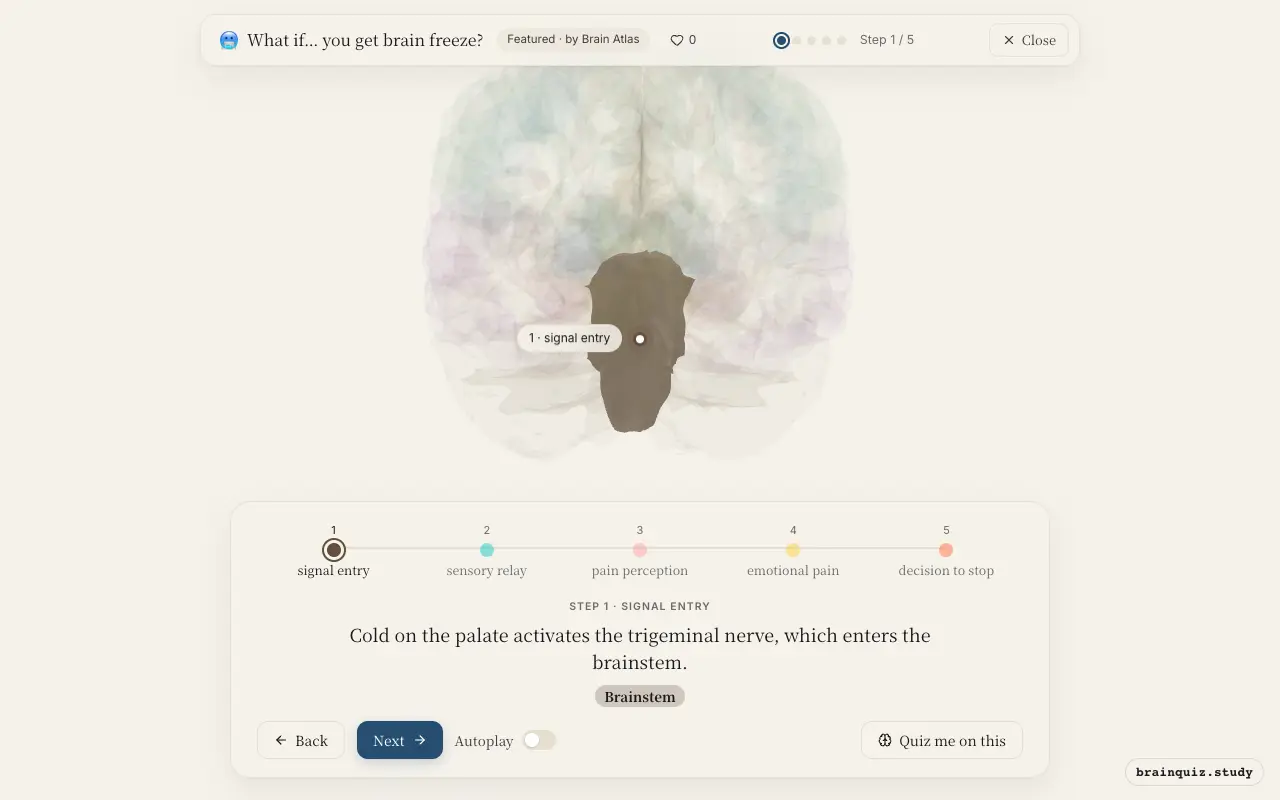
The brainstem receives nociceptive signals from the trigeminal nerve's maxillary branch. It relays these signals upward, acting as the first central processing station for the cold-induced pain. This is a rapid, reflexive pathway. The trigeminal nucleus in the brainstem is the initial synapse for these pain fibers.
2. Thalamus: sensory relay
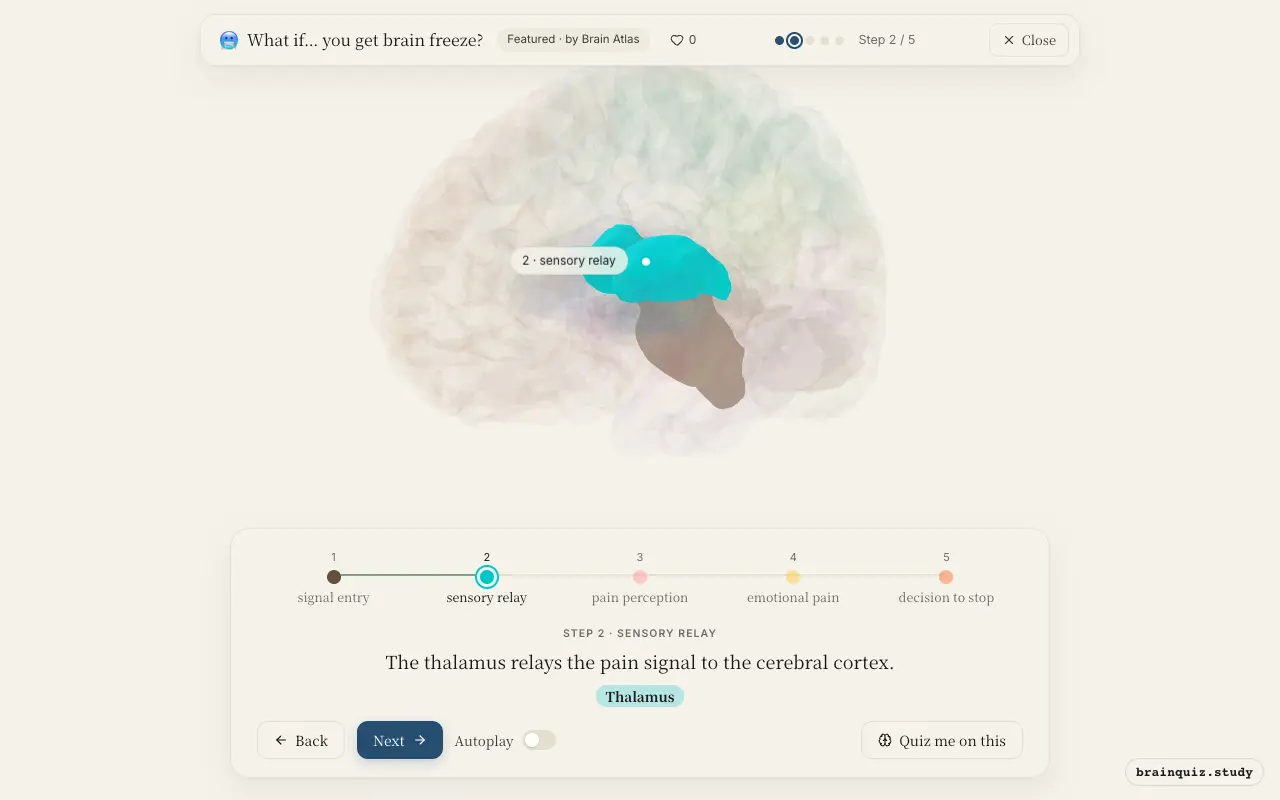
The thalamus acts as the brain's sensory switchboard, directing the trigeminal pain information to regions that process pain. It ensures the signal reaches both sensory and emotional areas. This relay is crucial for conscious perception of the headache. Specific thalamic nuclei, like the ventral posterior medial nucleus, receive facial pain input.
3. Insula: pain perception
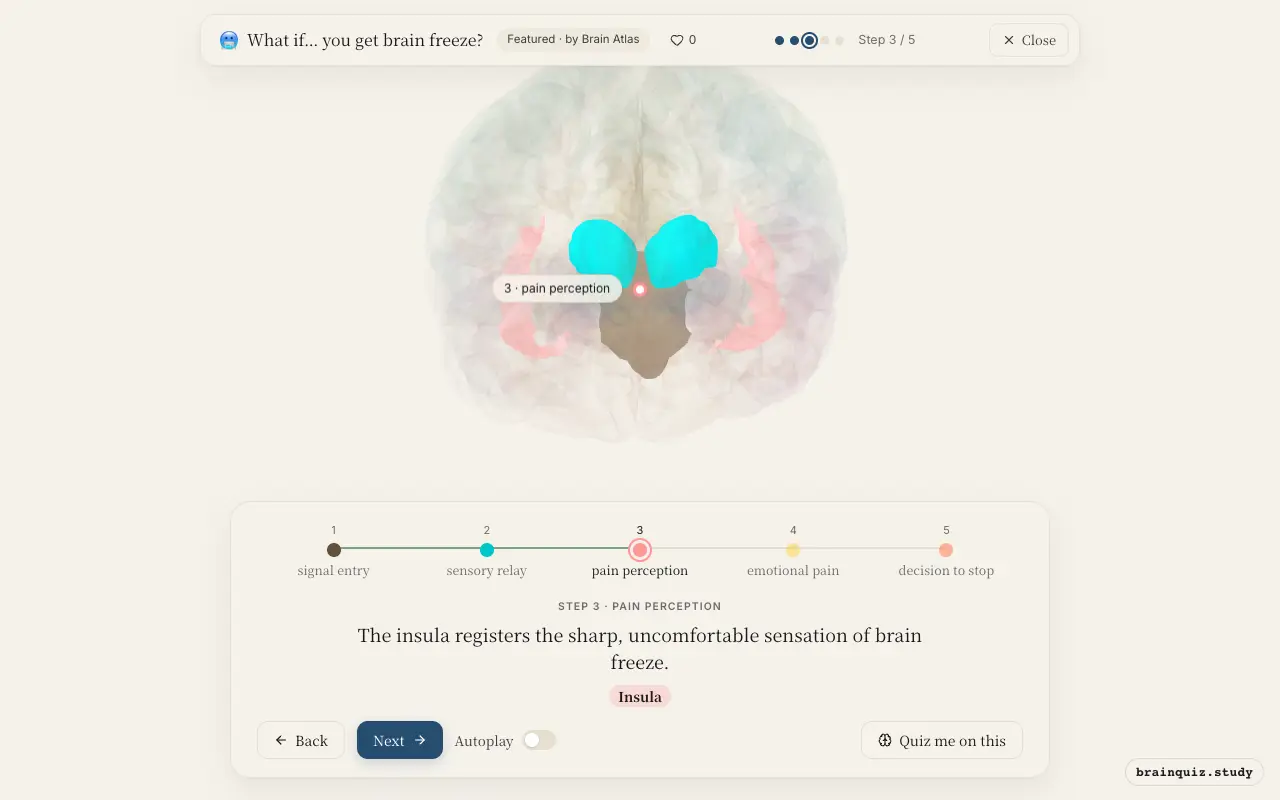
The insula is central to interoception and pain perception, mapping the body's internal state. It contributes to the feeling of intense cold pain in the head. Activation here makes the experience unpleasant and urgent. The posterior insula receives direct thalamic pain projections.
4. Anterior Cingulate Cortex: emotional pain
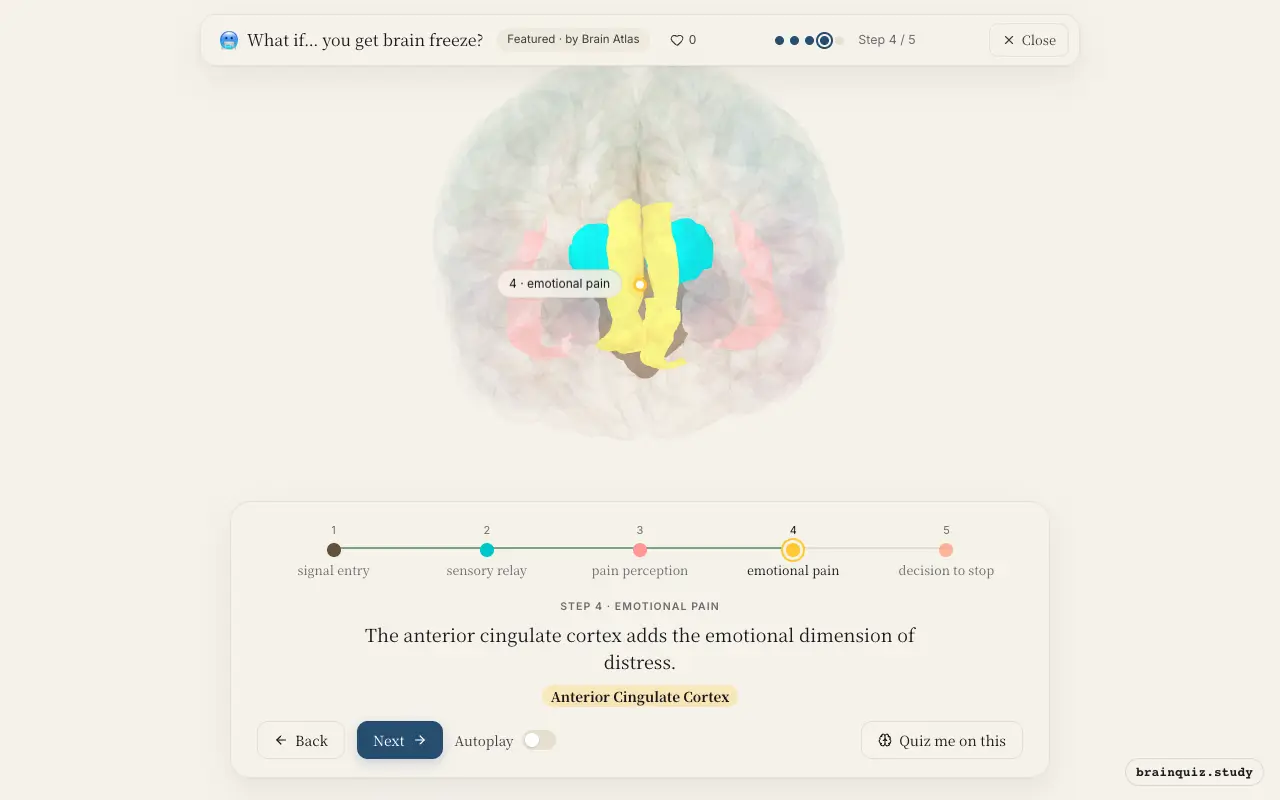
The ACC processes the affective component of pain, making brain freeze feel aversive. It helps motivate you to stop drinking the cold beverage. This region also monitors the conflict between continuing and stopping. It is part of the brain's salience network, tagging the pain as important.
5. Prefrontal Cortex: decision to stop
The prefrontal cortex integrates the pain signals with your goals, concluding that the cold stimulus is harmful. It sends commands to stop the behavior, such as moving the drink away. This executive control helps prevent further discomfort. The dorsolateral prefrontal cortex is especially active during such evaluations.
Good to know
- Brain freeze is also called sphenopalatine ganglioneuralgia.
- The pain is referred to the forehead because the trigeminal nerve's ophthalmic branch also innervates that area.
- Drinking warm water or pressing the tongue to the roof of the mouth can relieve brain freeze by warming the palate.
Brain freeze vs migraine
Both activate trigeminal pain pathways, but migraine involves widespread cortical and vascular changes and can last hours. Brain freeze is brief and self-limiting, with pain resolving once the palate warms. Migraine also includes sensitivity to light and sound.
Test yourself
Which nerve carries the cold pain signal from the palate to the brain?
What is the role of the anterior cingulate cortex in brain freeze?
Why does brain freeze cause pain in the forehead?
0 of 3 answered · 0 correct
Simplified: many regions work together at once, and this shows the main players in the order they act.