What happens in your brain when you get your heart broken?
Updated
The anterior cingulate registers social pain, the insula creates bodily distress, the nucleus accumbens craves the lost reward, the hippocampus replays memories, and the hypothalamus triggers stress.
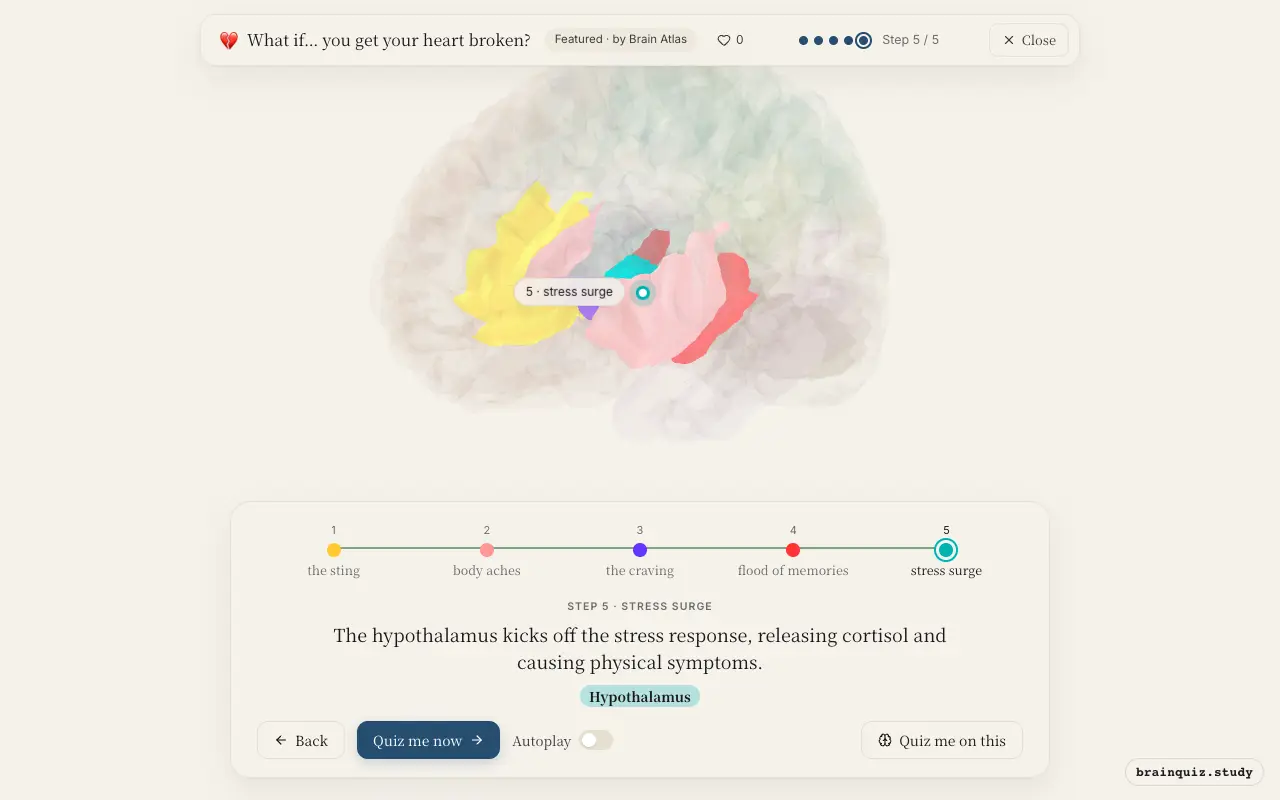
Watch it light up on the 3D brain
Brain regions that light up
| Order | Region | What it does here |
|---|---|---|
| 1 | Anterior Cingulate Cortex | Social rejection activates the anterior cingulate, which also processes physical pain. |
| 2 | Insula | The insula generates the physical sensations of heartbreak, like chest tightness or nausea. |
| 3 | Nucleus Accumbens | The nucleus accumbens, a reward center, experiences withdrawal when the partner is gone. |
| 4 | Hippocampus | The hippocampus retrieves memories of the relationship, reinforcing the sense of loss. |
| 5 | Hypothalamus | The hypothalamus kicks off the stress response, releasing cortisol and causing physical symptoms. |
1. Anterior Cingulate Cortex: the sting
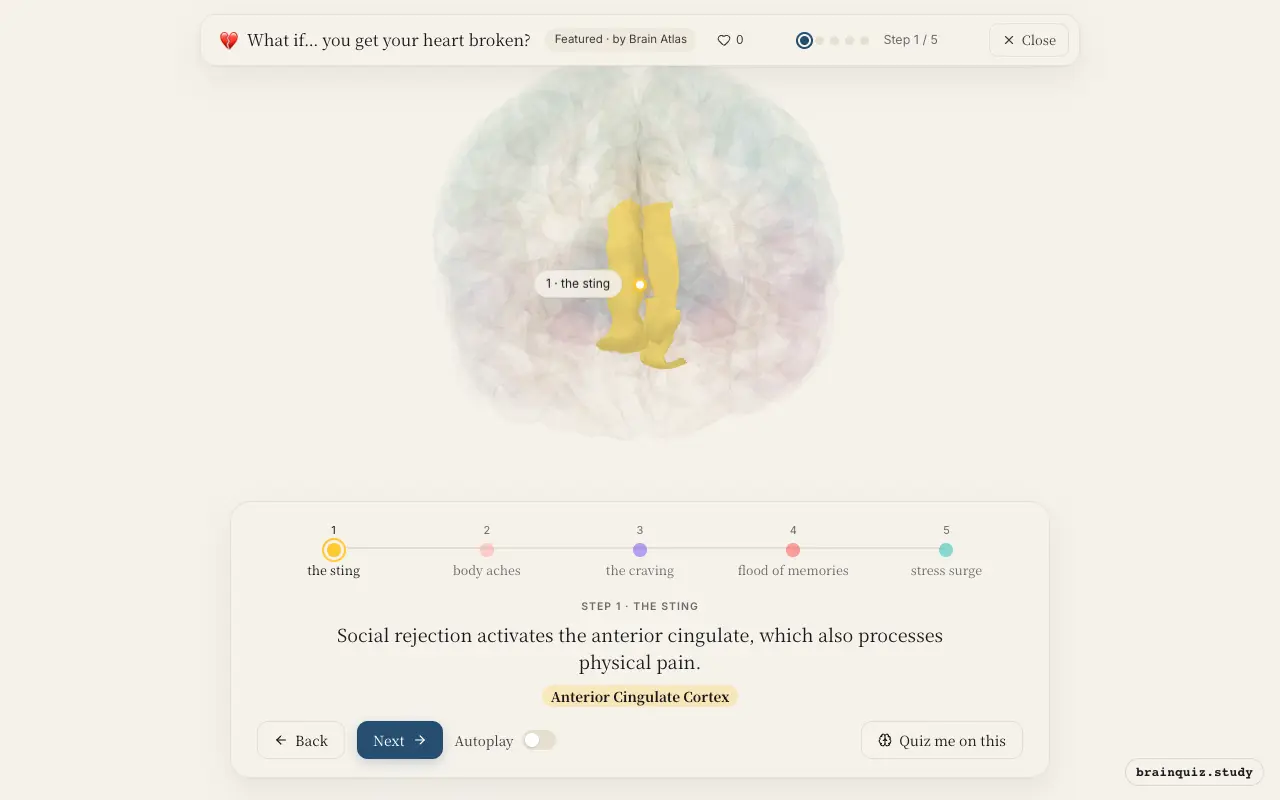
The anterior cingulate cortex is a hub for pain processing, both physical and social. Heartbreak triggers activity here as the brain interprets the loss as a painful event. This region signals the distress of separation, making the emotional hurt feel real.
2. Insula: body aches
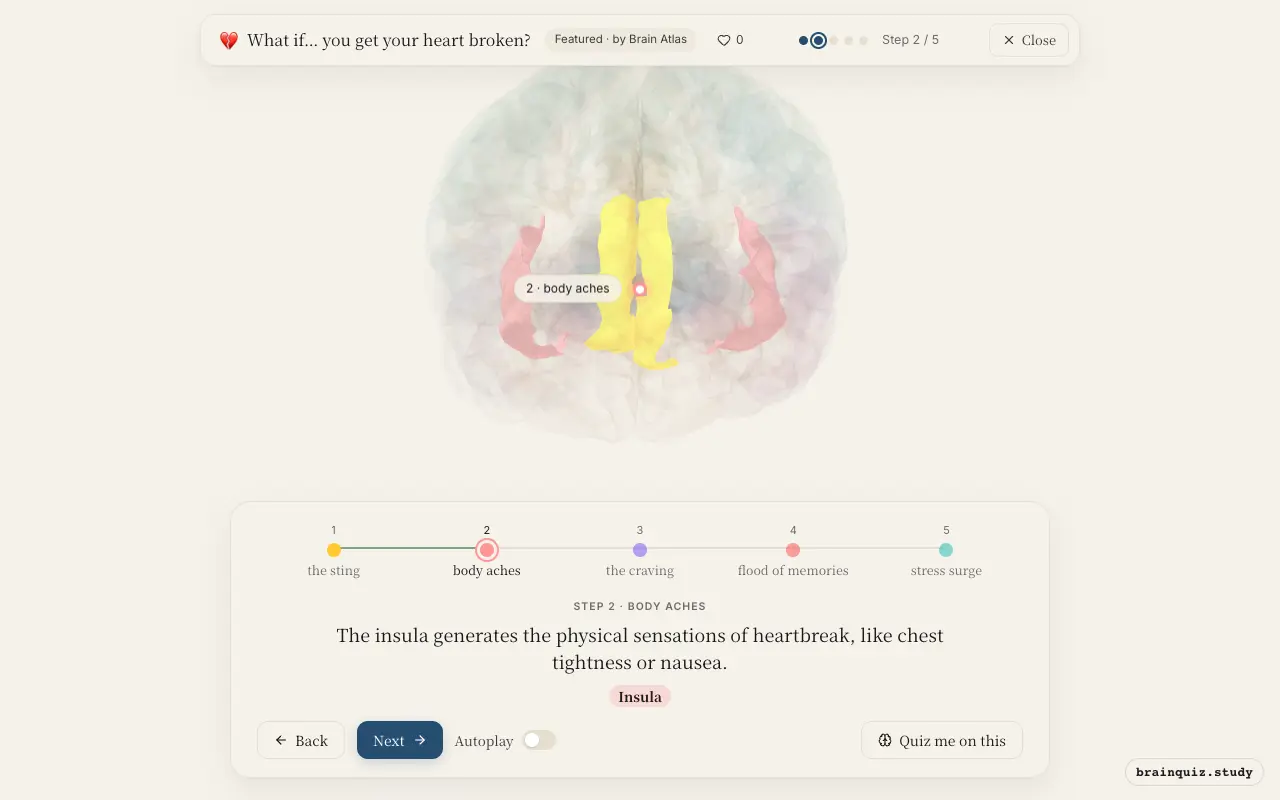
The insula integrates internal bodily states and emotions, producing the visceral feelings that accompany heartbreak. It receives signals from the body and creates the conscious experience of a 'broken heart,' such as a heavy chest or stomach knots. This interoceptive signal amplifies the emotional pain.
3. Nucleus Accumbens: the craving
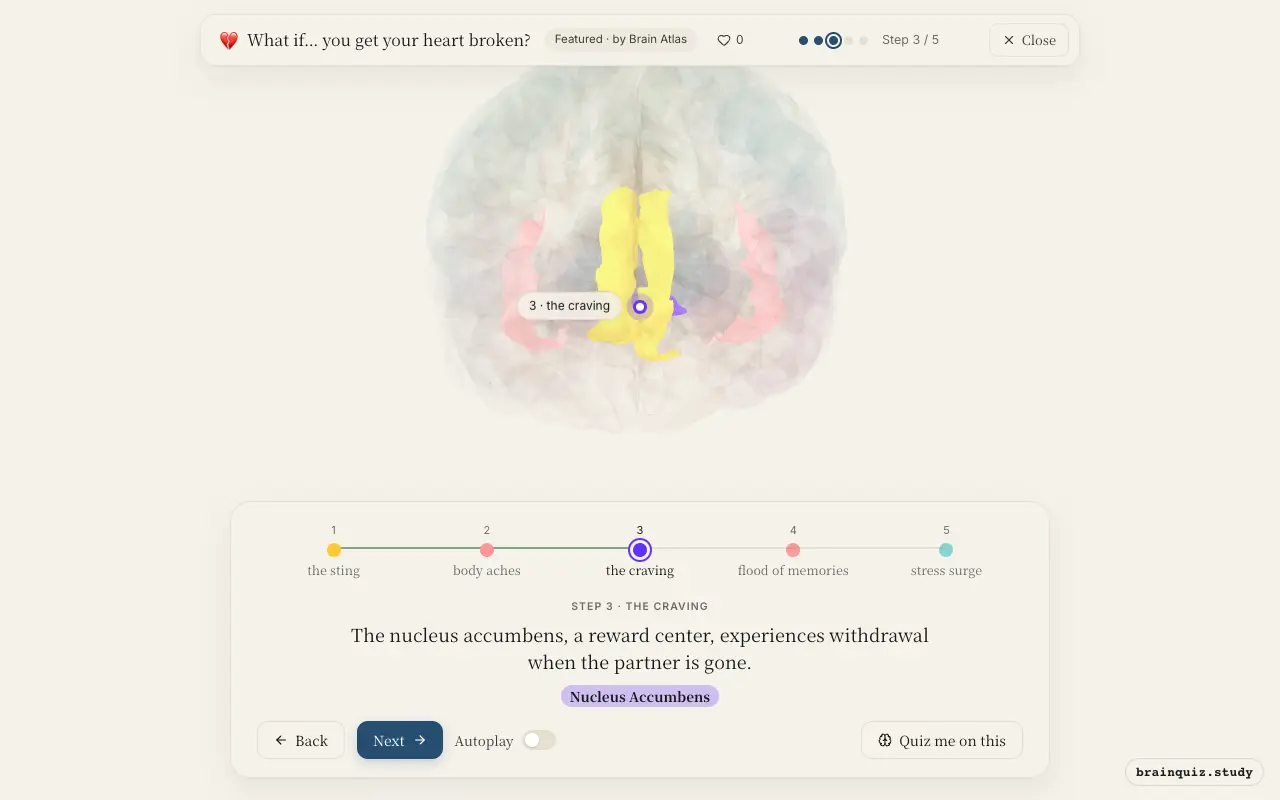
Romantic love activates the brain's reward system, particularly the nucleus accumbens, which is rich in dopamine. After a breakup, this region continues to expect the reward of the partner but receives none, creating a craving similar to drug withdrawal. This drives obsessive thoughts and urges to reconnect.
4. Hippocampus: flood of memories
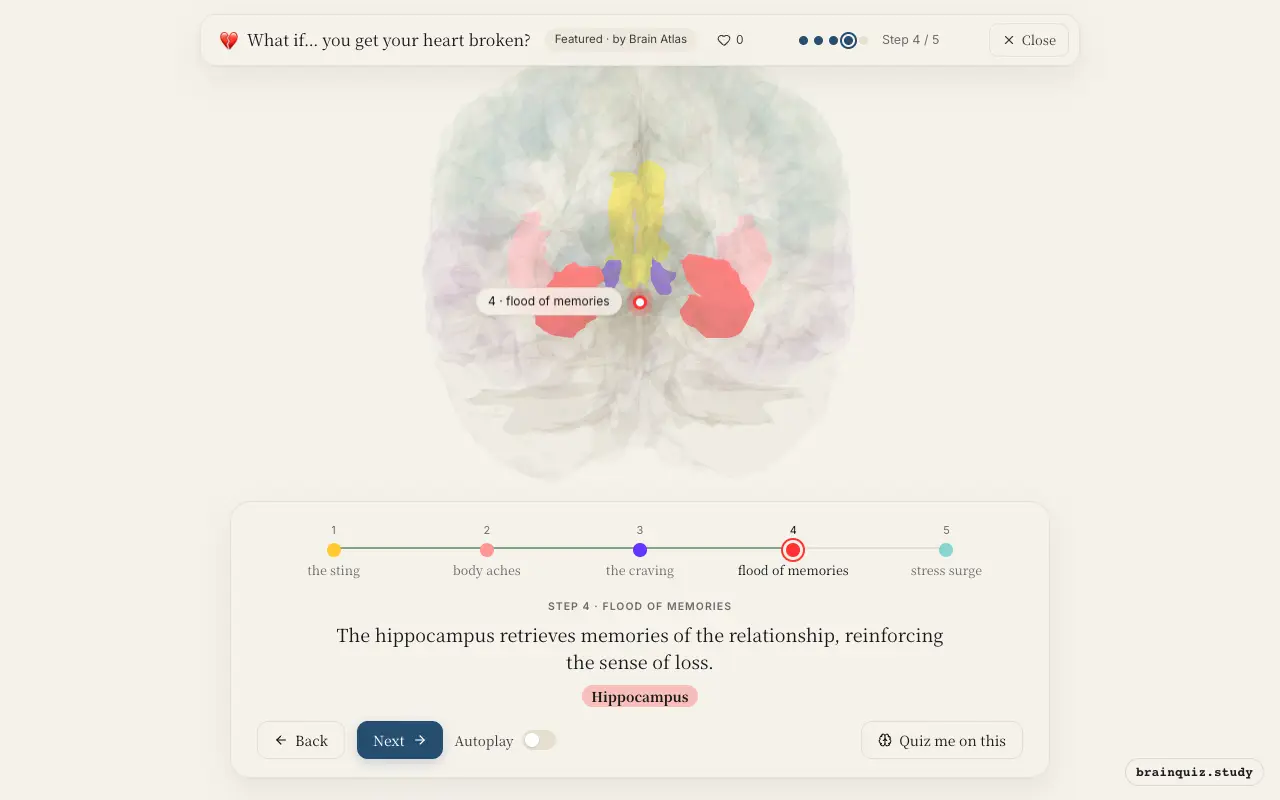
The hippocampus is crucial for memory consolidation and retrieval. When reminded of the ex, it activates and brings back detailed autobiographical memories, making the person relive happy moments. This memory replay intensifies the emotional pain and prolongs the grieving process.
5. Hypothalamus: stress surge
The hypothalamus coordinates the body's stress response by activating the sympathetic nervous system and the HPA axis. This leads to the release of stress hormones like cortisol, causing symptoms such as loss of appetite, sleep disturbances, and a weakened immune system. The body stays in a state of high alert, contributing to the feeling of being unwell.
Good to know
- Studies suggest that the brain processes social rejection in overlapping regions with physical pain, which may explain why heartbreak feels physically painful.
- Heartbreak activates some of the same reward circuits as addiction, leading to cravings and obsessive thoughts about the ex-partner.
- Chronic stress may reduce hippocampal volume, but evidence specific to heartbreak is lacking.
Heartbreak vs. Physical Pain
While both involve the anterior cingulate and insula, physical pain also strongly engages the somatosensory cortex for bodily location, whereas heartbreak primarily activates emotion and reward circuits. Heartbreak additionally involves the nucleus accumbens and hypothalamus, reflecting its unique blend of craving and stress.
Test yourself
Which brain region is most directly involved in processing the social pain of heartbreak?
Why does heartbreak feel like drug withdrawal?
What role does the hypothalamus play in heartbreak?
0 of 3 answered · 0 correct
Simplified: many regions work together at once, and this shows the main players in the order they act.