What happens in your brain when you hear nails on a chalkboard?
Updated
Your brainstem triggers a startle reflex, the amygdala tags the sound as aversive, the auditory cortex identifies the screech, and the insula and anterior cingulate generate intense disgust and an urge to escape.
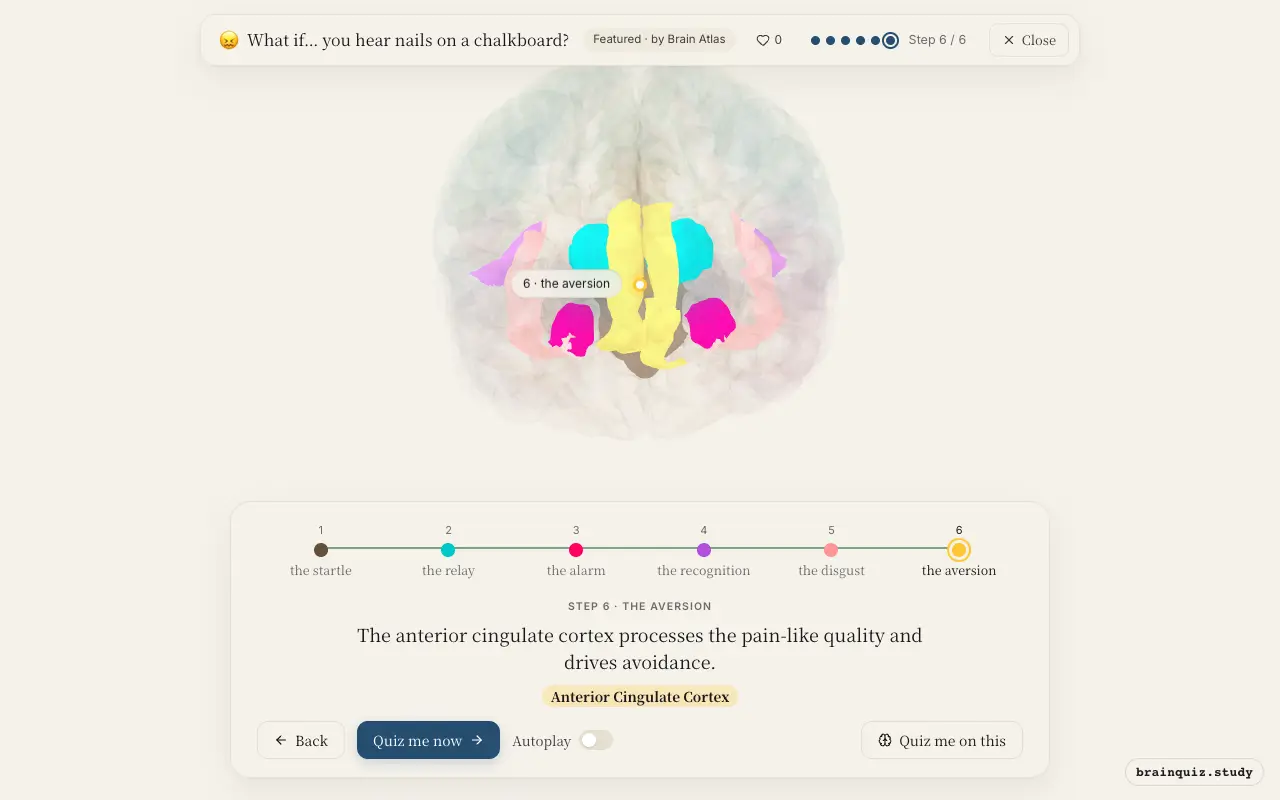
Watch it light up on the 3D brain
Brain regions that light up
| Order | Region | What it does here |
|---|---|---|
| 1 | Brainstem | A sudden harsh sound triggers an automatic startle reflex in your brainstem. |
| 2 | Thalamus | The thalamus routes the sound to both the amygdala and the auditory cortex. |
| 3 | Amygdala | The amygdala instantly flags the sound as aversive, triggering a fear-like response. |
| 4 | Auditory Cortex | Your auditory cortex analyzes the screech's pitch and harshness. |
| 5 | Insula | The insula generates an intense feeling of disgust and physical unease. |
| 6 | Anterior Cingulate Cortex | The anterior cingulate cortex processes the pain-like quality and drives avoidance. |
1. Brainstem: the startle
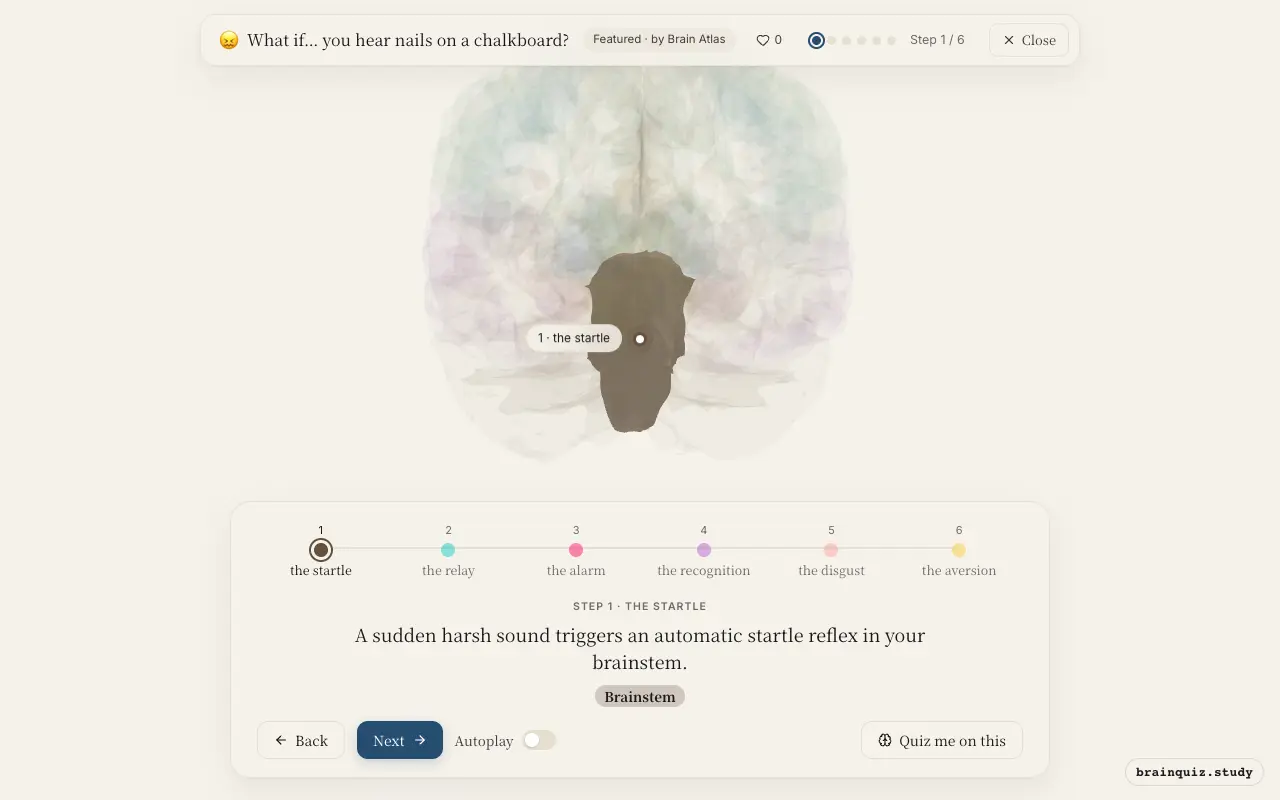
The brainstem's reticular formation and cochlear nuclei receive the sound signal and initiate a rapid defensive response. This reflex tenses your neck and shoulders before you consciously register the noise, preparing you to react. It is a hard-wired protective mechanism.
2. Thalamus: the relay
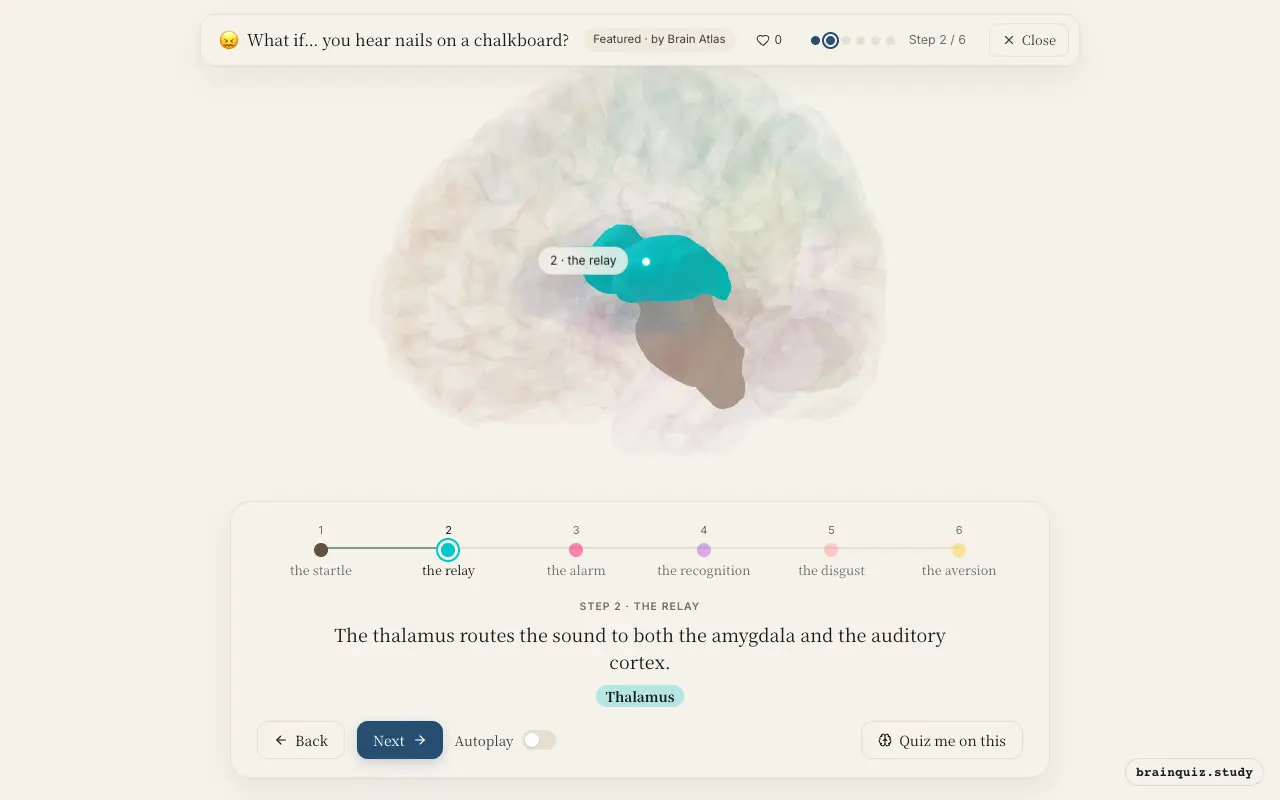
The medial geniculate nucleus of the thalamus sends auditory information along two pathways. A fast subcortical route projects directly to the amygdala, while a slower route sends signals to the auditory cortex for detailed analysis. This dual routing explains why you recoil before fully recognizing the sound.
3. Amygdala: the alarm
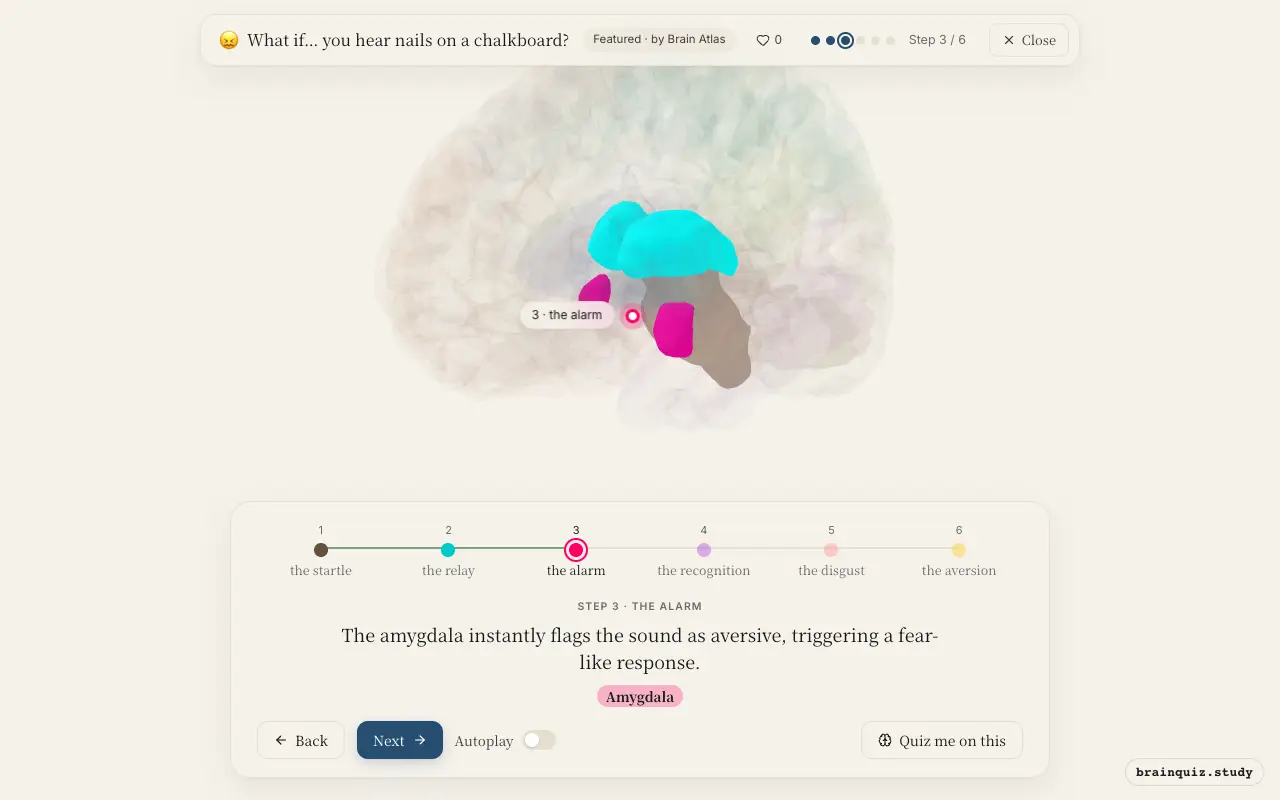
The amygdala receives the rapid input and assigns emotional significance to the sound. It activates the sympathetic nervous system, raising your heart rate and priming your body to escape. This neural response is automatic and occurs within milliseconds.
4. Auditory Cortex: the recognition
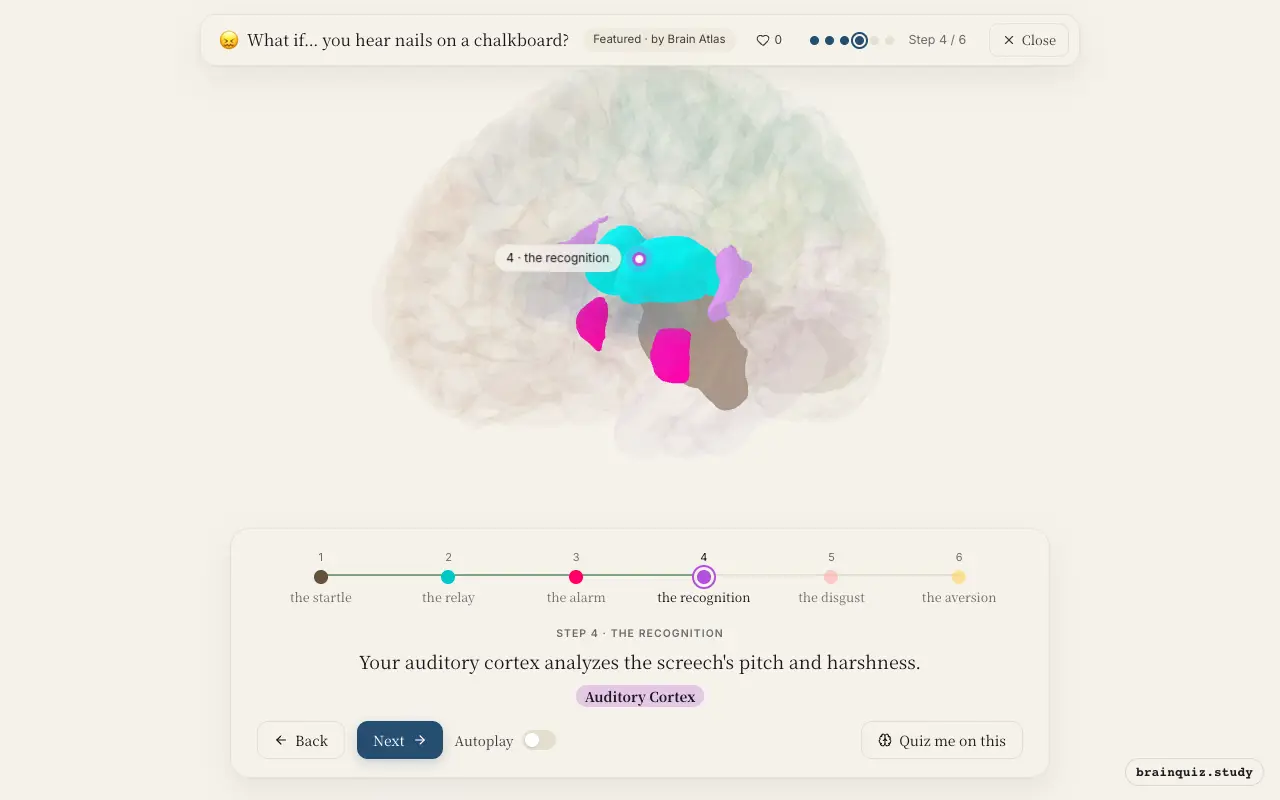
As the slower cortical pathway catches up, the auditory cortex processes the sound's physical properties, such as its high-frequency, dissonant components. It recognizes the pattern as a familiar, unpleasant noise—nails on a chalkboard. This conscious awareness adds context to the initial alarm.
5. Insula: the disgust
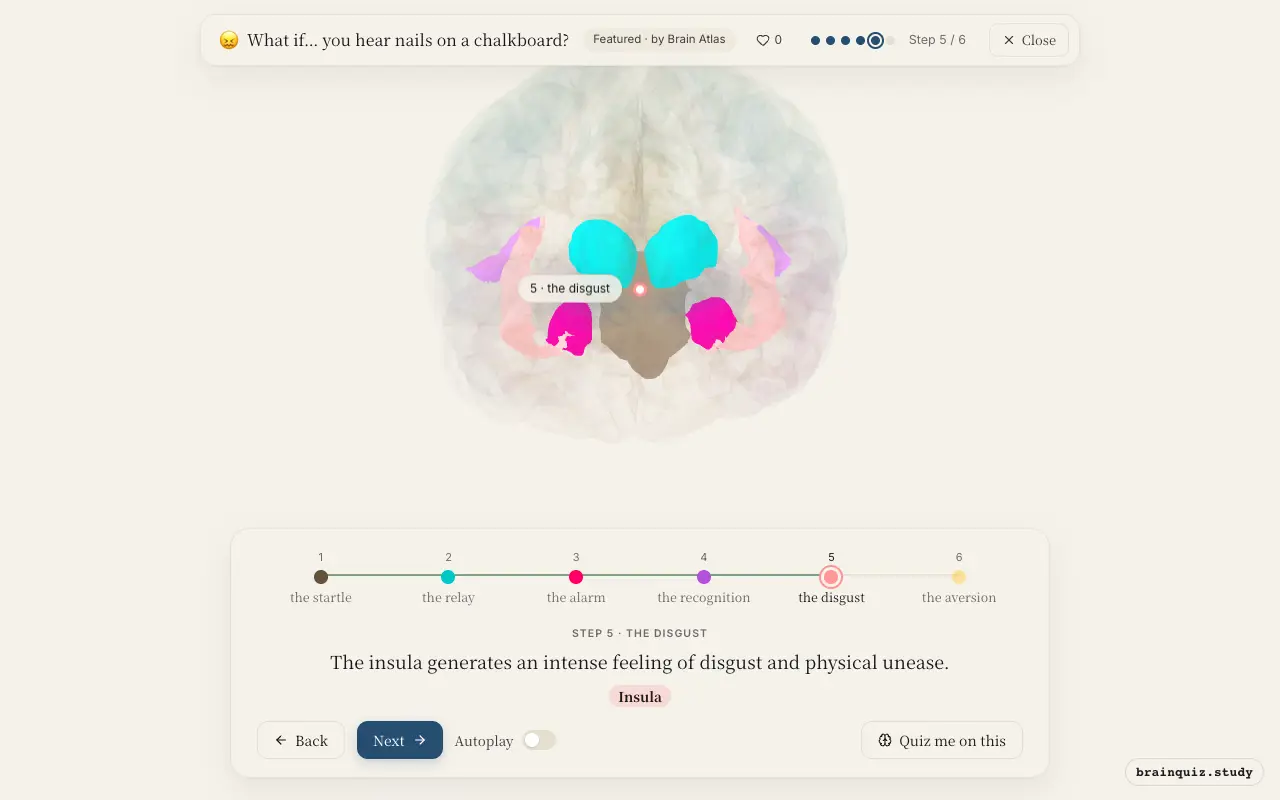
The insula integrates the sensory and emotional information to produce a visceral sense of revulsion. It monitors your internal bodily state, and the screeching sound triggers a mismatch that registers as unpleasant. This feeling is the core of why the sound is so intolerable.
6. Anterior Cingulate Cortex: the aversion
The anterior cingulate cortex is active during both physical pain and social or emotional distress. The harsh sound activates this region, which signals that the stimulus is harmful and motivates you to cover your ears or leave. This pain-like response ensures you avoid the sound in the future.
Good to know
- The amygdala receives a rapid 'low road' auditory input from the thalamus, bypassing the cortex for faster emotional reactions.
- The acoustic startle reflex has a latency of about 30–50 milliseconds, making it one of the fastest motor responses in humans.
- High-frequency, dissonant sounds activate the anterior cingulate cortex similarly to physical pain.
Nails on chalkboard vs. unexpected loud noise
A sudden loud bang triggers a startle reflex and fear via the amygdala, but without the same level of disgust. The nails-on-chalkboard sound also strongly engages the insula and anterior cingulate, producing a unique blend of revulsion and pain-like aversion.
Test yourself
Which brain region triggers the rapid aversive response before you consciously recognize the sound?
The subjective feeling of disgust is most associated with which region?
Which neural pathway allows the amygdala to respond to a sound faster than the auditory cortex?
0 of 3 answered · 0 correct
Simplified: many regions work together at once, and this shows the main players in the order they act.