What happens in your brain when you lose a match?
Updated
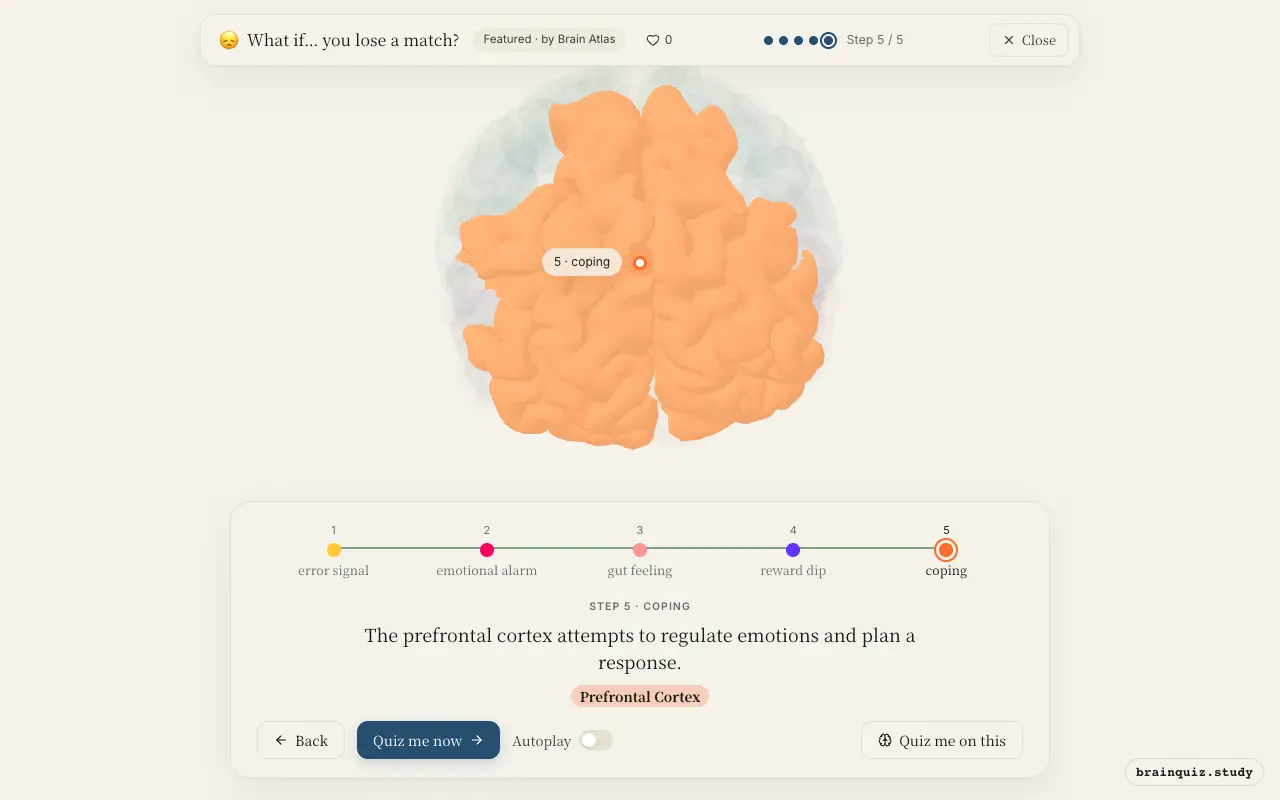
Anterior cingulate detects the loss as an error, amygdala triggers emotional distress, insula creates a visceral sense of disappointment, and prefrontal cortex tries to regulate while nucleus accumbens shows reduced reward activity.
Watch it light up on the 3D brain
Brain regions that light up
| Order | Region | What it does here |
|---|---|---|
| 1 | Anterior Cingulate Cortex | The anterior cingulate flags the loss as a mismatch between expected and actual outcome. |
| 2 | Amygdala | The amygdala reacts to the negative outcome, triggering fear and distress. |
| 3 | Insula | The insula integrates bodily signals that contribute to feelings of disappointment and disgust. |
| 4 | Nucleus Accumbens | The nucleus accumbens shows reduced activity, reflecting loss of expected reward. |
| 5 | Prefrontal Cortex | The prefrontal cortex attempts to regulate emotions and plan a response. |
1. Anterior Cingulate Cortex: error signal
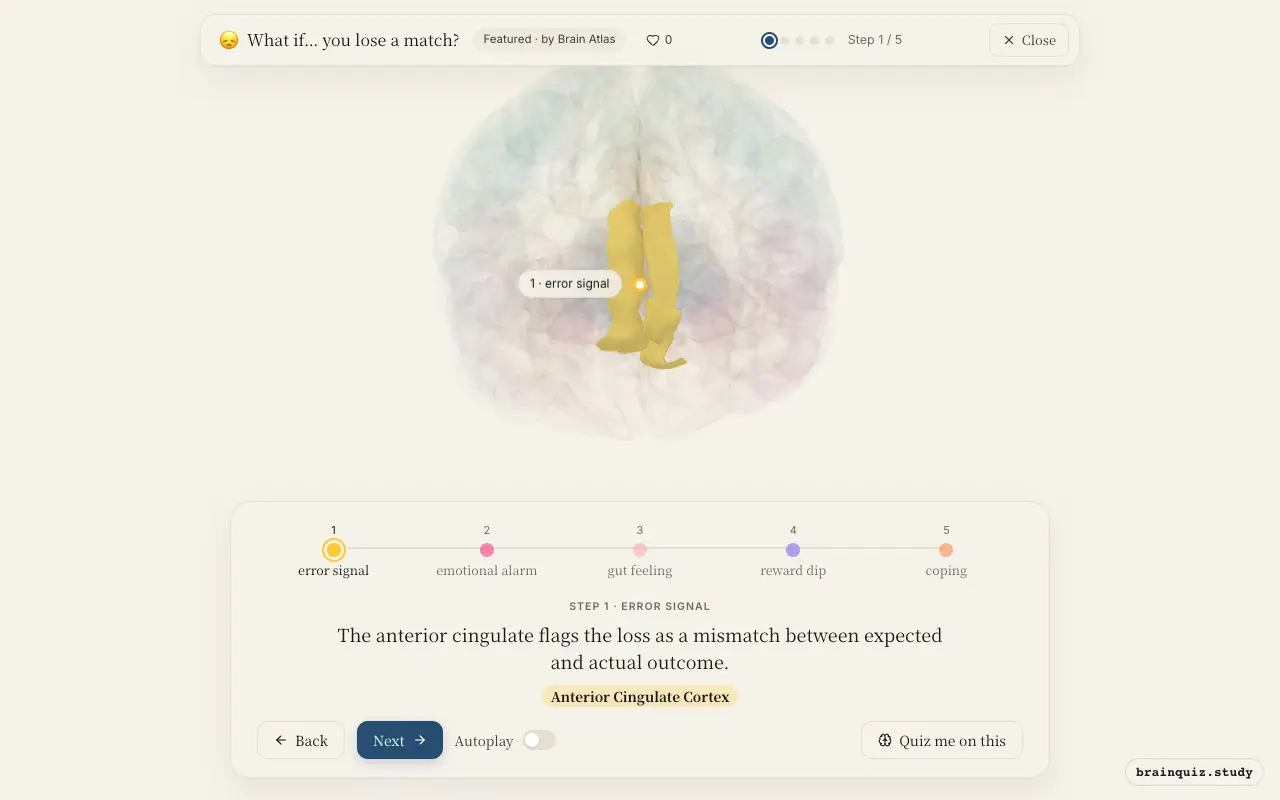
This region monitors conflicts and errors. When you expected to win but lost, it fires strongly, signaling a negative prediction error. This activity helps update future expectations and motivates avoidance of similar losses.
2. Amygdala: emotional alarm
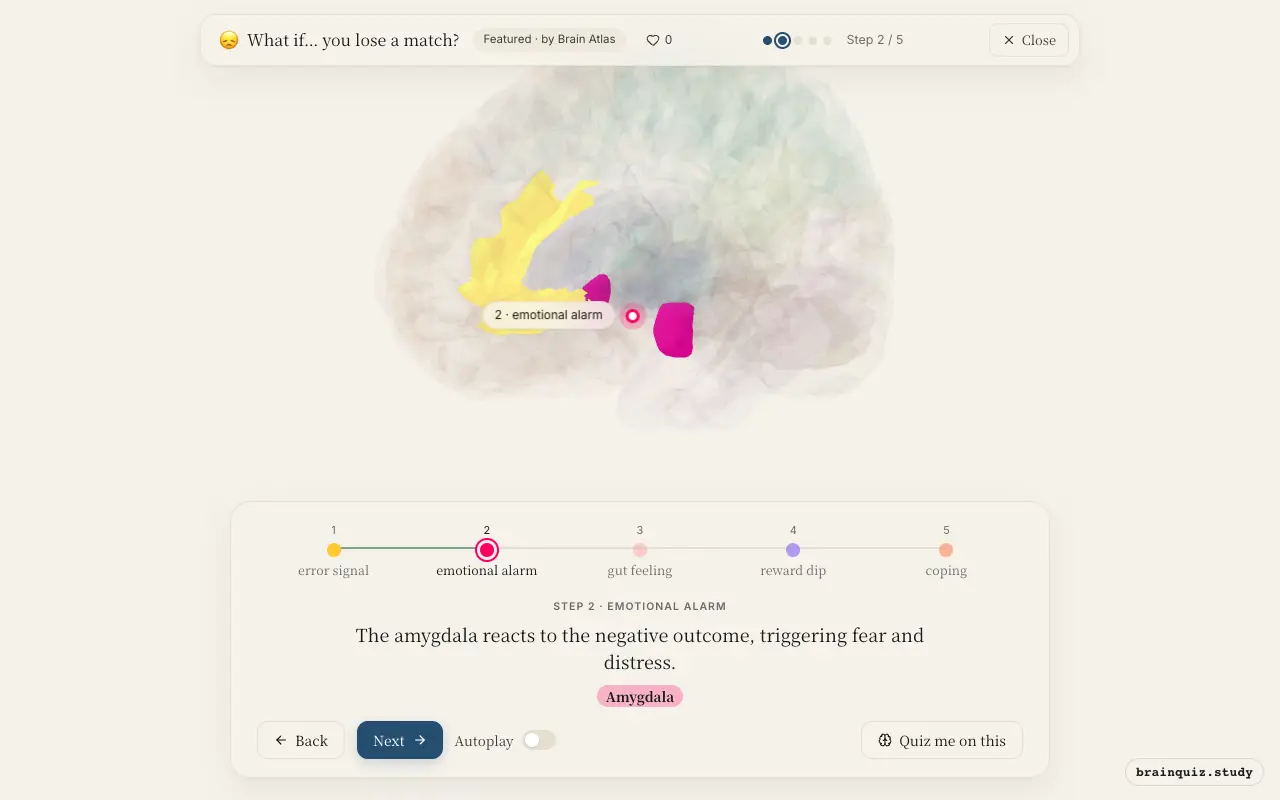
The amygdala processes emotionally salient events, especially threats. Losing can feel like a social threat, so the amygdala activates the stress response. This may release cortisol and heighten arousal, making the loss feel intensely unpleasant.
3. Insula: gut feeling
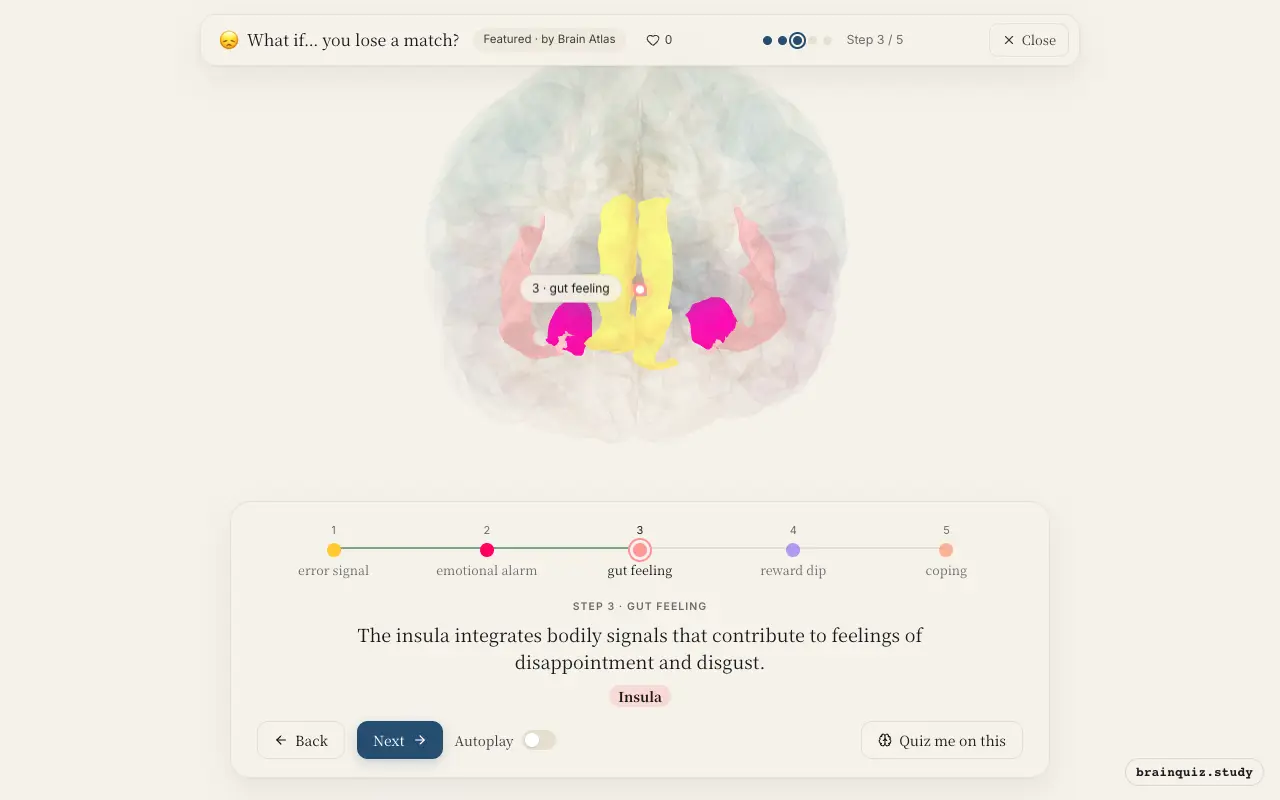
The insula integrates interoceptive signals from the body. After a loss, it may produce a sinking feeling in the stomach or tightness in the chest. This visceral awareness contributes to the conscious experience of negative emotion.
4. Nucleus Accumbens: reward dip
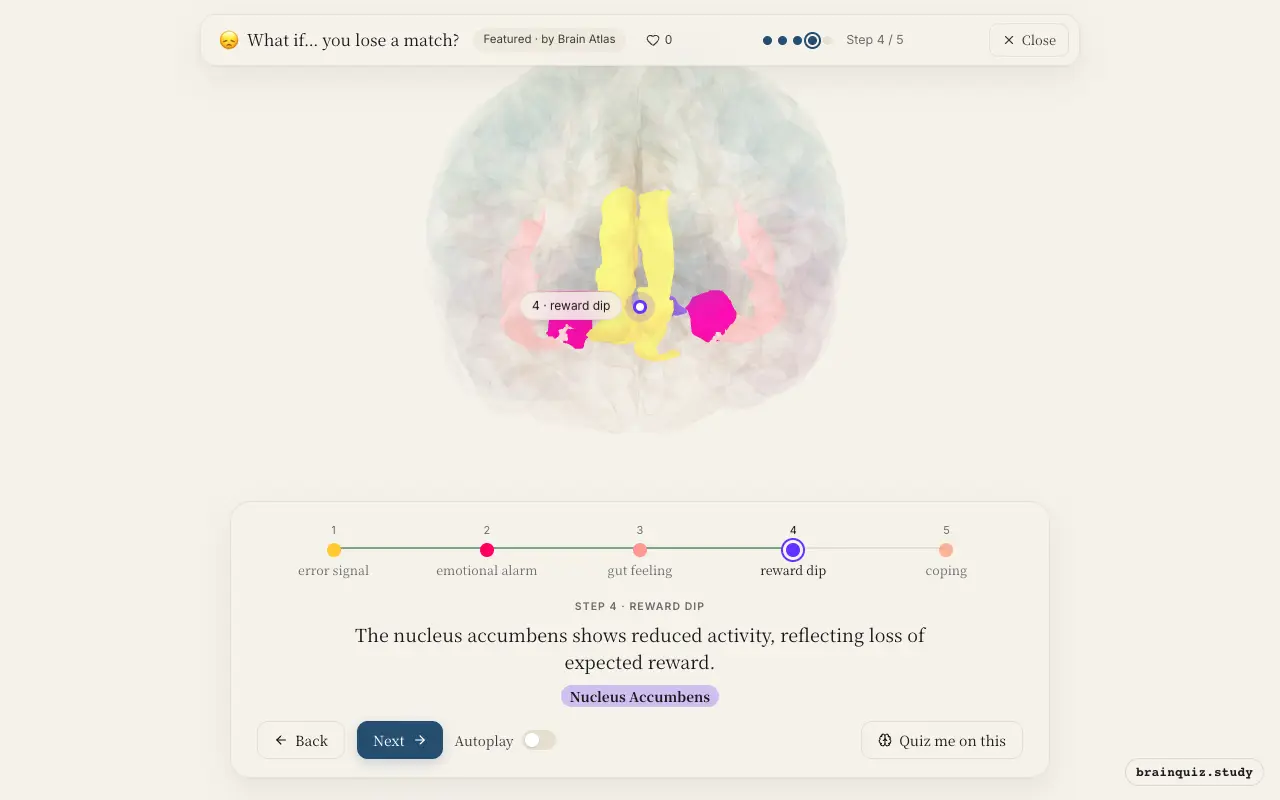
The nucleus accumbens is a key part of the brain's reward circuit. Winning normally increases dopamine here, but losing suppresses it. This drop in dopaminergic signaling makes the outcome feel unrewarding and can lower motivation.
5. Prefrontal Cortex: coping
The prefrontal cortex supports executive functions like cognitive reappraisal. It may try to reframe the loss as a learning opportunity or suppress impulsive reactions. Its engagement helps you maintain composure and decide how to move forward.
Good to know
- The anterior cingulate cortex is consistently activated by errors and negative feedback in neuroimaging studies.
- Losing a competition can trigger a drop in dopamine in the striatum, which includes the nucleus accumbens.
- The amygdala's response to social loss may overlap with its response to physical threats, but the degree of similarity is debated.
Losing vs. Winning a Match
Winning activates reward regions like the nucleus accumbens and ventral tegmental area, increasing dopamine. Losing instead engages error detection and threat circuits, with reduced reward activity. Both outcomes recruit the prefrontal cortex for learning, but the emotional valence differs sharply.
Test yourself
Which brain region first detects that you have lost the match?
What happens to dopamine activity in the nucleus accumbens after a loss?
How does the prefrontal cortex contribute to coping with a loss?
0 of 3 answered · 0 correct
Simplified: many regions work together at once, and this shows the main players in the order they act.