What happens in your brain when you quit smoking?
Updated
Quitting smoking triggers withdrawal: reduced dopamine in nucleus accumbens fuels craving, anterior cingulate and insula register the urge and bodily discomfort, prefrontal cortex battles to resist, while amygdala adds anxiety.
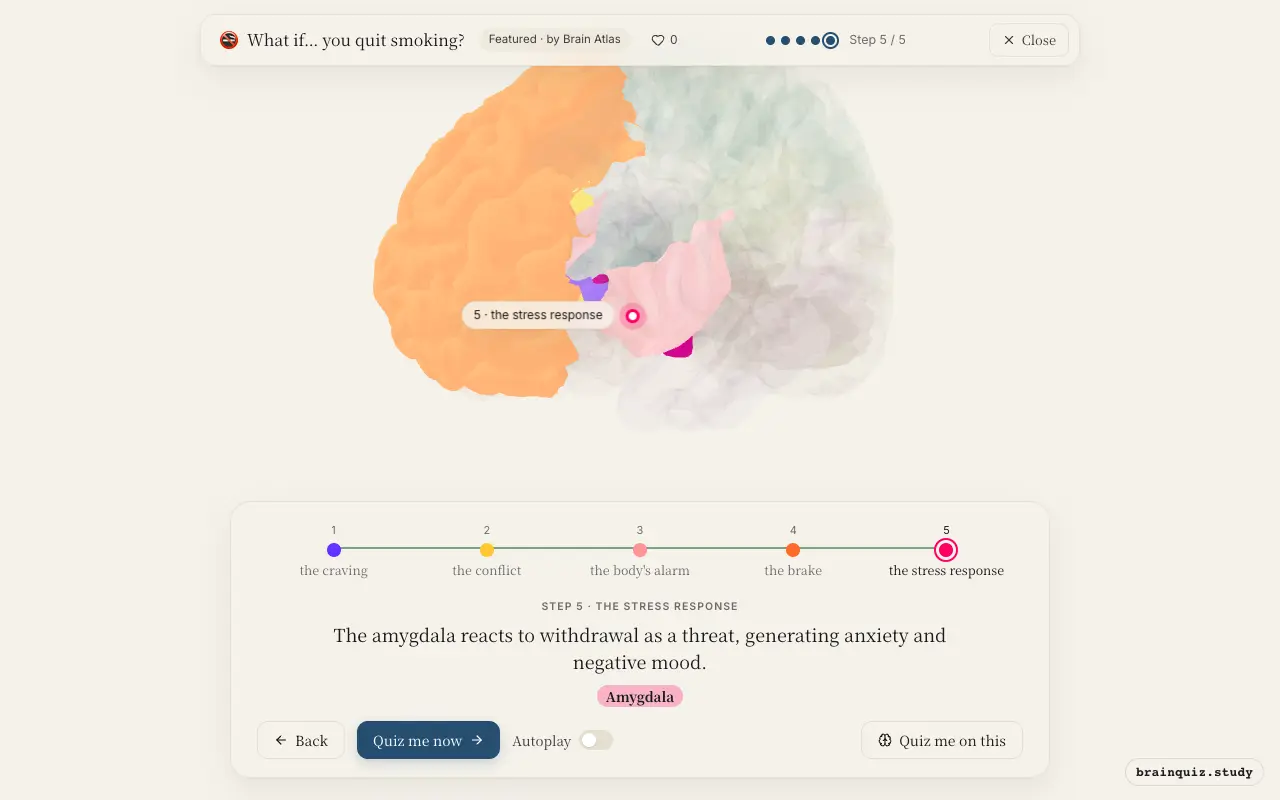
Watch it light up on the 3D brain
Brain regions that light up
| Order | Region | What it does here |
|---|---|---|
| 1 | Nucleus Accumbens | Nicotine no longer boosts dopamine, so reward signaling drops and craving begins. |
| 2 | Anterior Cingulate Cortex | The anterior cingulate detects mismatch between wanting to smoke and trying to quit. |
| 3 | Insula | The insula senses withdrawal discomfort like irritability, anxiety, and physical unease. |
| 4 | Prefrontal Cortex | The prefrontal cortex attempts to suppress the craving and maintain the decision to quit. |
| 5 | Amygdala | The amygdala reacts to withdrawal as a threat, generating anxiety and negative mood. |
1. Nucleus Accumbens: the craving
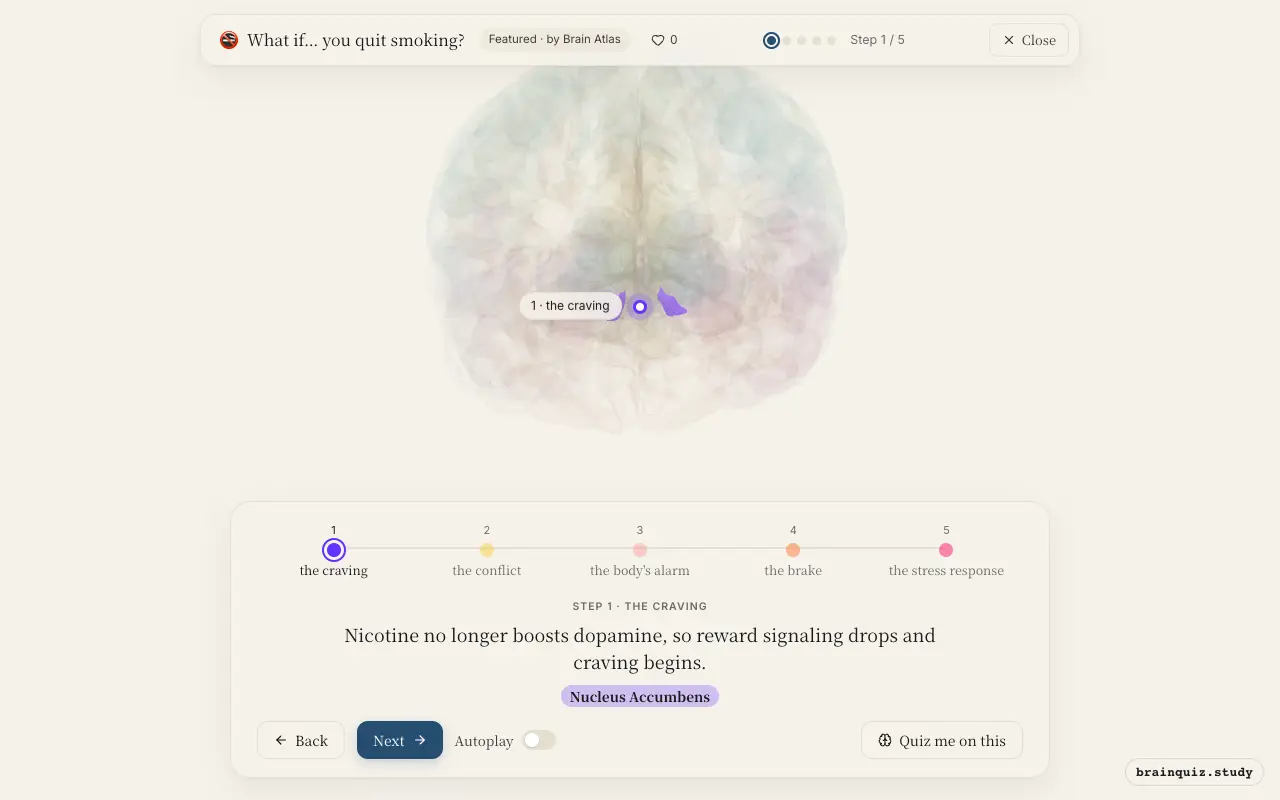
The nucleus accumbens is central to reward and motivation. Chronic nicotine use alters dopamine signaling here; quitting removes that stimulation, leaving a relative dopamine deficit that produces intense craving for the drug.
2. Anterior Cingulate Cortex: the conflict
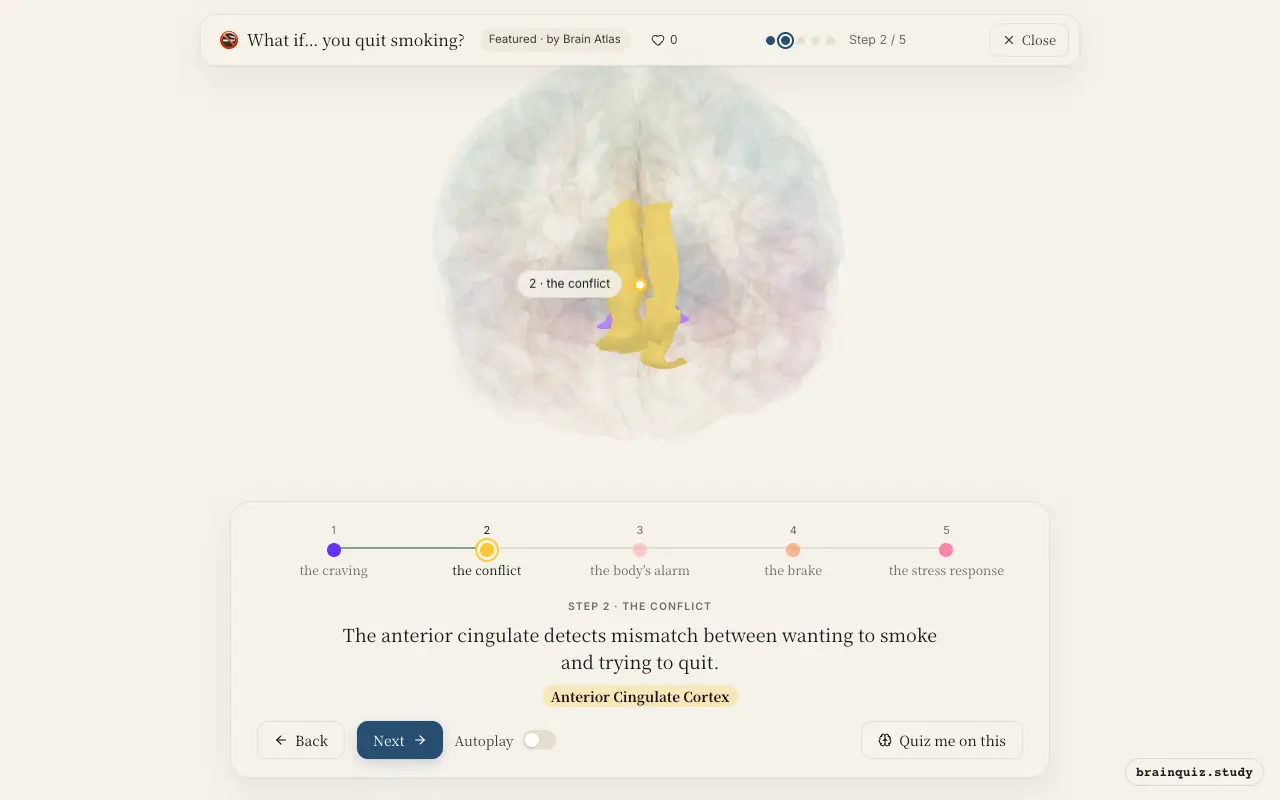
This region monitors conflict and error. During withdrawal it becomes highly active as the brain registers the discrepancy between the automatic desire for nicotine and the conscious goal of abstinence, contributing to the feeling of internal struggle.
3. Insula: the body's alarm
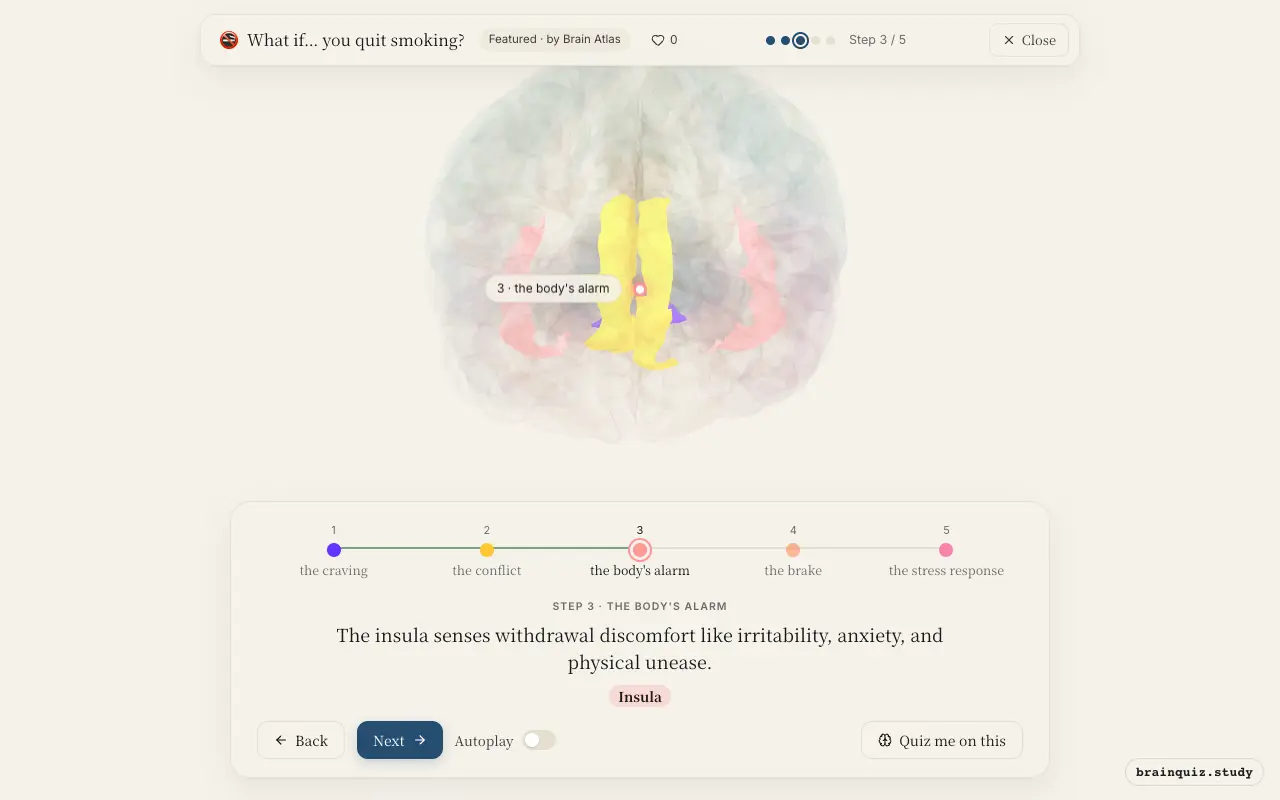
The insula processes interoceptive signals from the body. Heightened insula activity during nicotine withdrawal makes these unpleasant bodily sensations conscious, which amplifies the urge to smoke to relieve them.
4. Prefrontal Cortex: the brake
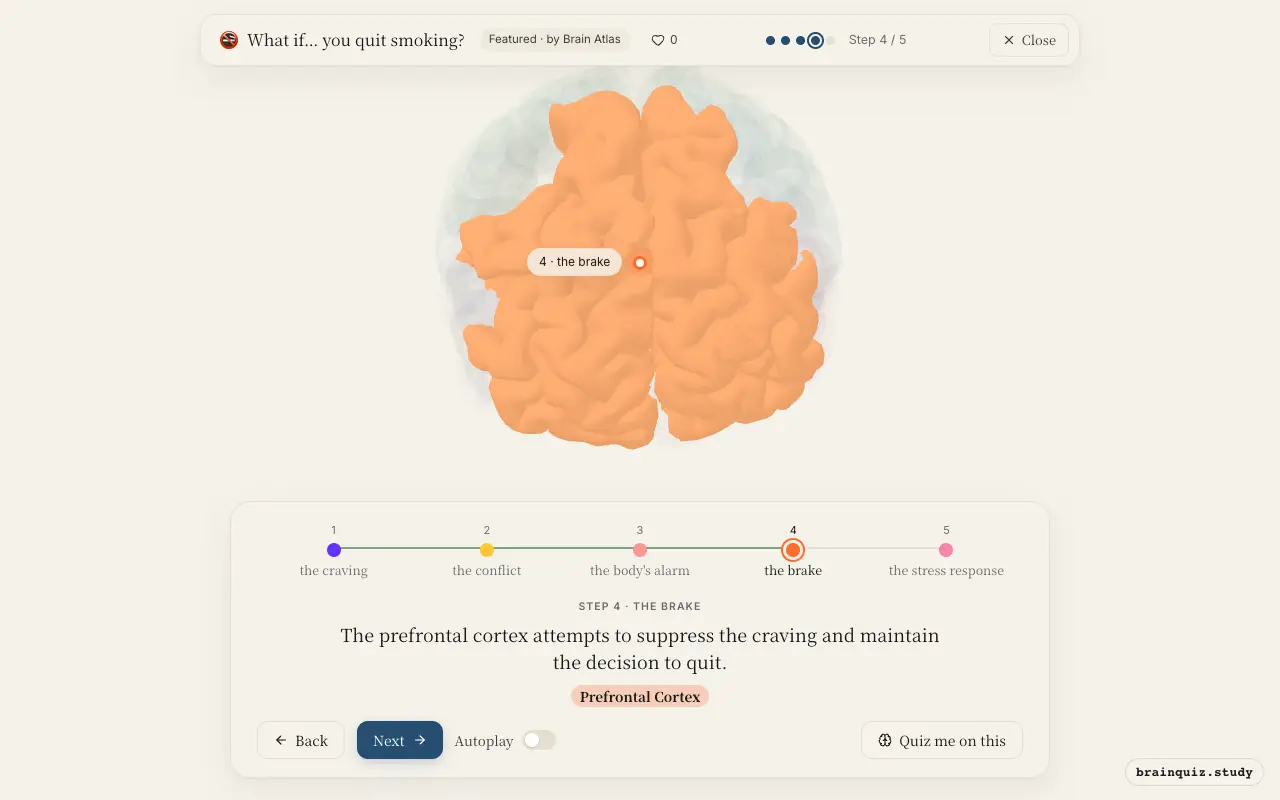
Executive control areas in the prefrontal cortex, especially dorsolateral regions, work to inhibit the automatic urge generated by subcortical reward circuits. This top-down control is weakened during withdrawal, making self-control more effortful.
5. Amygdala: the stress response
Nicotine withdrawal activates stress systems including the amygdala. This region's threat detection circuitry becomes sensitized, producing feelings of anxiety, irritability, and emotional distress that often accompany quitting.
Good to know
- Nicotine withdrawal symptoms peak within the first week and can include irritability, anxiety, difficulty concentrating, and increased appetite.
- Cue-induced craving in smokers is associated with increased activity in the insula and anterior cingulate cortex.
- Dopamine levels in the nucleus accumbens drop significantly during nicotine withdrawal, which drives the urge to resume smoking.
Nicotine vs alcohol withdrawal
Both involve dopamine drops in reward circuits, but nicotine withdrawal more directly engages the insula for physical craving. Alcohol withdrawal involves greater GABA and glutamate dysregulation, leading to more severe autonomic and neurological symptoms.
Test yourself
Which brain region's reduced dopamine activity is most closely linked to nicotine craving?
What is the primary role of the insula during smoking cessation?
Which prefrontal cortical region is thought to help resist the urge to smoke?
0 of 3 answered · 0 correct
Simplified: many regions work together at once, and this shows the main players in the order they act. For learning only, not medical advice.