What happens in your brain when you win a race?
Updated
Winning activates the motor cortex and cerebellum for movement, then the ventral tegmental area releases dopamine into the nucleus accumbens, driving the pleasure of victory, while the orbitofrontal cortex evaluates the reward.
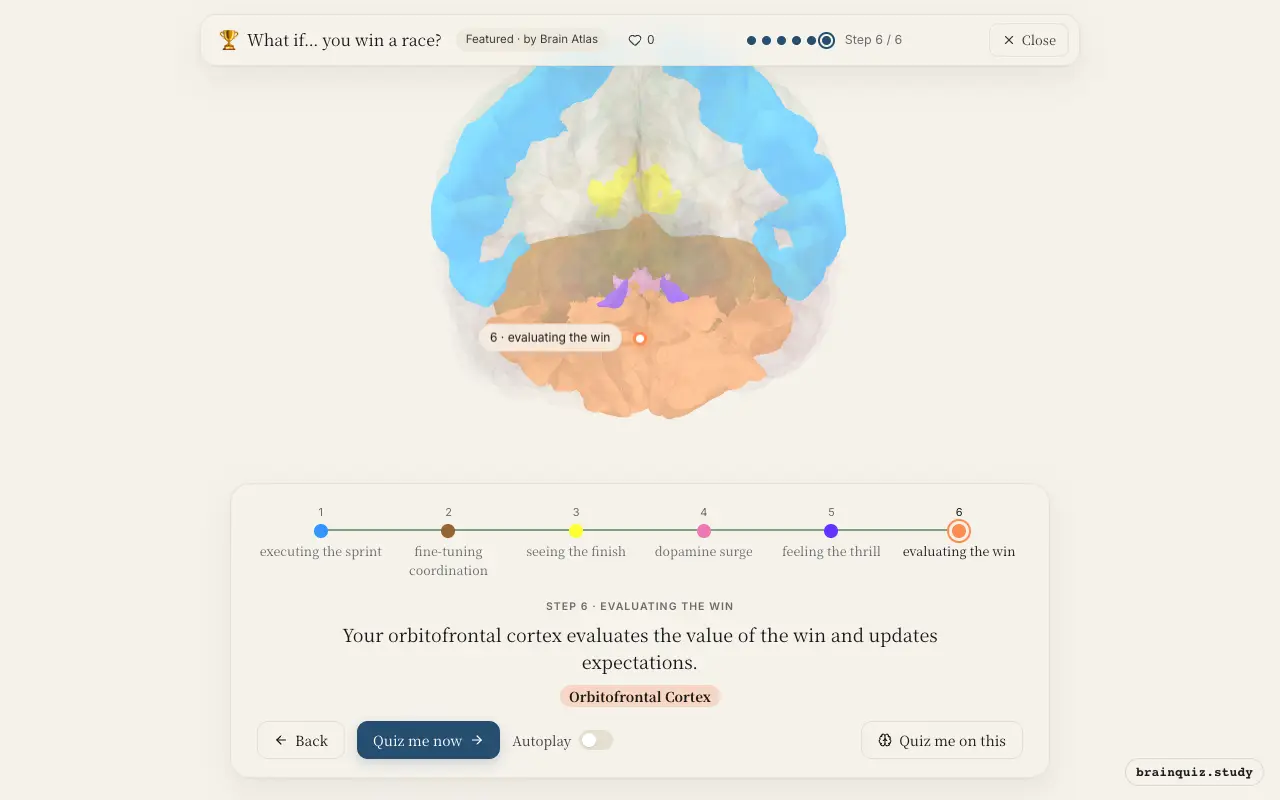
Watch it light up on the 3D brain
Brain regions that light up
| Order | Region | What it does here |
|---|---|---|
| 1 | Motor Cortex | Your motor cortex sends commands to your muscles to keep you running fast. |
| 2 | Cerebellum | Your cerebellum adjusts timing and balance to keep your stride smooth. |
| 3 | Visual Cortex | Your visual cortex processes the finish line and confirms you have won. |
| 4 | Ventral Tegmental Area | The ventral tegmental area releases dopamine when you realize you won. |
| 5 | Nucleus Accumbens | Dopamine in the nucleus accumbens signals reward and reinforces winning. |
| 6 | Orbitofrontal Cortex | Your orbitofrontal cortex evaluates the value of the win and updates expectations. |
1. Motor Cortex: executing the sprint
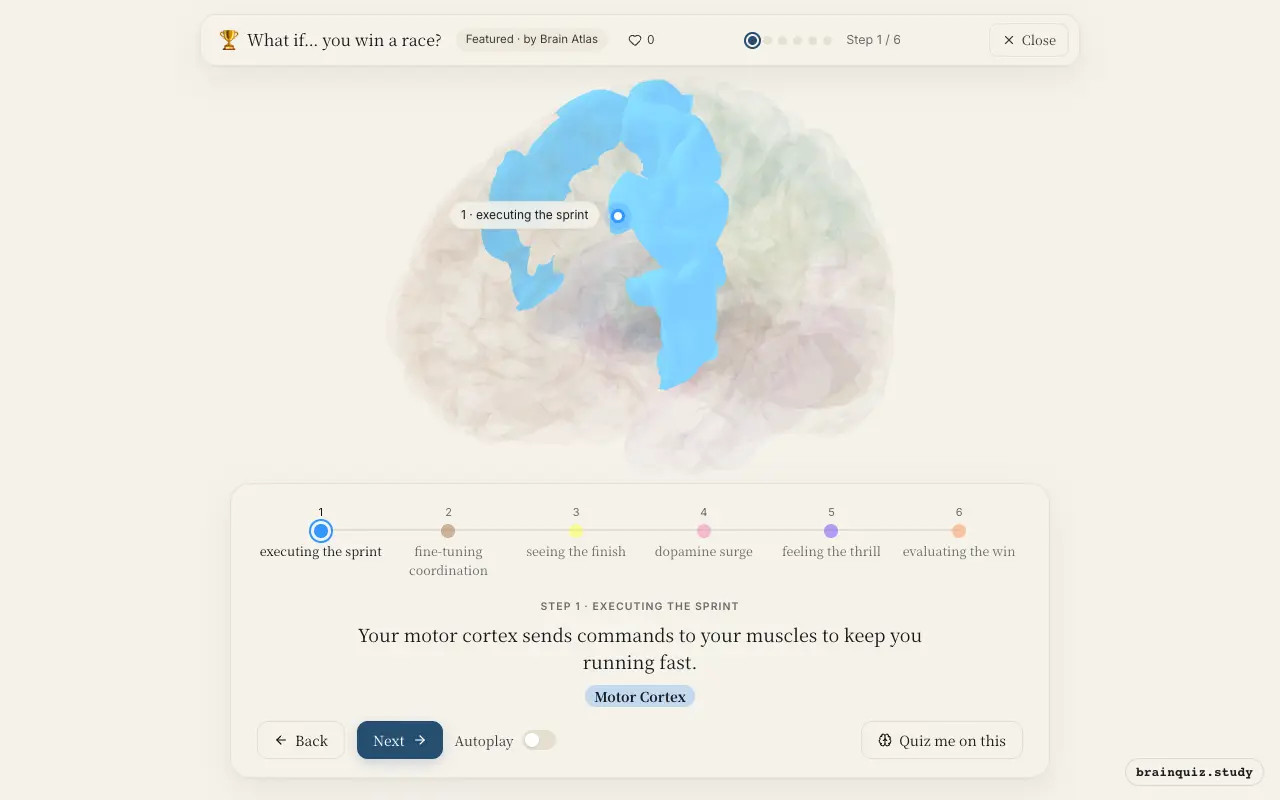
The primary motor cortex generates neural signals that travel down the corticospinal tract to activate lower motor neurons. This drives the voluntary muscle contractions that propel you forward, especially during the final sprint. The motor cortex is highly active throughout the race.
2. Cerebellum: fine-tuning coordination
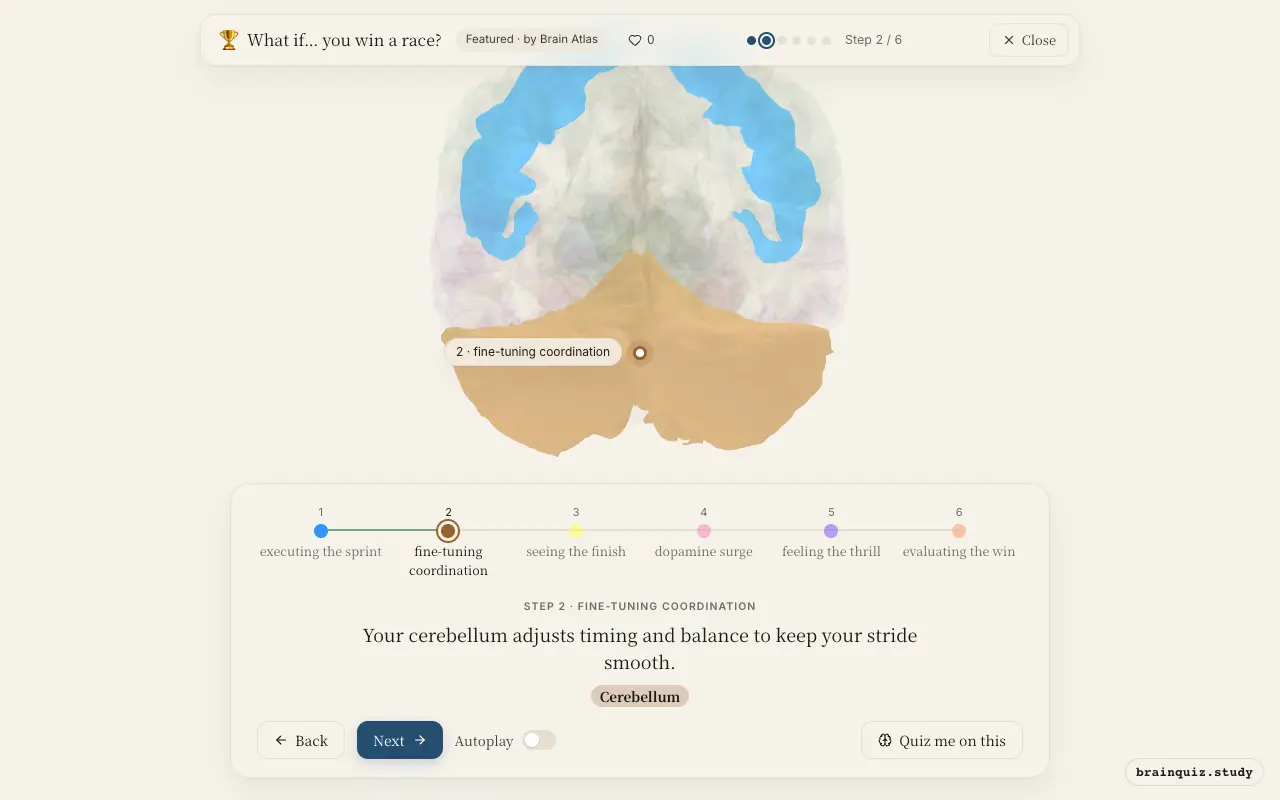
The cerebellum receives feedback from your muscles and joints and compares it with the intended movement. It makes real-time corrections to maintain balance and coordination. This allows you to run efficiently without stumbling, especially when fatigued.
3. Visual Cortex: seeing the finish
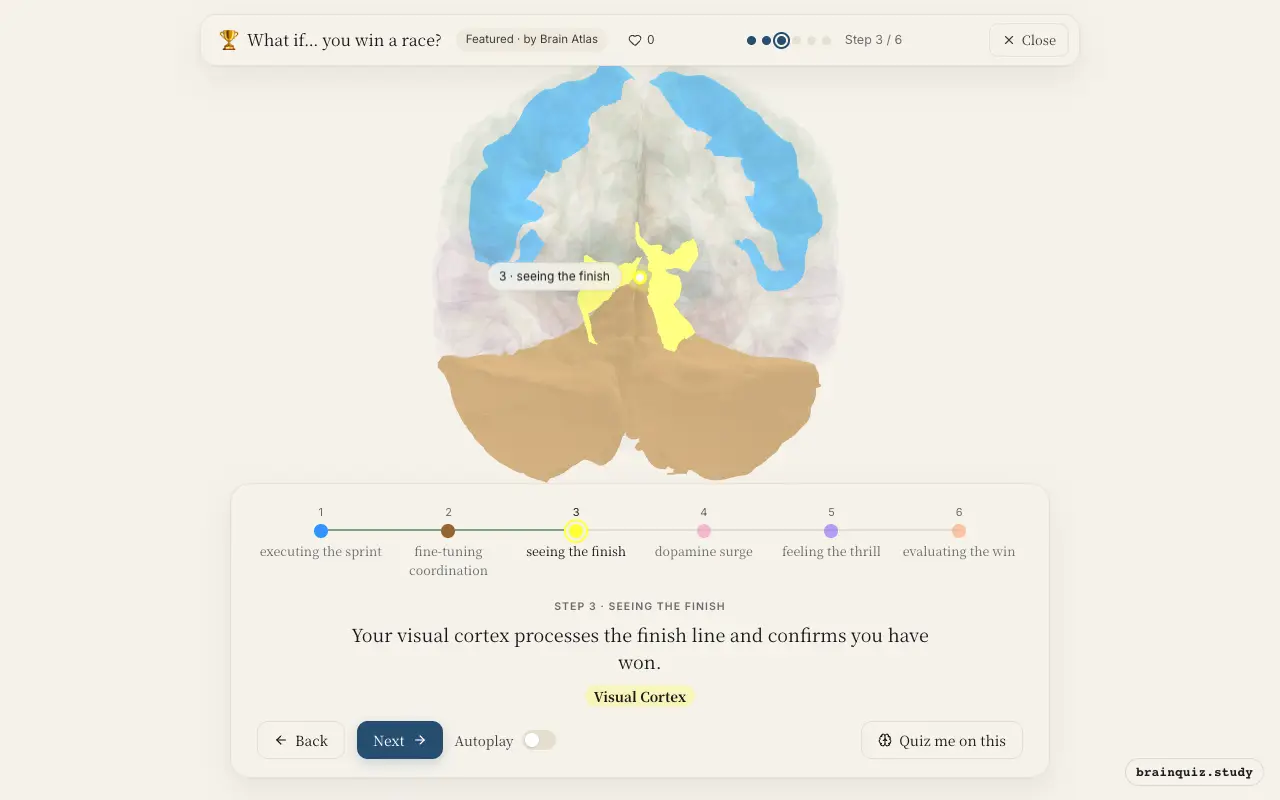
As you cross the line, your visual cortex processes the visual scene, including the finish line and your position relative to competitors. This sensory information is sent to higher-order areas for recognition. The visual confirmation of winning is a crucial trigger for the reward response.
4. Ventral Tegmental Area: dopamine surge
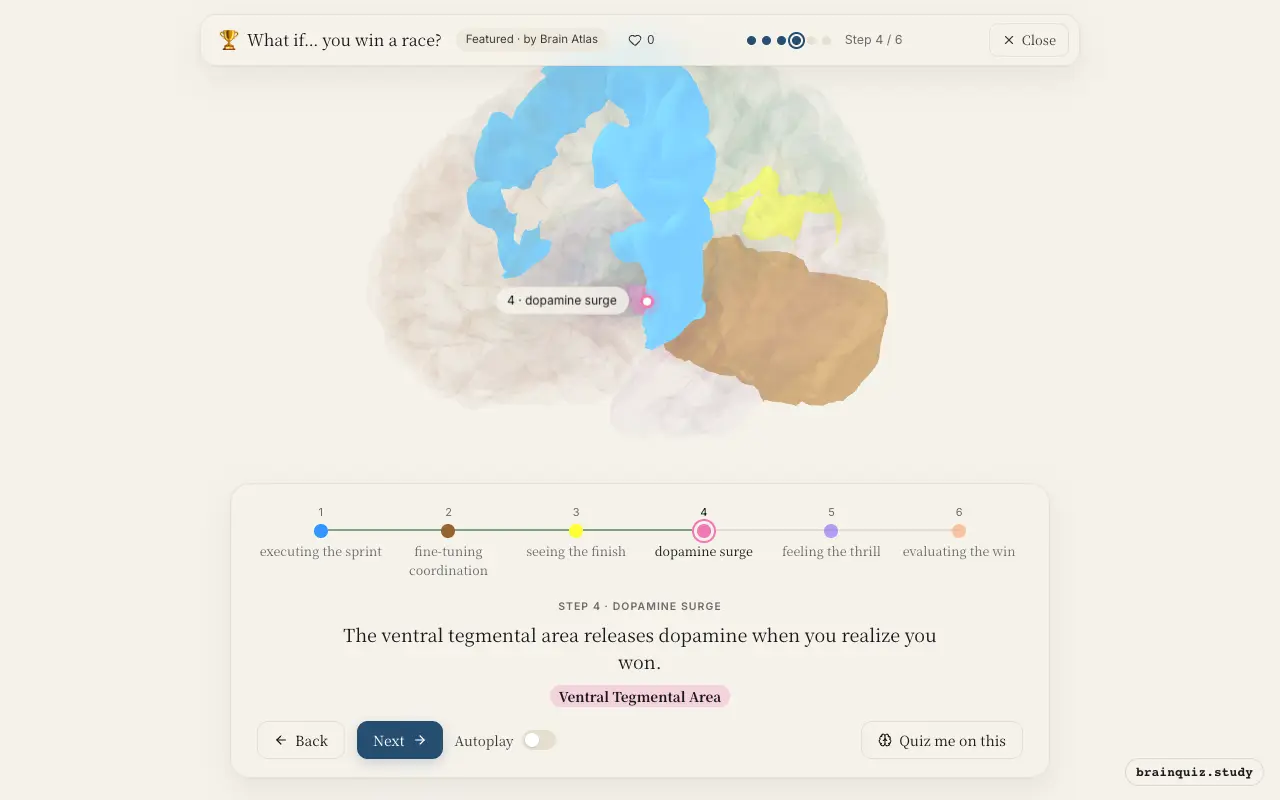
The VTA contains dopamine-producing neurons that fire in response to unexpected rewards. Winning a race is a highly salient reward, causing a burst of dopamine release. This dopamine is sent to the nucleus accumbens and prefrontal cortex to signal that something good has happened.
5. Nucleus Accumbens: feeling the thrill
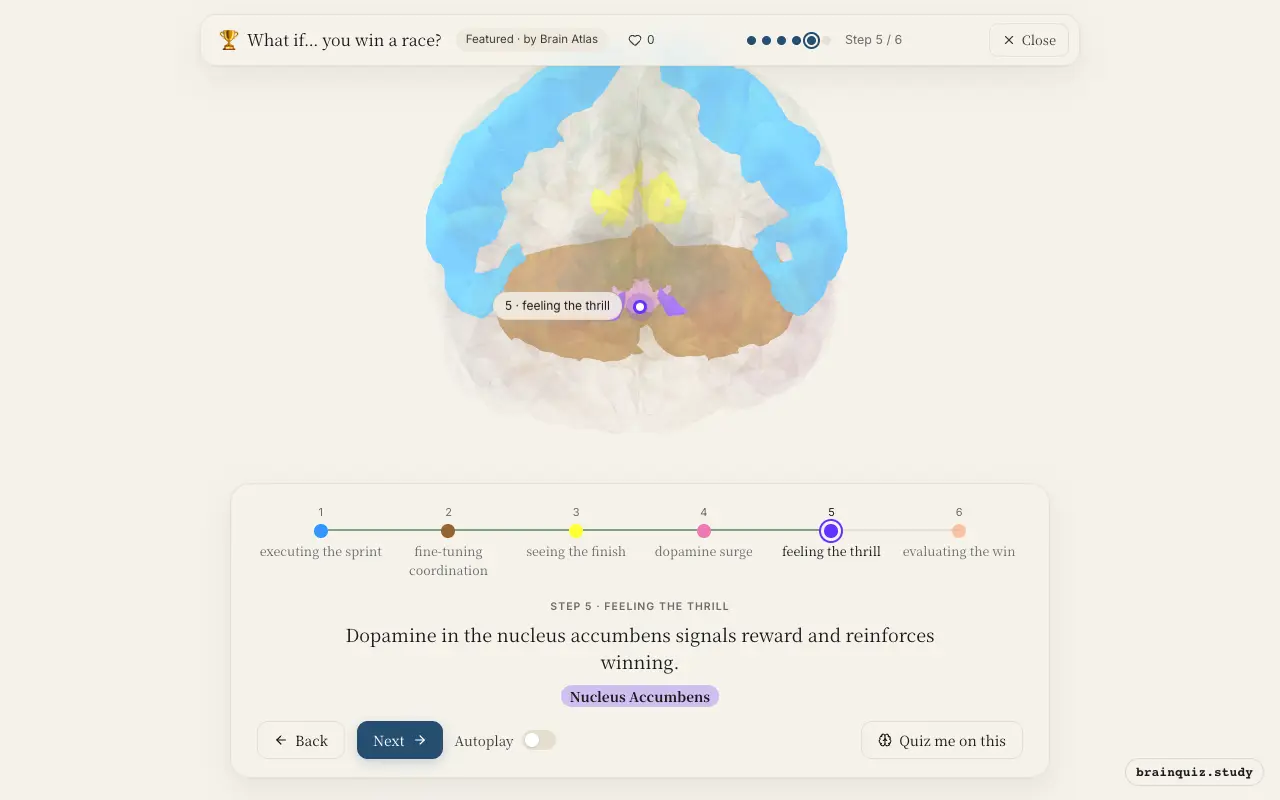
The nucleus accumbens is a key target of dopamine from the VTA. When dopamine binds here, it generates feelings of pleasure and reinforces the behaviors that led to the win. This activation strengthens the motivation to race again.
6. Orbitofrontal Cortex: evaluating the win
The orbitofrontal cortex receives input from the reward system and assigns value to the outcome. It integrates the win with contextual information, such as the effort expended. This helps you learn from the experience and adjust future strategies.
Good to know
- Dopamine is the key neurotransmitter for reward and is released in the striatum (nucleus accumbens) during pleasurable experiences.
- The motor cortex and cerebellum work together to execute smooth, coordinated movements during running.
- The orbitofrontal cortex helps assign value to the winning outcome, influencing future motivation.
Winning vs Losing a Race
Losing activates the anterior cingulate cortex for error detection and the amygdala for negative emotion, while winning primarily engages the reward circuit centered on the nucleus accumbens and ventral tegmental area.
Test yourself
Which brain region is most directly responsible for the feeling of pleasure when you win a race?
Which neurotransmitter is released by the ventral tegmental area to signal reward?
Which region primarily coordinates the physical movements required to run?
0 of 3 answered · 0 correct
Simplified: many regions work together at once, and this shows the main players in the order they act.