What happens in your brain when you work in a team?
Updated
Your prefrontal cortex plans and coordinates, the anterior cingulate monitors conflicts, the insula generates empathy, and the orbitofrontal cortex evaluates social rewards, while the nucleus accumbens reinforces cooperation.
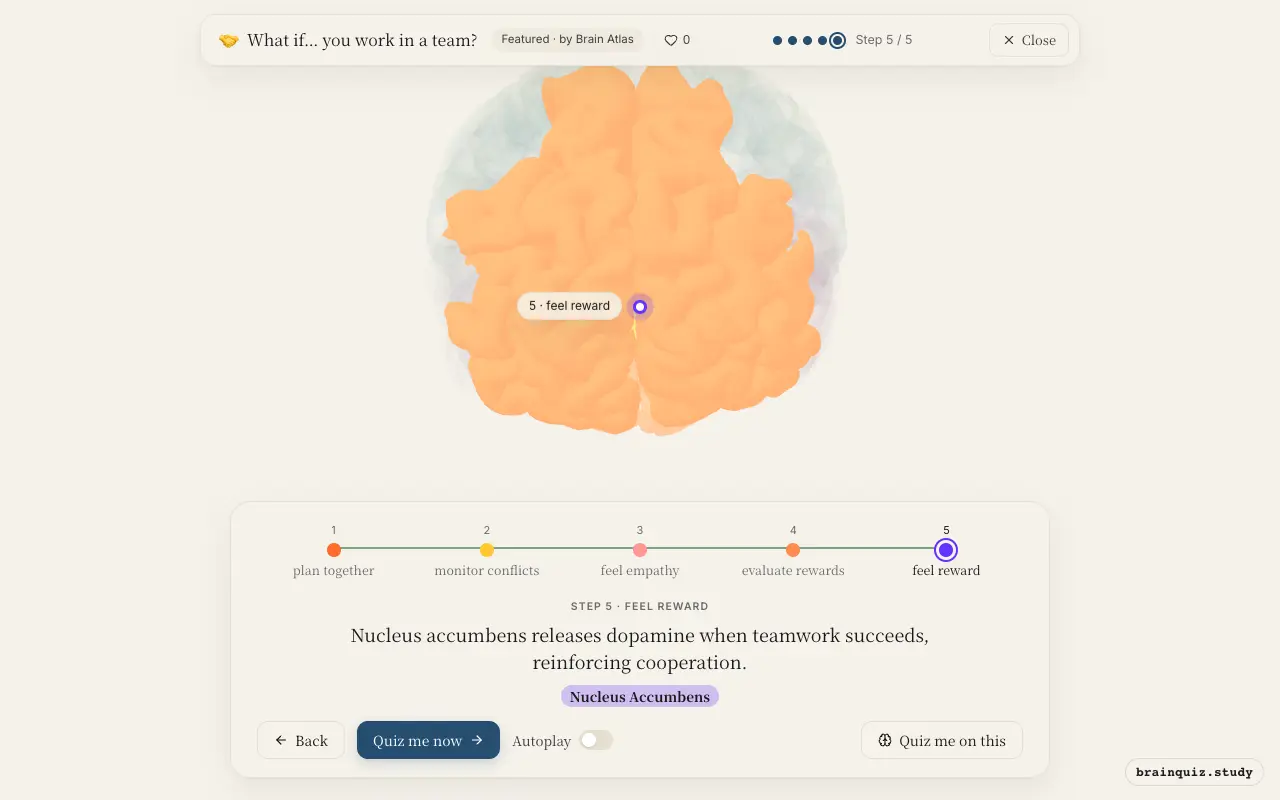
Watch it light up on the 3D brain
Brain regions that light up
| Order | Region | What it does here |
|---|---|---|
| 1 | Prefrontal Cortex | Your prefrontal cortex holds the shared goal and each member's tasks in mind. |
| 2 | Anterior Cingulate Cortex | The anterior cingulate detects when team actions clash or errors occur. |
| 3 | Insula | Your insula helps you sense teammates' emotions and physical states. |
| 4 | Orbitofrontal Cortex | The orbitofrontal cortex assesses whether team interactions are socially rewarding. |
| 5 | Nucleus Accumbens | Nucleus accumbens releases dopamine when teamwork succeeds, reinforcing cooperation. |
1. Prefrontal Cortex: plan together
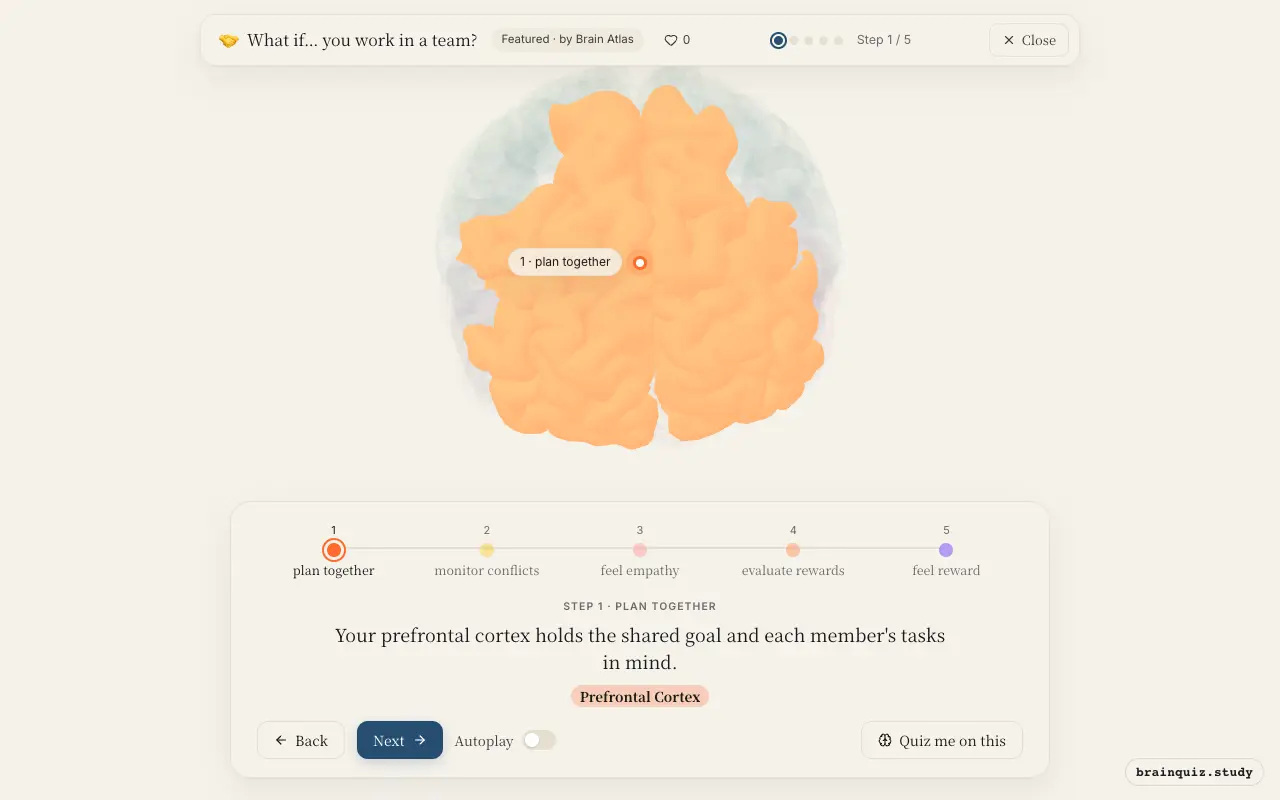
The prefrontal cortex is essential for executive functions like planning, working memory, and decision-making. In a team, it allows you to keep track of who is doing what, coordinate actions, and adjust strategies as the situation changes. This region is thought to be especially active when you need to inhibit your own impulses to support the group's objective.
2. Anterior Cingulate Cortex: monitor conflicts
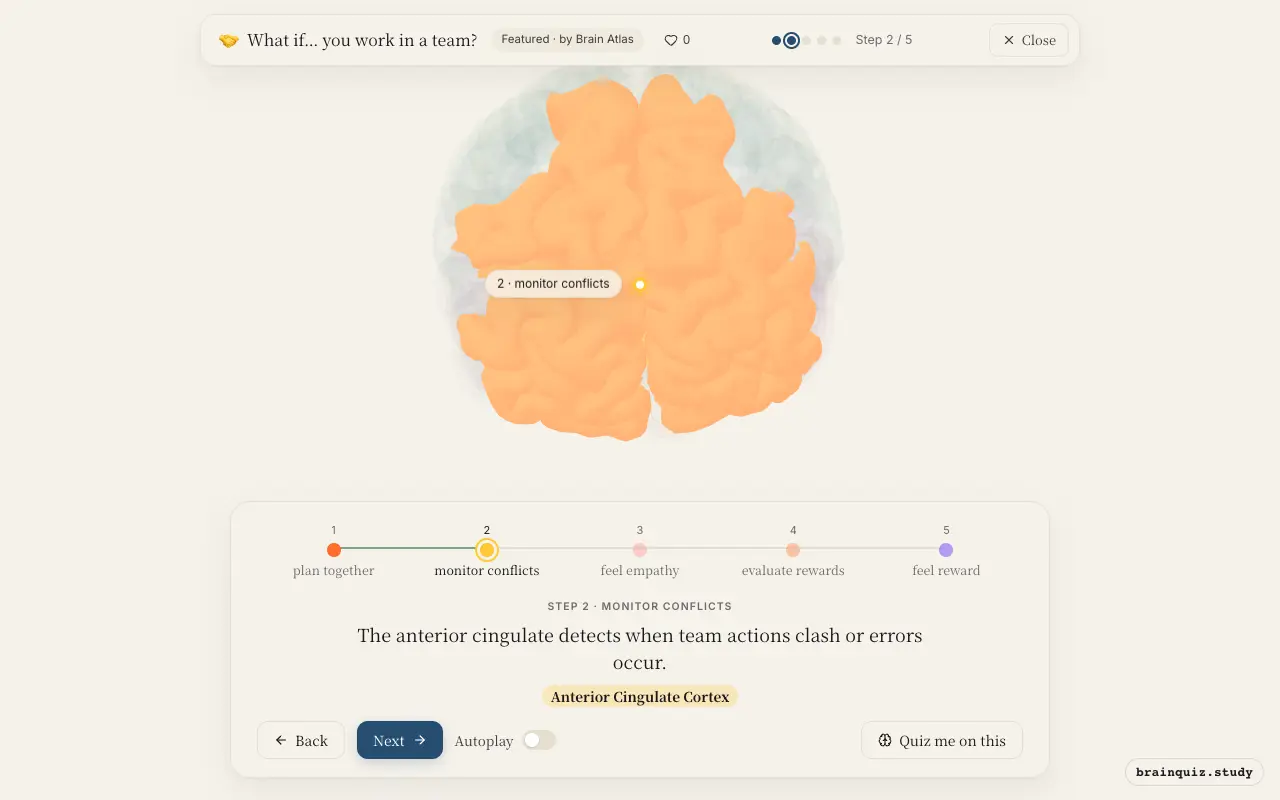
The anterior cingulate cortex (ACC) is critical for conflict monitoring and error detection. When teammates' contributions conflict or something goes wrong, the ACC signals the need for adjustment. This may trigger increased attention and recruit the prefrontal cortex to resolve the issue, keeping the team on track.
3. Insula: feel empathy
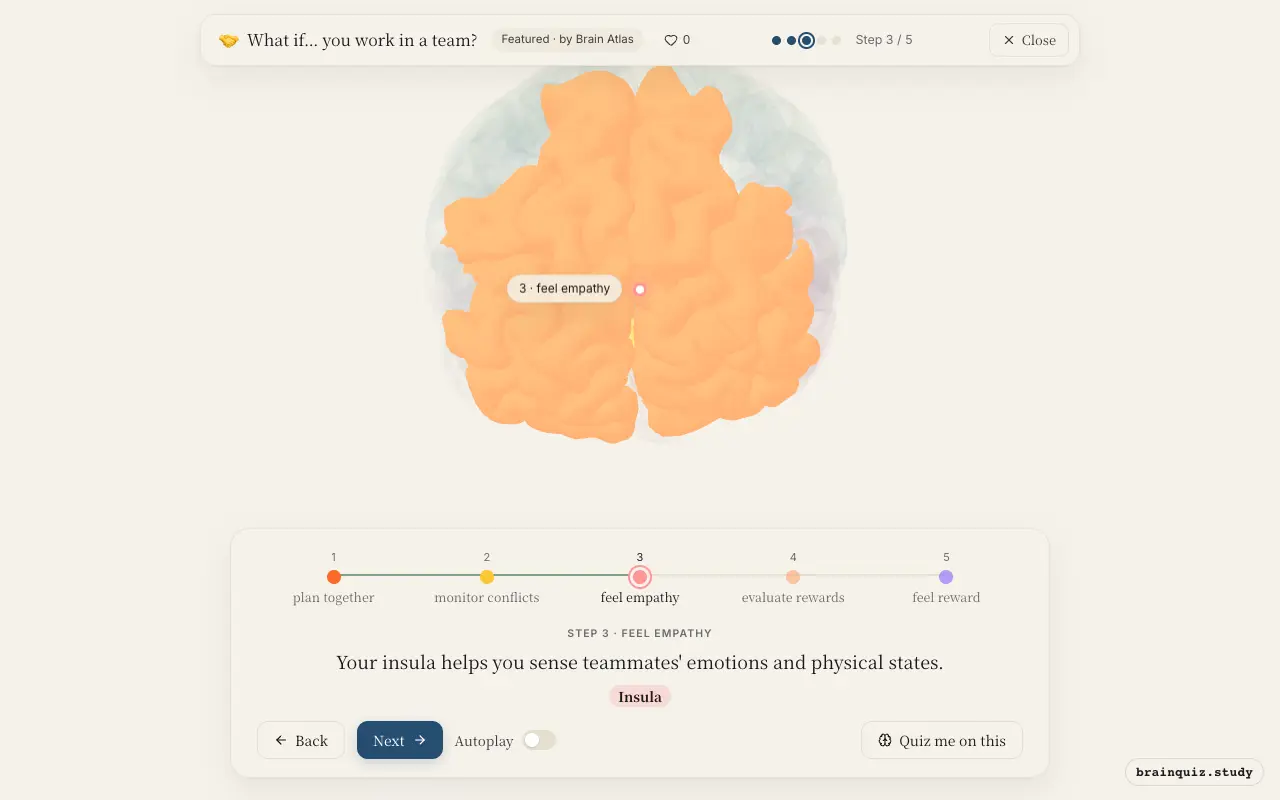
The insula is involved in interoception and empathy, letting you internally simulate others' feelings. This helps you understand whether a teammate is frustrated, confused, or excited, enabling appropriate social responses. Studies suggest that stronger insula activity predicts better cooperation and emotional attunement in group settings.
4. Orbitofrontal Cortex: evaluate rewards
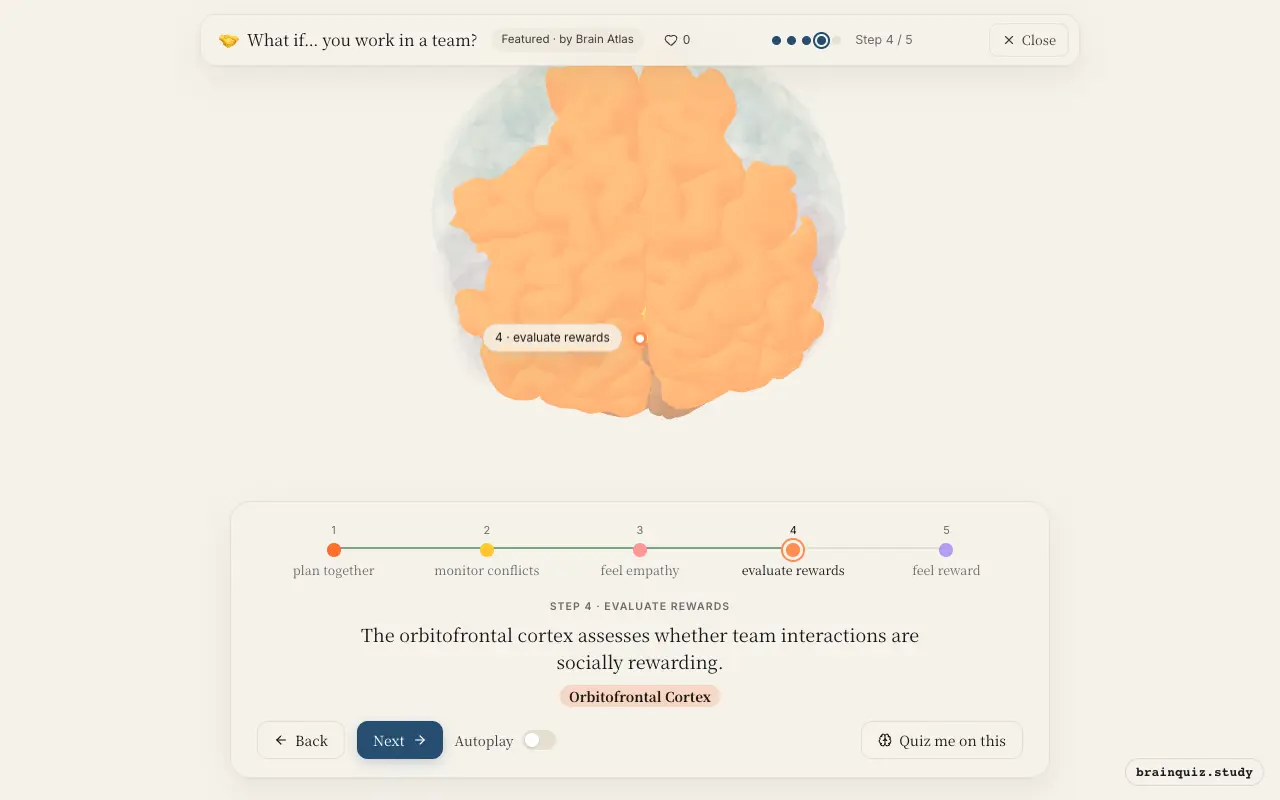
The orbitofrontal cortex (OFC) processes reward value, including social feedback. It evaluates whether outcomes are positive or negative and guides flexible behavior. In teamwork, the OFC may compute the value of cooperating versus competing, helping you decide to continue collaborating when it feels beneficial.
5. Nucleus Accumbens: feel reward
The nucleus accumbens is a core part of the brain's reward circuit. Successful collaboration often triggers dopamine release here, producing feelings of pleasure and motivating you to work with others again. This reinforcement is thought to be a key reason why humans are inherently social and cooperative.
Good to know
- The anterior cingulate cortex is also active when you experience social exclusion, highlighting its role in detecting social conflict.
- Oxytocin, released during positive social interactions, may modulate activity in the insula and reward regions, but its link to trust and cooperation is uncertain.
Cooperation vs. Competition
Studies suggest that cooperation involves stronger activation in the insula and orbitofrontal cortex for empathy and social reward, while competition may activate the striatum more strongly, as winning becomes a personal reward. The anterior cingulate may also track different types of errors: social conflicts in cooperation versus performance errors in competition.
Test yourself
Which brain region is most directly involved in planning and coordinating team actions?
What does the anterior cingulate cortex primarily do during teamwork?
Successful teamwork often triggers dopamine release in which region?
0 of 3 answered · 0 correct
Simplified: many regions work together at once, and this shows the main players in the order they act.