What happens in your brain when you get a massage?
Updated
Thalamus relays touch to somatosensory cortex, which maps the pressure. The insula integrates bodily feelings, while the anterior cingulate processes emotional calm and modulates pain. The hypothalamus then shifts the body into relaxation mode.
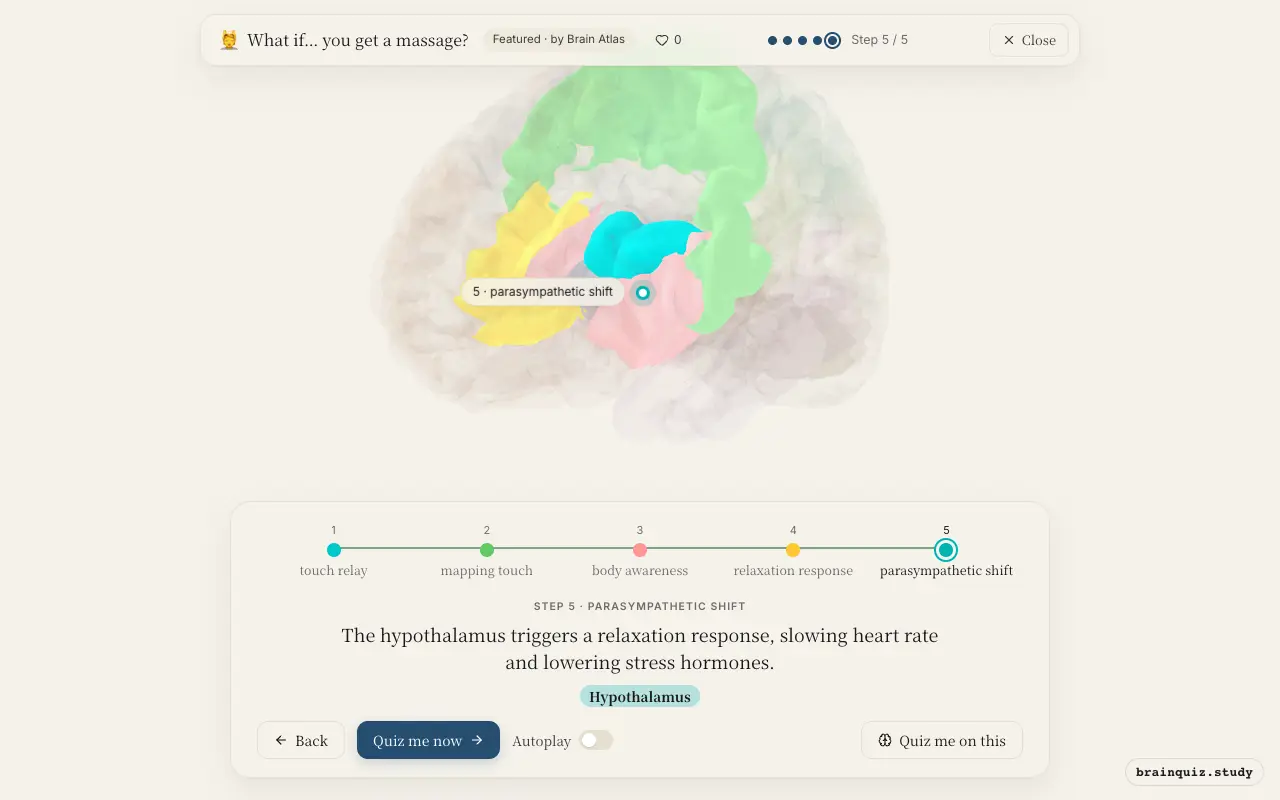
Watch it light up on the 3D brain
Brain regions that light up
| Order | Region | What it does here |
|---|---|---|
| 1 | Thalamus | The thalamus receives touch signals from the spinal cord and sends them to the cortex. |
| 2 | Somatosensory Cortex | The somatosensory cortex processes where and how intense the massage touch is. |
| 3 | Insula | The insula integrates bodily sensations, creating a felt sense of the massage. |
| 4 | Anterior Cingulate Cortex | The anterior cingulate cortex processes the emotional and calming aspects of touch. |
| 5 | Hypothalamus | The hypothalamus triggers a relaxation response, slowing heart rate and lowering stress hormones. |
1. Thalamus: touch relay
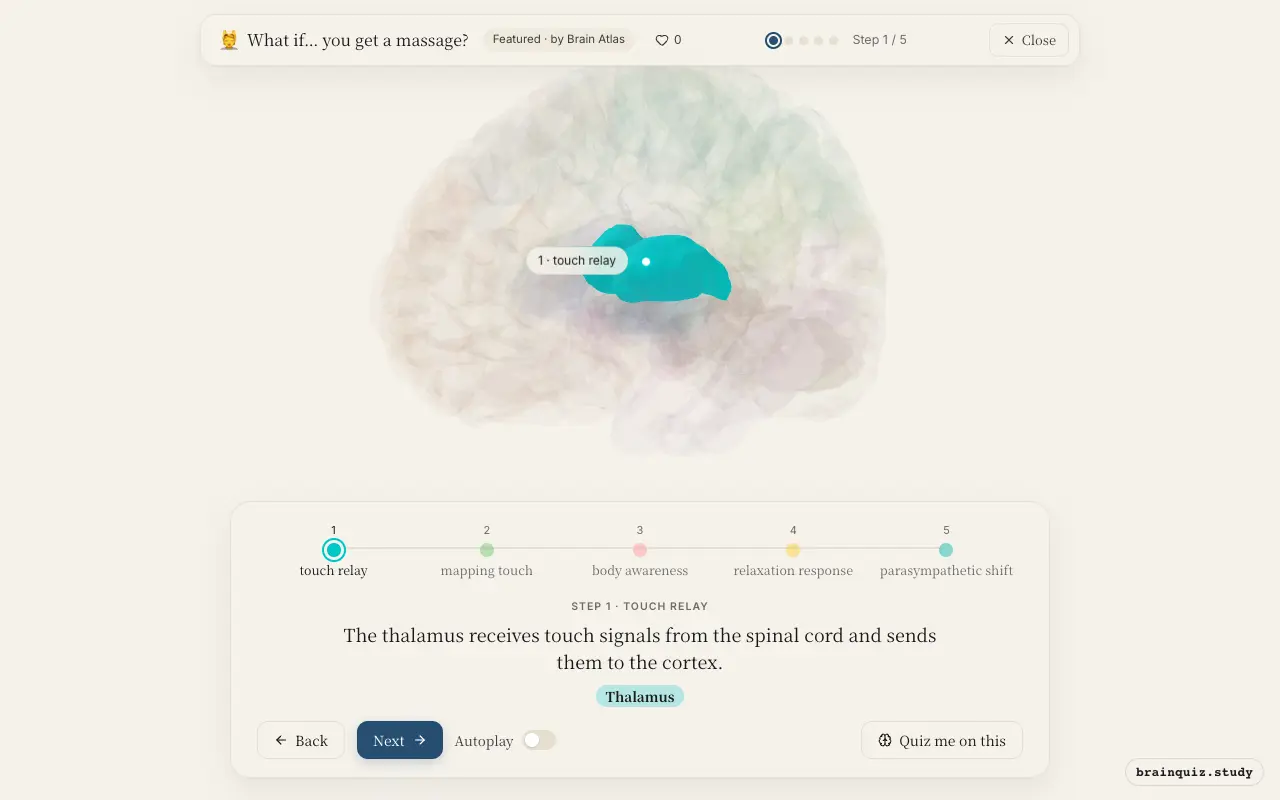
As the brain's sensory relay station, the thalamus filters and directs incoming tactile information. It ensures that touch, pressure, and temperature data reach the appropriate cortical areas for conscious perception.
2. Somatosensory Cortex: mapping touch
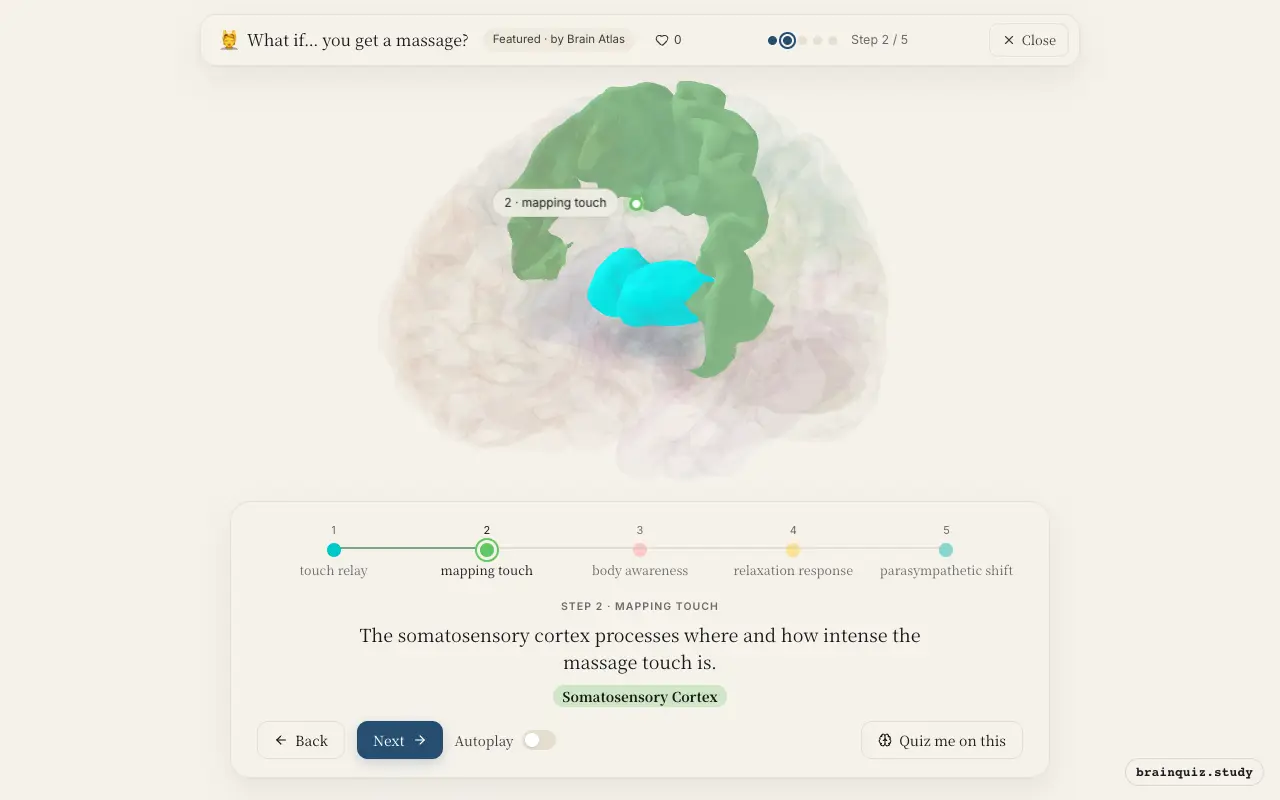
Located in the parietal lobe, this region contains a topographic map of the body. Neurons here respond to specific skin areas, allowing you to localize the massage strokes and discriminate pressure, vibration, and texture.
3. Insula: body awareness
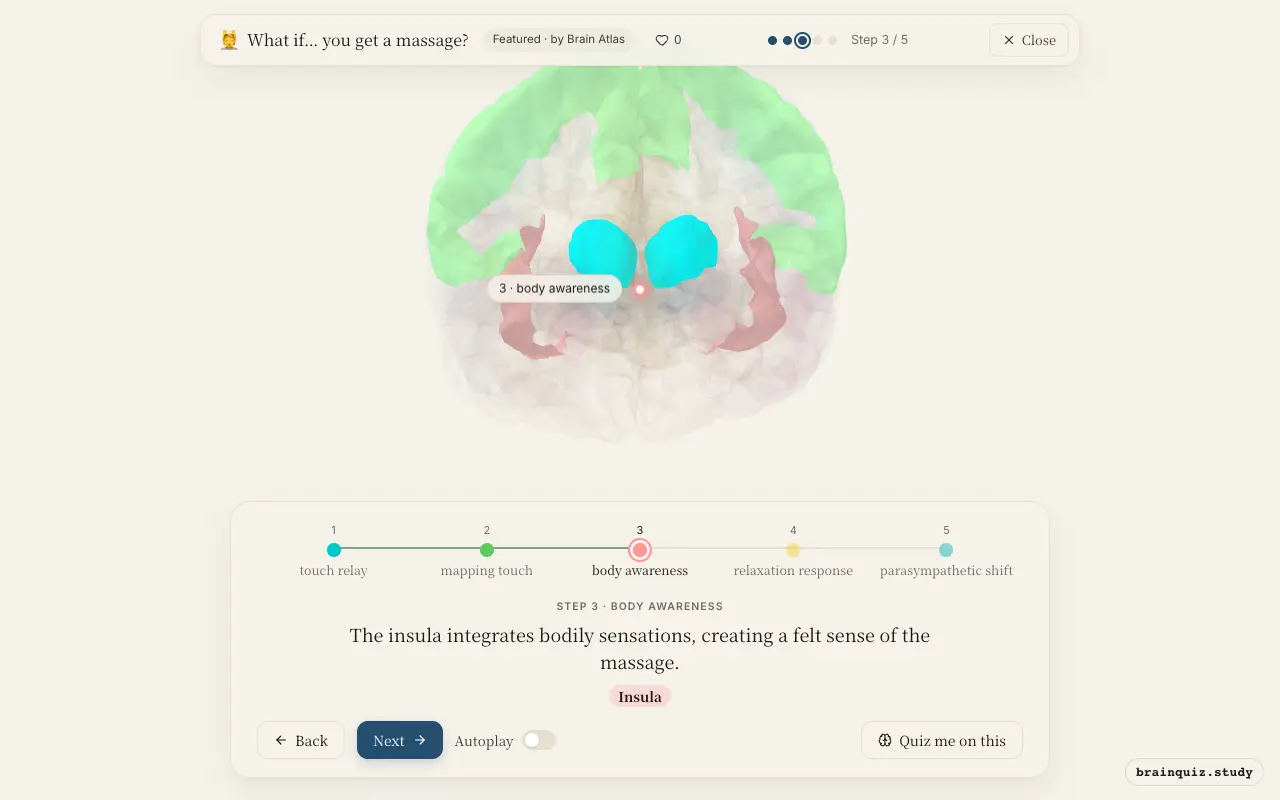
The insula is key for interoception—the perception of internal body states. It combines tactile input with emotional and autonomic signals, producing the subjective feeling of being touched and the accompanying sense of bodily comfort.
4. Anterior Cingulate Cortex: relaxation response
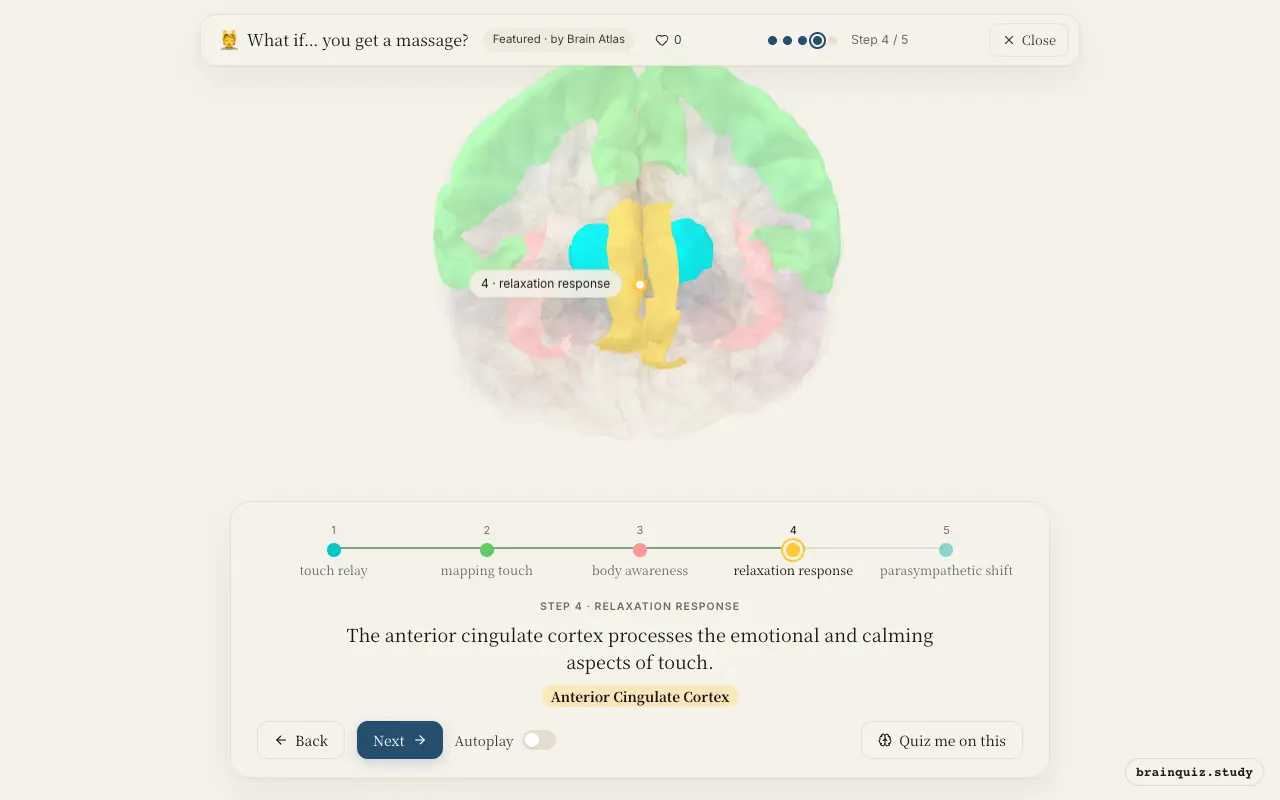
This region is involved in pain modulation and emotional regulation. During a massage, increased activity here can help reduce perceived stress and pain, perhaps by dampening signals from threat-related areas like the amygdala.
5. Hypothalamus: parasympathetic shift
As the master regulator of homeostasis, the hypothalamus coordinates the autonomic nervous system. Massage can shift the balance toward the parasympathetic branch, reducing cortisol levels and promoting a state of calm and restoration.
Good to know
- C-tactile afferents are unmyelinated fibers that respond to slow, gentle stroking and are implicated in pleasant touch perception.
- Massage is thought to reduce cortisol levels, though effect sizes vary across studies.
- The insula integrates interoceptive signals and is active during both touch and emotional awareness.
Massage vs pain
Both massage and a painful pinch activate the thalamus and somatosensory cortex. However, massage engages the insula for interoceptive processing and the anterior cingulate for emotional calm, while pain triggers the amygdala and a sympathetic stress response. The hypothalamus shifts toward relaxation in massage but toward arousal in pain.
Test yourself
Which brain region acts as the initial relay for touch signals during a massage?
What role does the insula play in massage perception?
How does the hypothalamus contribute to the relaxing effect of massage?
0 of 3 answered · 0 correct
Simplified: many regions work together at once, and this shows the main players in the order they act.