What happens in your brain when you get a notification on your phone?
Updated
Auditory cortex detects the sound, somatosensory cortex the vibration, visual cortex the flash; anterior cingulate and prefrontal cortex shift attention and decide; nucleus accumbens anticipates reward.
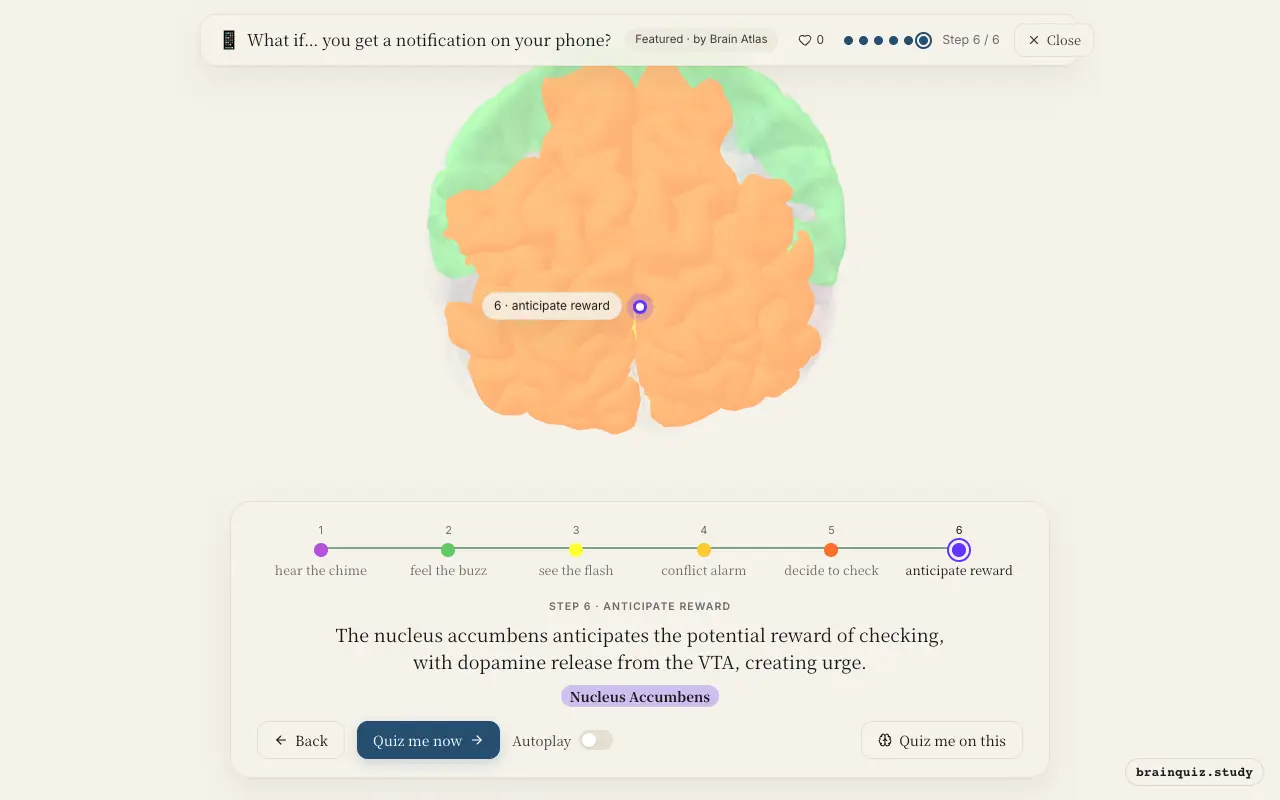
Watch it light up on the 3D brain
Brain regions that light up
| Order | Region | What it does here |
|---|---|---|
| 1 | Auditory Cortex | The auditory cortex registers the notification chime, even before you consciously notice it. |
| 2 | Somatosensory Cortex | The somatosensory cortex processes the vibration from the phone in your pocket or hand. |
| 3 | Visual Cortex | If the screen lights up, the visual cortex detects the change in your peripheral or foveal vision. |
| 4 | Anterior Cingulate Cortex | The anterior cingulate cortex flags the alert as a potential conflict with your current focus. |
| 5 | Prefrontal Cortex | The prefrontal cortex weighs the notification's importance and decides whether to interrupt your task. |
| 6 | Nucleus Accumbens | The nucleus accumbens anticipates the potential reward of checking, with dopamine release from the VTA, creating urge. |
1. Auditory Cortex: hear the chime
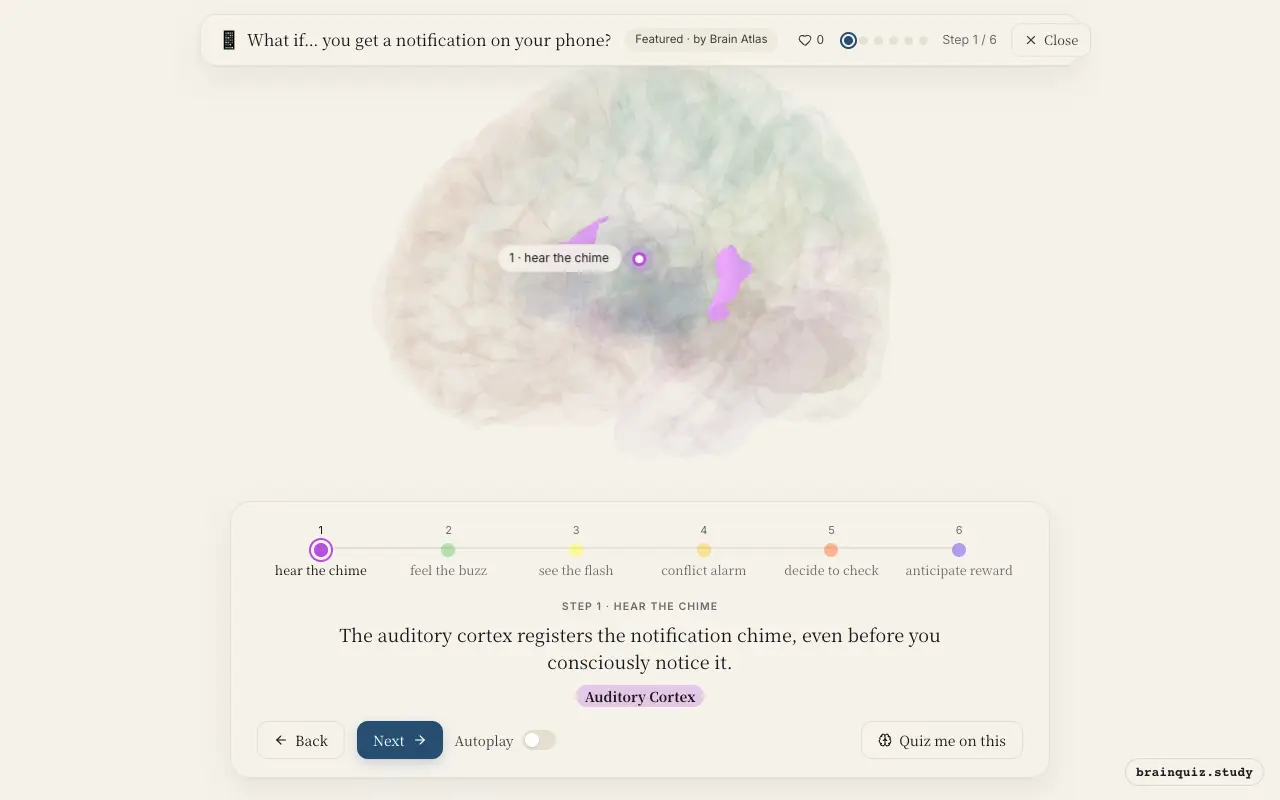
The auditory cortex processes the sound frequency and pattern of the notification. It rapidly distinguishes the alert from background noise, triggering an orienting response. This bottom-up sensory signal is the first step in capturing attention.
2. Somatosensory Cortex: feel the buzz
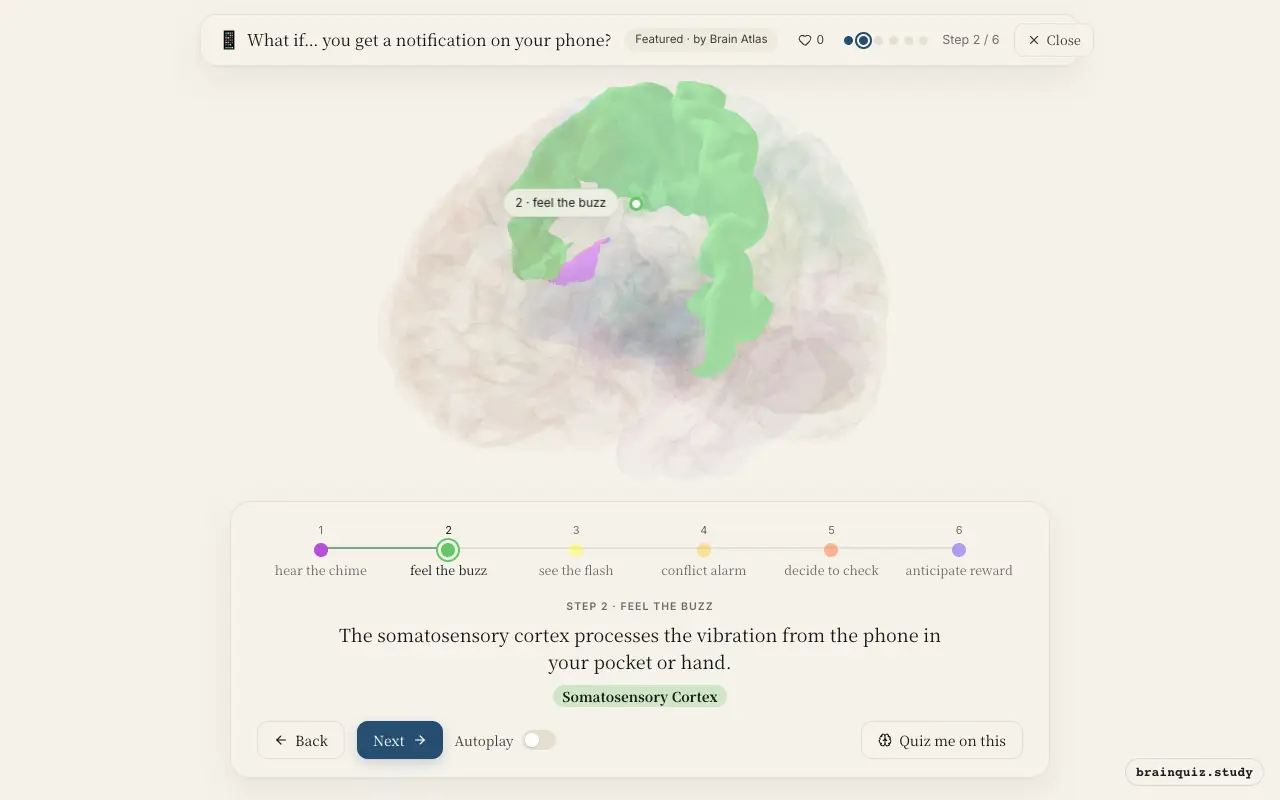
Vibration receptors in the skin send signals via the spinal cord and thalamus to the somatosensory cortex. This region localizes the sensation and adds another sensory modality to the alert, making it more salient and harder to ignore.
3. Visual Cortex: see the flash
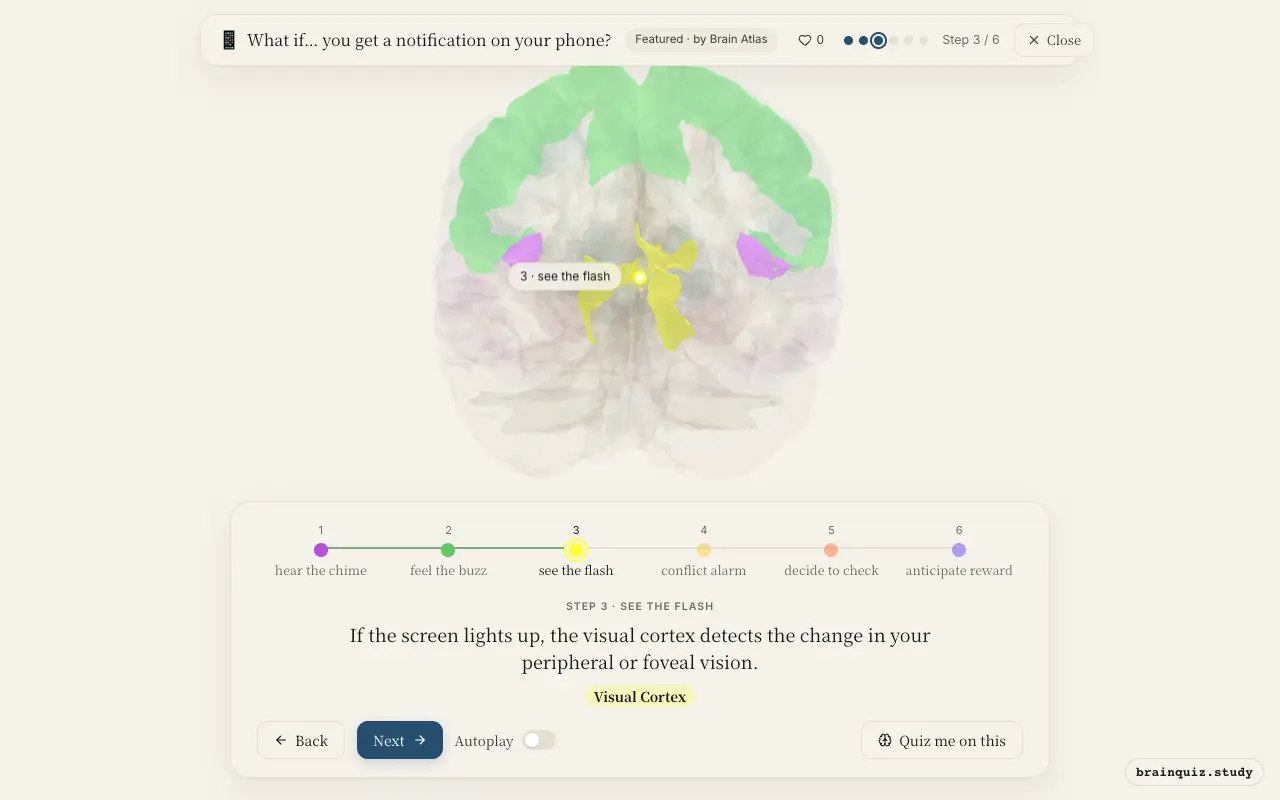
The visual cortex processes the sudden luminance change or notification icon. Even without direct gaze, peripheral vision can detect motion or brightness shifts. This visual input further confirms the alert and refines spatial attention toward the phone.
4. Anterior Cingulate Cortex: conflict alarm
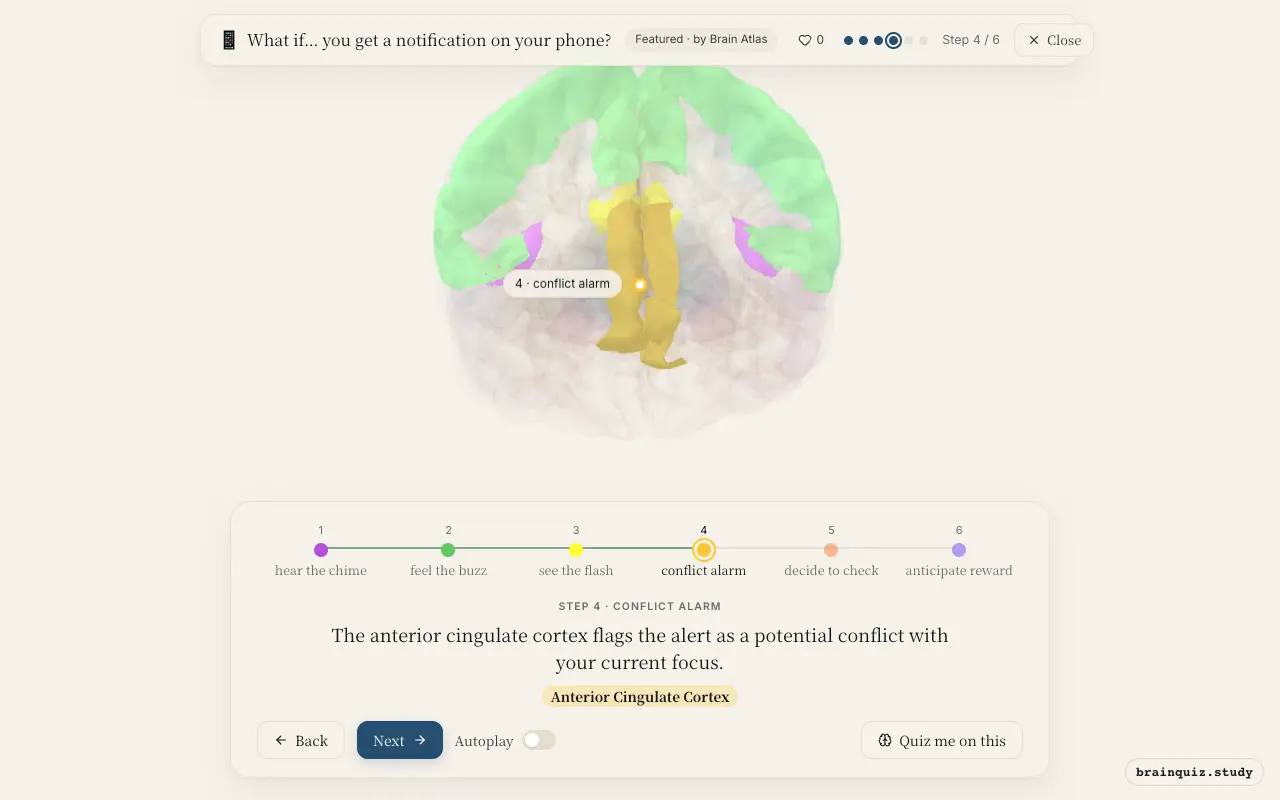
The anterior cingulate cortex monitors ongoing tasks and detects discrepancies between your current goal and the novel stimulus. It signals that attention needs to be reallocated. This conflict signal is crucial for the subjective feeling of being interrupted.
5. Prefrontal Cortex: decide to check
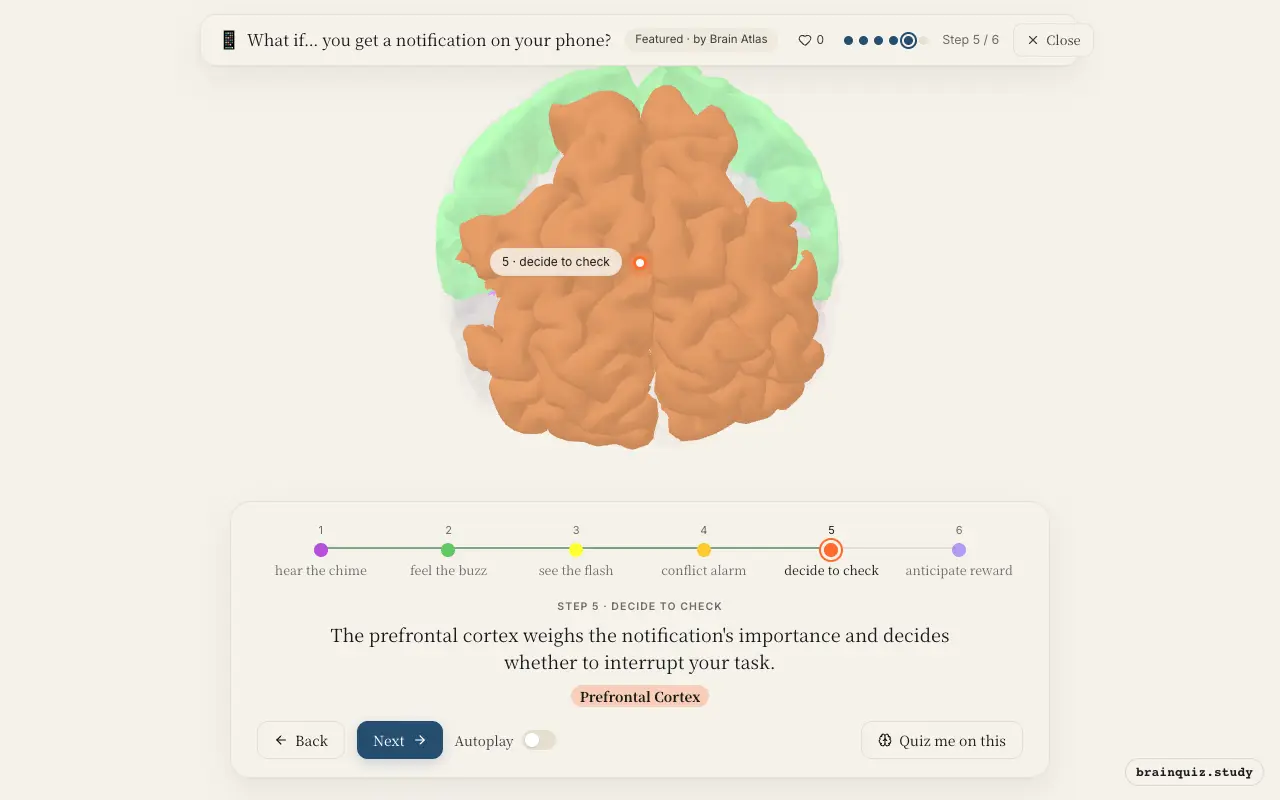
The prefrontal cortex integrates contextual information, such as who messaged and current task demands. It evaluates the cost of switching attention and initiates a decision to check the phone or ignore it. Executive control here determines your behavioral response.
6. Nucleus Accumbens: anticipate reward
The nucleus accumbens is a key node in the brain's reward circuit. Dopamine release here is thought to signal the expected value of the notification. This anticipation can create a strong urge to check, especially if the notification is unpredictable or from a high-value contact.
Good to know
- The ventral tegmental area and nucleus accumbens form a reward circuit that responds to unpredictable notifications similarly to other rewards.
- Multisensory alerts are more effective at capturing attention than single-modality alerts.
- Repeated phone checking may involve habit formation in the basal ganglia.
Notification vs deliberate check
A deliberate check is initiated by prefrontal cortex and internal goals, with less sensory-driven salience. A notification hijacks attention via sensory and salience regions before prefrontal cortex can evaluate it, making it harder to resist.
Test yourself
Which brain region first processes the sound of a phone notification?
What role does the anterior cingulate cortex play when a notification arrives?
Which region is most directly linked to the urge to check your phone due to anticipated reward?
0 of 3 answered · 0 correct
Simplified: many regions work together at once, and this shows the main players in the order they act.