What happens in your brain when you get tickled?
Updated
When tickled, the somatosensory cortex detects the touch, the cerebellum flags it as unexpected, the insula and anterior cingulate process the unsettling feeling, the brainstem triggers laughter, and the motor cortex drives squirming.
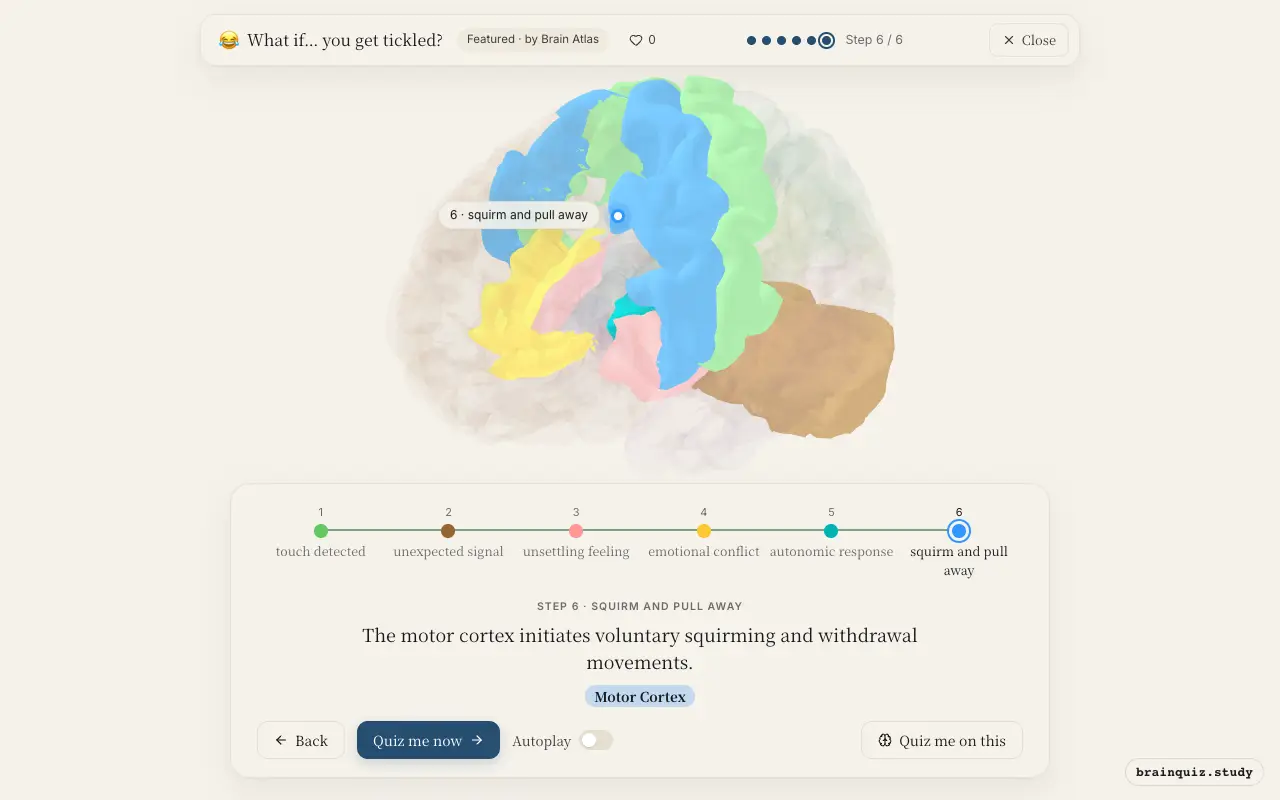
Watch it light up on the 3D brain
Brain regions that light up
| Order | Region | What it does here |
|---|---|---|
| 1 | Somatosensory Cortex | Light touch on ticklish skin activates the somatosensory cortex. |
| 2 | Cerebellum | The cerebellum compares actual touch with predicted sensations, flagging it as surprising. |
| 3 | Insula | The insula processes the interoceptive and emotional aspects of the tickle. |
| 4 | Anterior Cingulate Cortex | The anterior cingulate cortex monitors the conflict between laughter and discomfort. |
| 5 | Hypothalamus | The hypothalamus triggers autonomic responses like increased heart rate. |
| 6 | Motor Cortex | The motor cortex initiates voluntary squirming and withdrawal movements. |
1. Somatosensory Cortex: touch detected
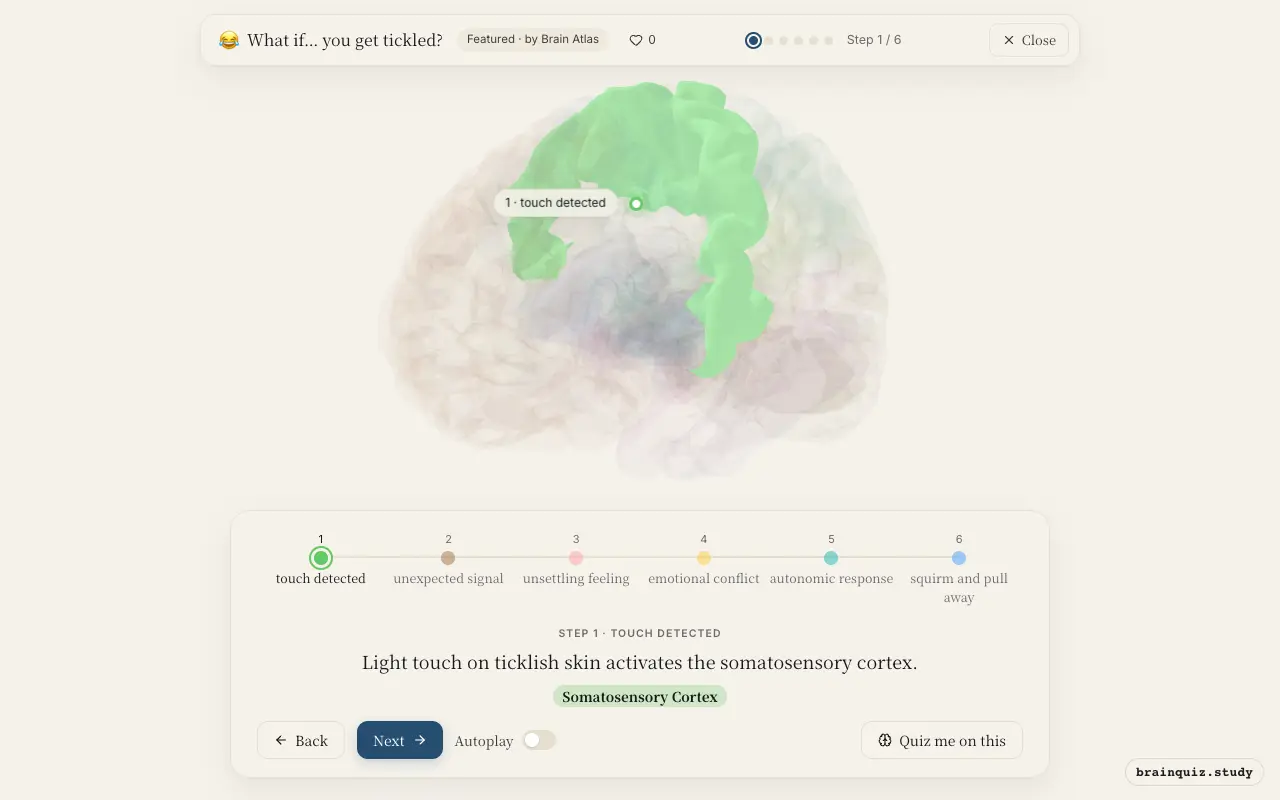
The somatosensory cortex receives tactile signals from the skin, mapping the body surface. Ticklish areas like ribs or feet are especially sensitive due to their vulnerability and unpredictability.
2. Cerebellum: unexpected signal
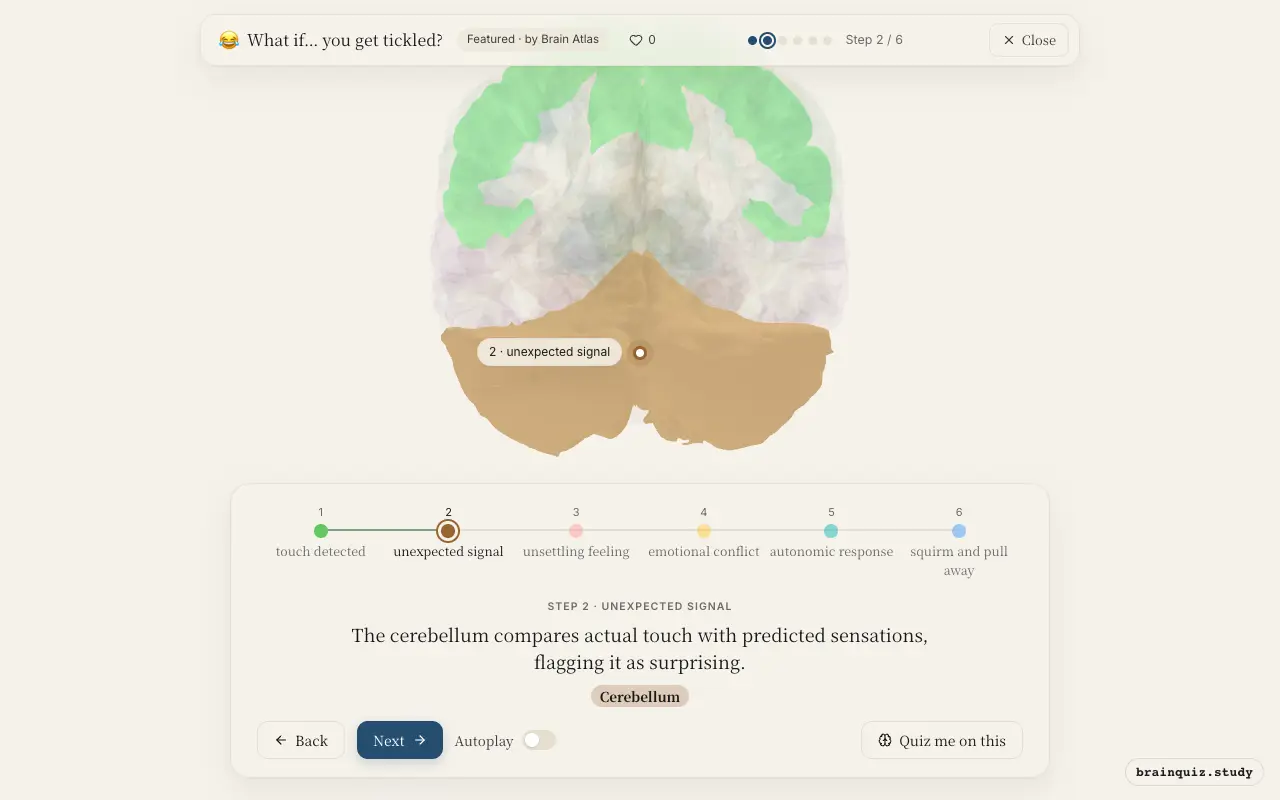
When you are tickled by another person, the cerebellum cannot predict the exact timing and location, so it signals a mismatch. This prediction error amplifies the tickle response; self-tickle is suppressed because the cerebellum predicts it.
3. Insula: unsettling feeling
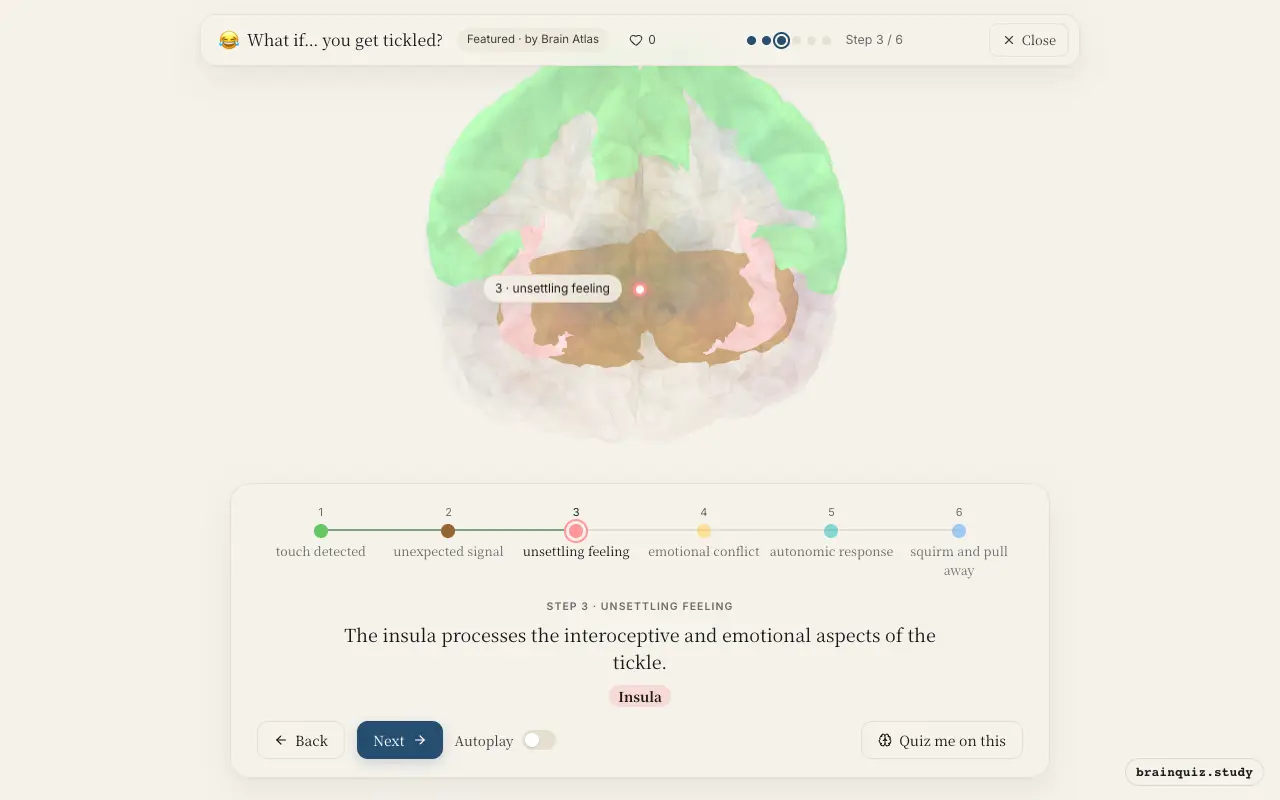
The insula integrates bodily sensations with emotional states, perceiving the tickle as slightly unpleasant or ambiguous. It also contributes to the urge to escape the stimulation.
4. Anterior Cingulate Cortex: emotional conflict
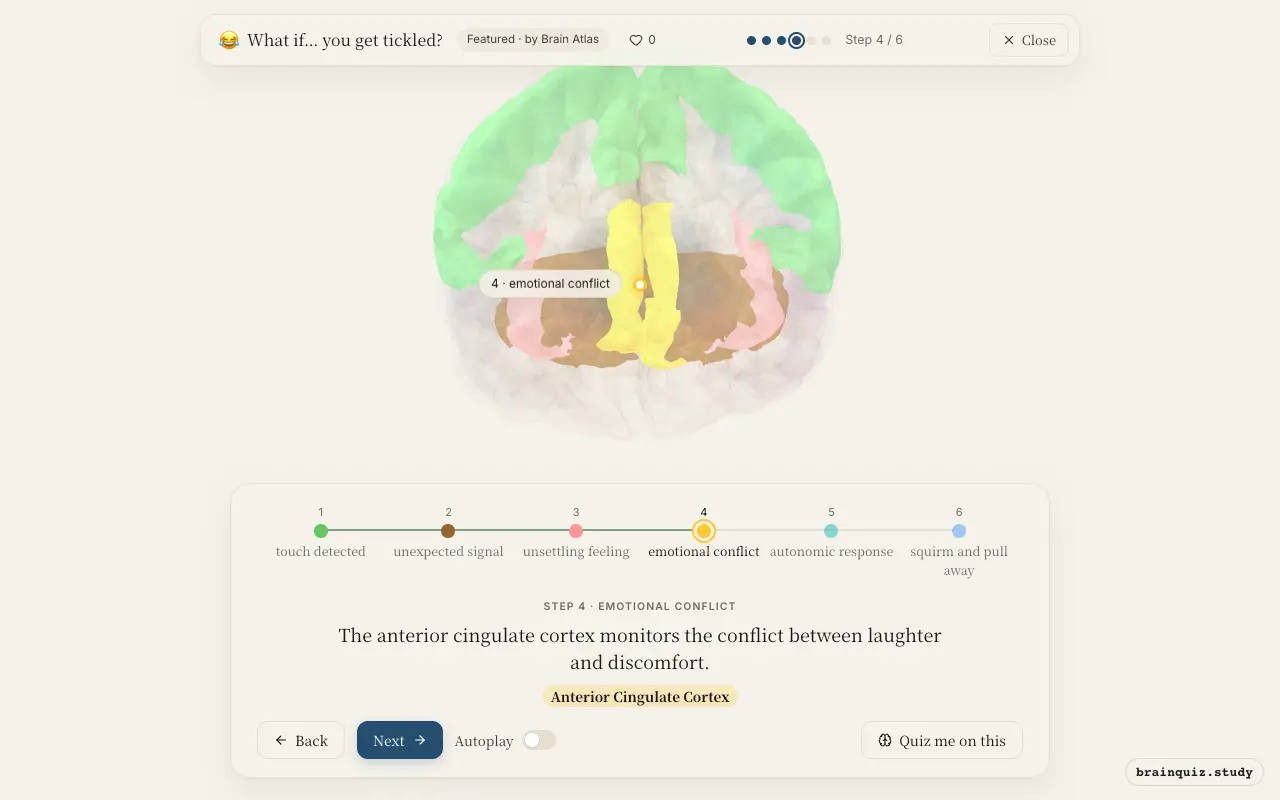
The ACC is active during conflicting emotional experiences, such as tickling, which is both playful and aversive. It modulates the emotional response and contributes to social bonding.
5. Hypothalamus: autonomic response
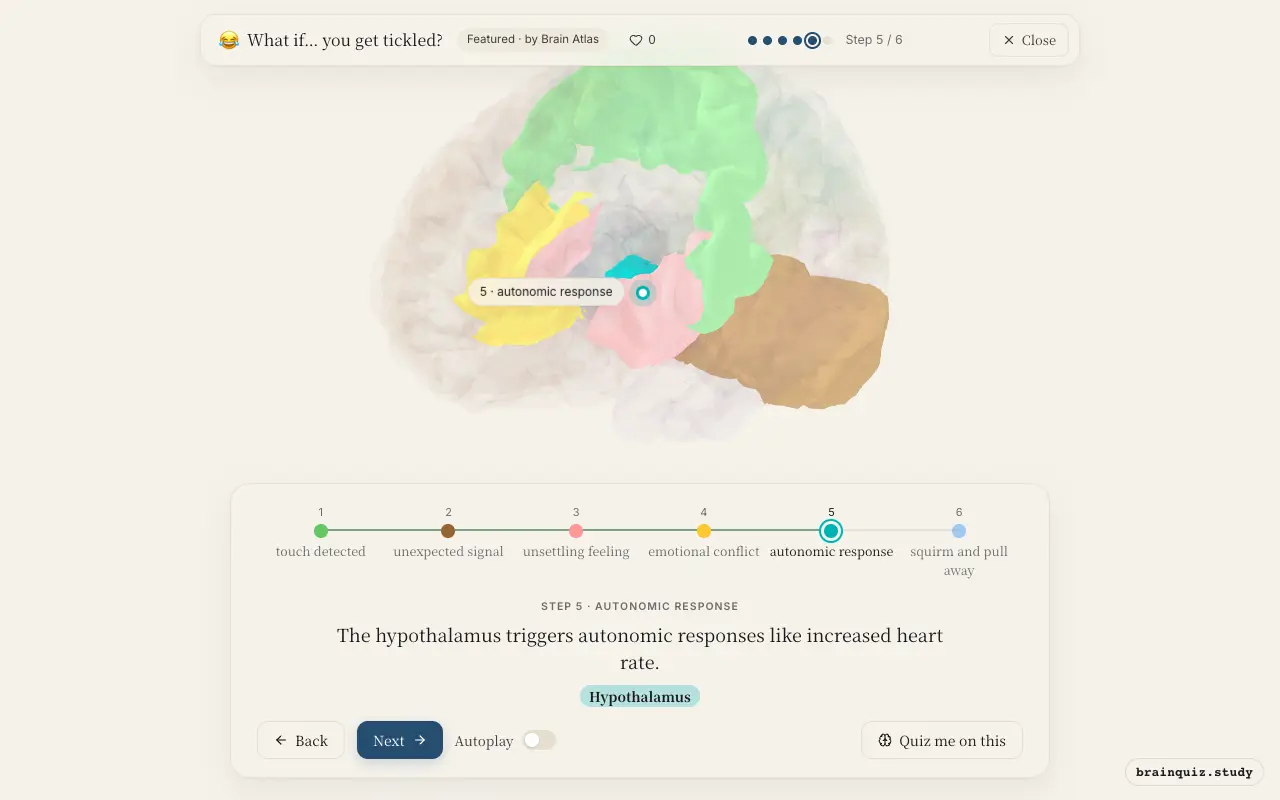
The hypothalamus coordinates autonomic changes like increased heart rate, linking the emotional brain to the body. Tickling-induced laughter is thought to be a primitive reflex, not always tied to humor.
6. Motor Cortex: squirm and pull away
While much of the tickle response is reflexive, the motor cortex can override or modulate movements to escape the tickling. It sends signals to muscles to twist, push away, or protect ticklish areas.
Good to know
- You cannot tickle yourself effectively because the cerebellum predicts the sensory consequences of your own movements and cancels the tickle response.
- Tickling-induced laughter is distinct from humor-based laughter and may engage different neural pathways.
- The sensitivity of ticklish areas varies widely, with the soles of the feet and underarms being common sites.
Tickled vs. Self-tickle
When someone else tickles you, the cerebellum cannot predict the touch, leading to a strong tickle response. When you try to tickle yourself, the cerebellum forecasts the sensation and dampens somatosensory cortex activity, so the tickle is greatly reduced or absent.
Test yourself
Which brain region is primarily responsible for processing the tactile sensation of a tickle?
Why can't you tickle yourself?
Which brain region is most associated with the involuntary laughter during tickling?
0 of 3 answered · 0 correct
Simplified: many regions work together at once, and this shows the main players in the order they act.