What happens in your brain when you hold a baby?
Updated
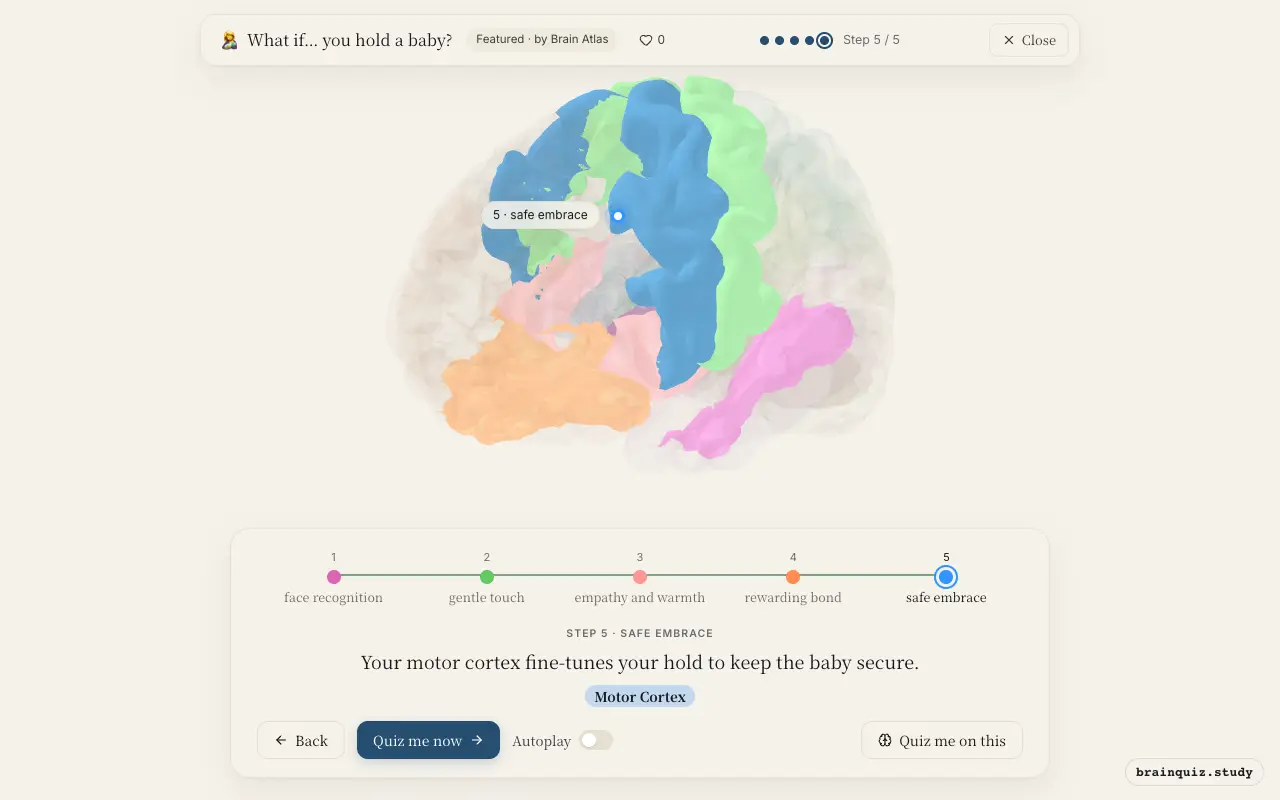
Your fusiform gyrus recognizes the baby's face, your somatosensory cortex processes the comforting touch, your insula generates empathy, your orbitofrontal cortex rewards the interaction, and your motor cortex adjusts your hold.
Watch it light up on the 3D brain
Brain regions that light up
| Order | Region | What it does here |
|---|---|---|
| 1 | Fusiform Gyrus | Your fusiform gyrus springs to life as you see the baby's face. |
| 2 | Somatosensory Cortex | Touch receptors send signals about the baby's warmth and weight. |
| 3 | Insula | Your insula integrates these sensations, generating tenderness and concern. |
| 4 | Orbitofrontal Cortex | The orbitofrontal cortex evaluates the interaction as deeply rewarding. |
| 5 | Motor Cortex | Your motor cortex fine-tunes your hold to keep the baby secure. |
1. Fusiform Gyrus: face recognition
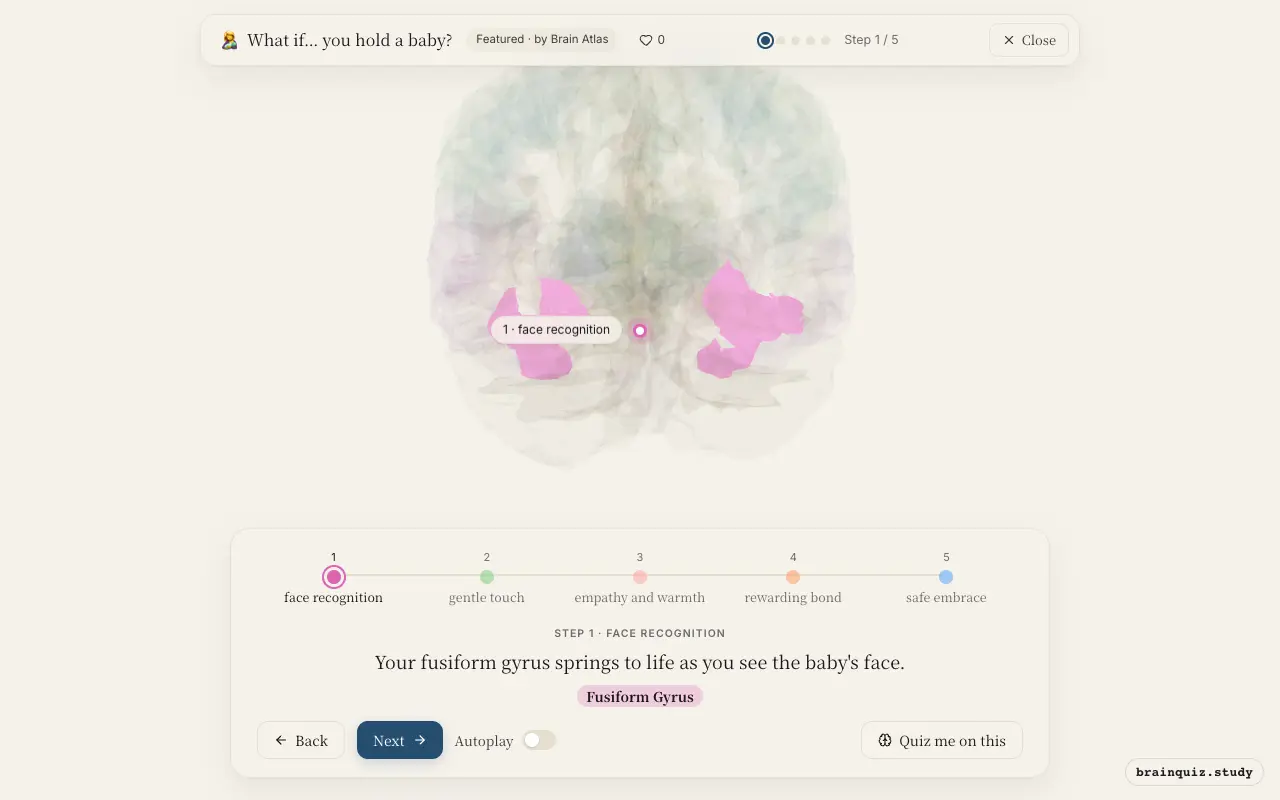
The fusiform gyrus is specialized for face perception, rapidly extracting identity and emotional expression. Recognizing the infant's face triggers a cascade of social and caregiving responses, prioritizing the baby's needs in your attention.
2. Somatosensory Cortex: gentle touch
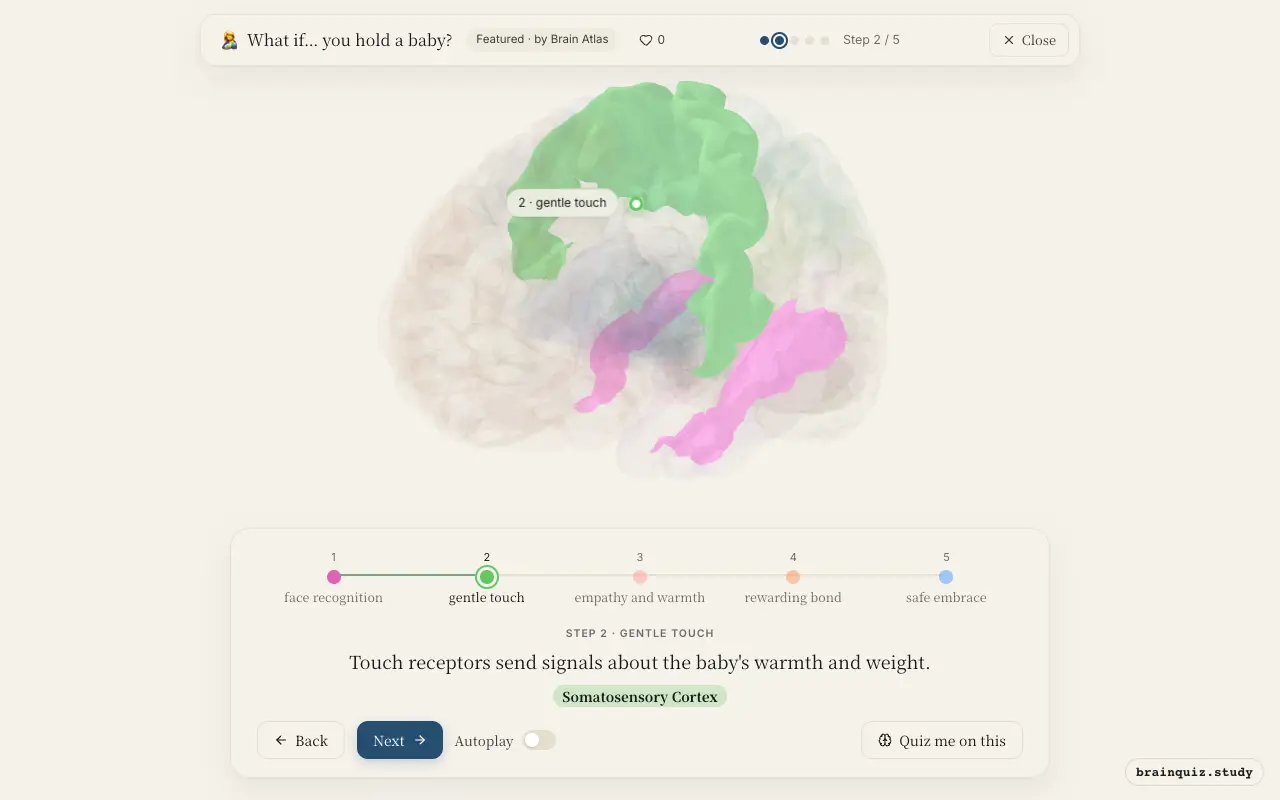
The somatosensory cortex processes tactile information from your arms and hands, mapping the pressure, temperature, and texture of the baby's body. This sensory input is crucial for maintaining a safe and comforting hold, allowing you to adjust your grip without conscious effort.
3. Insula: empathy and warmth
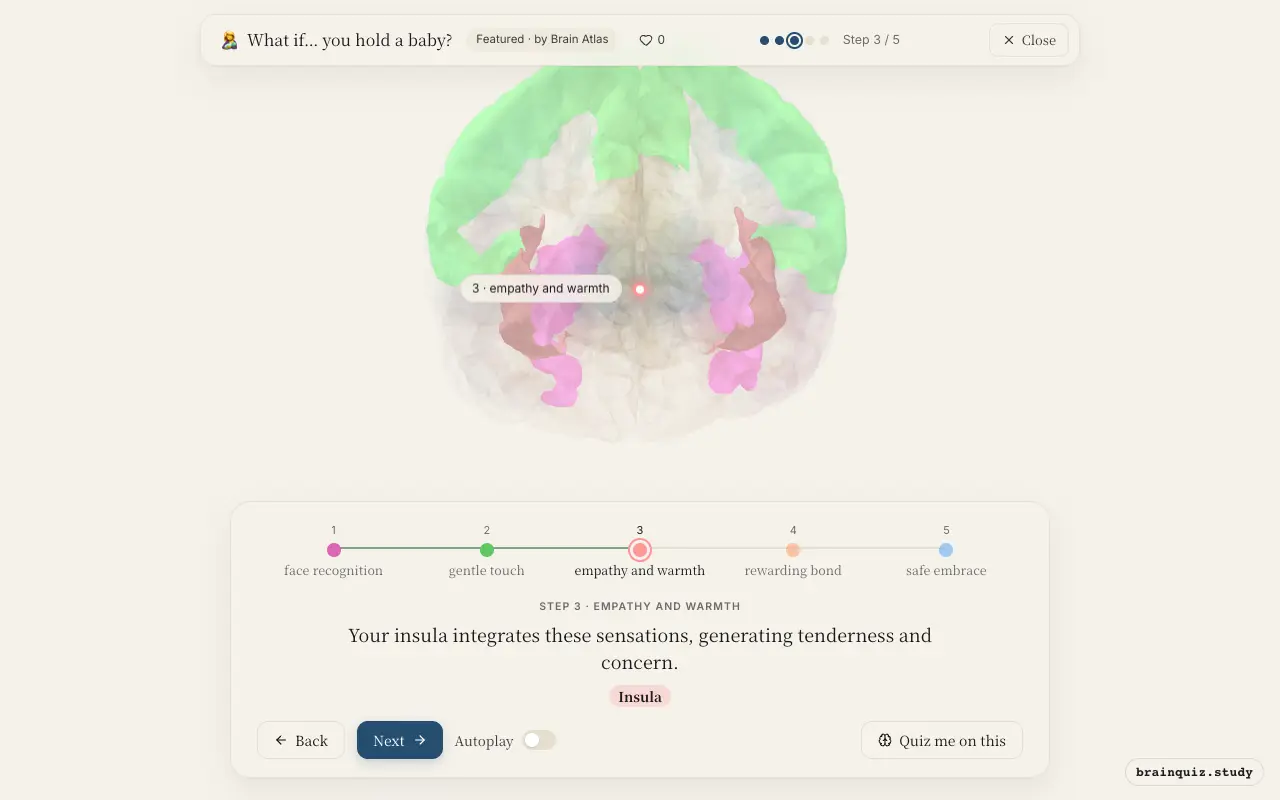
The insula combines external sensory signals with internal bodily states, such as heart rate and visceral feelings, to create a unified emotional experience. This integration fosters empathy, making you attuned to the baby's needs and motivating protective, nurturing behavior.
4. Orbitofrontal Cortex: rewarding bond
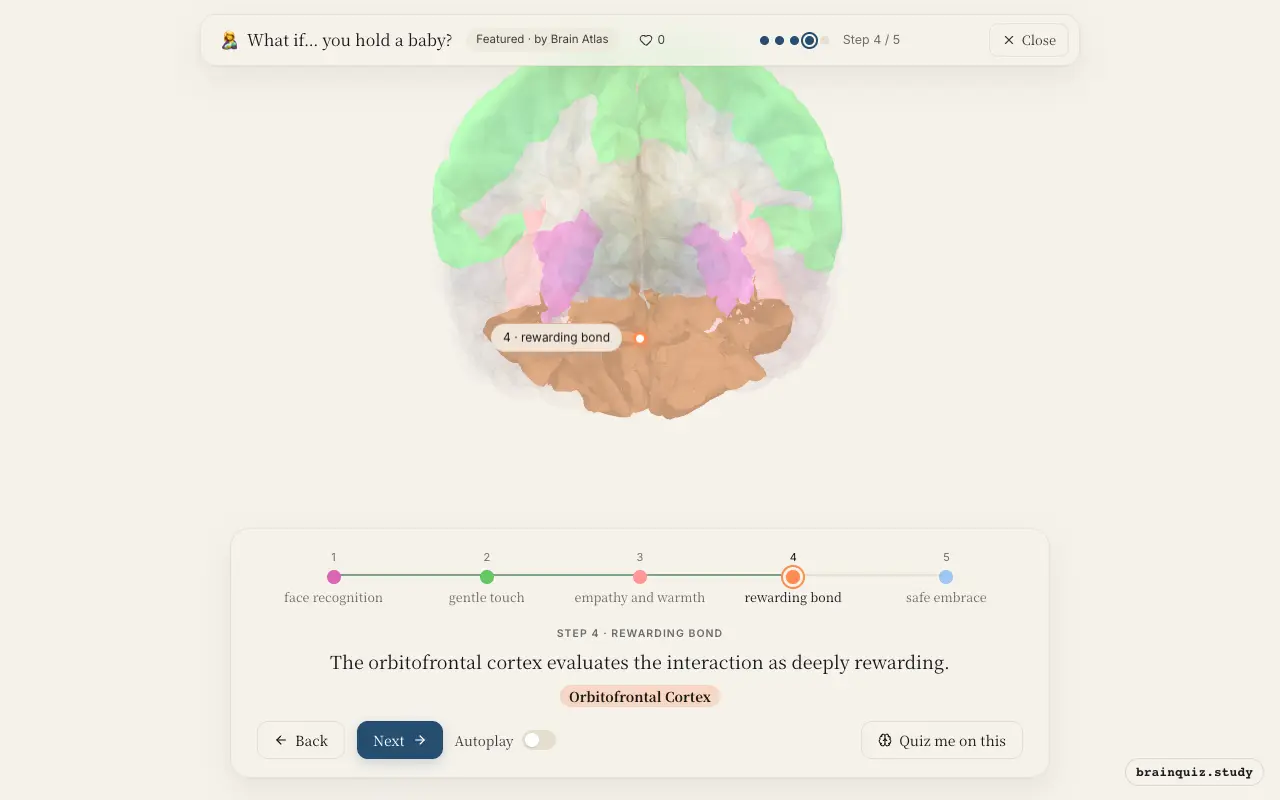
The orbitofrontal cortex assigns value to the experience, linking the sensory and emotional inputs to positive reinforcement. This processing makes holding the baby feel pleasurable, strengthening the attachment bond and increasing the likelihood of future caregiving behavior.
5. Motor Cortex: safe embrace
The motor cortex sends precise commands to your arm and hand muscles, adjusting grip strength and position in real time. This continuous motor control ensures the baby is held safely and comfortably, adapting to their movements and your own posture.
Good to know
- Oxytocin, released by the hypothalamus during physical contact, enhances parental bonding and reduces stress responses.
- Studies suggest that holding a baby can lower amygdala activity, promoting a calm, nurturing state in caregivers.
- Skin-to-skin contact with an infant is thought to reduce cortisol levels in both parent and child, aiding mutual regulation.
Your baby vs. a stranger's baby
Holding your own infant elicits stronger activity in reward regions like the orbitofrontal cortex and insula, and reduced amygdala response, compared to holding an unfamiliar baby. This reflects the unique emotional bond and caregiving motivation parents develop.
Test yourself
Which brain region is primarily responsible for recognizing the baby's face when you hold them?
The rewarding feeling of holding a baby is most strongly associated with activity in which region?
Which region integrates touch and internal sensations to generate feelings of empathy while holding a baby?
0 of 3 answered · 0 correct
Simplified: many regions work together at once, and this shows the main players in the order they act.