What happens in your brain when you read a book?
Updated
As you read, your visual cortex processes the text, the fusiform gyrus recognizes word shapes, the angular gyrus and Wernicke's area decode language, and the hippocampus encodes the story into memory.
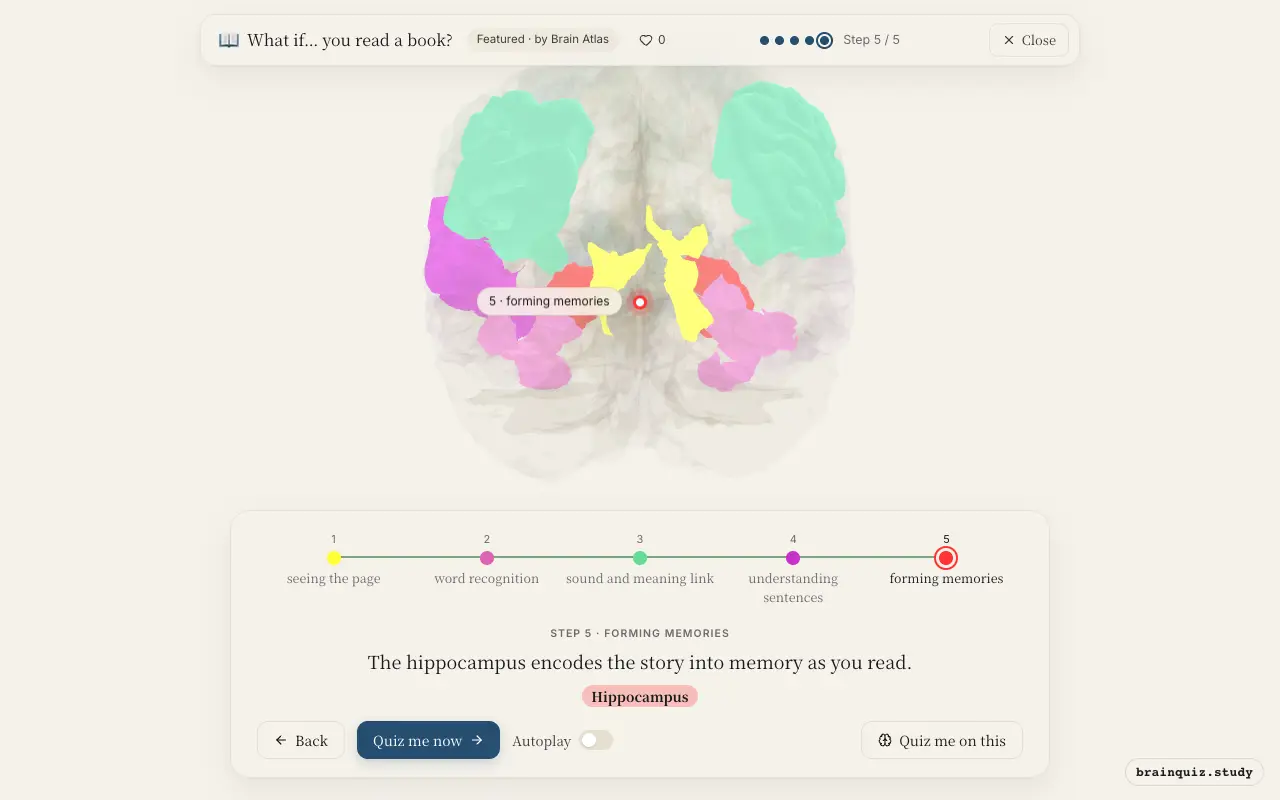
Watch it light up on the 3D brain
Brain regions that light up
| Order | Region | What it does here |
|---|---|---|
| 1 | Visual Cortex | The visual cortex processes the lines and curves of each letter. |
| 2 | Fusiform Gyrus | The fusiform gyrus recognizes entire words as visual patterns. |
| 3 | Angular Gyrus | The angular gyrus links the visual word form to its sound and meaning. |
| 4 | Wernicke's Area | Wernicke's area decodes the meaning of words and sentences. |
| 5 | Hippocampus | The hippocampus encodes the story into memory as you read. |
1. Visual Cortex: seeing the page
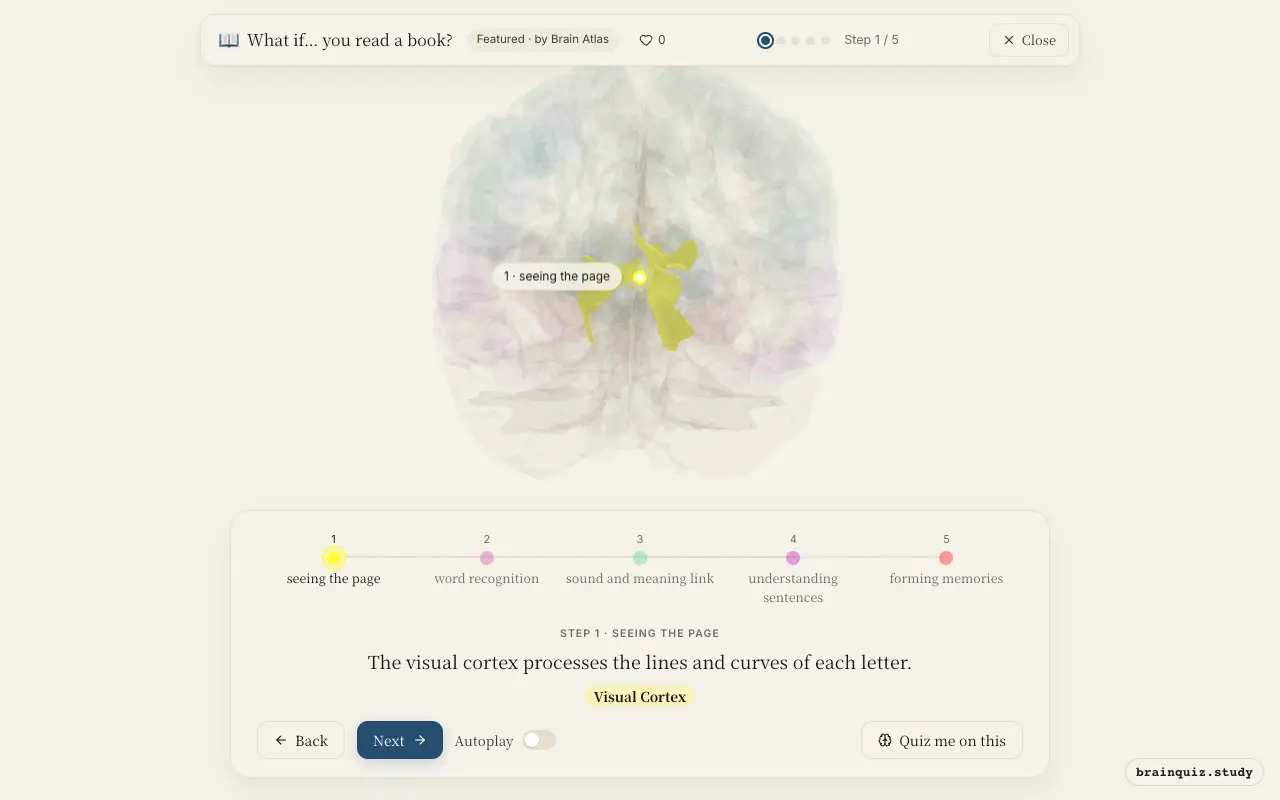
The primary visual cortex in the occipital lobe receives raw visual input from the eyes and extracts basic features like edges and orientation. This initial processing is essential for recognizing text.
2. Fusiform Gyrus: word recognition
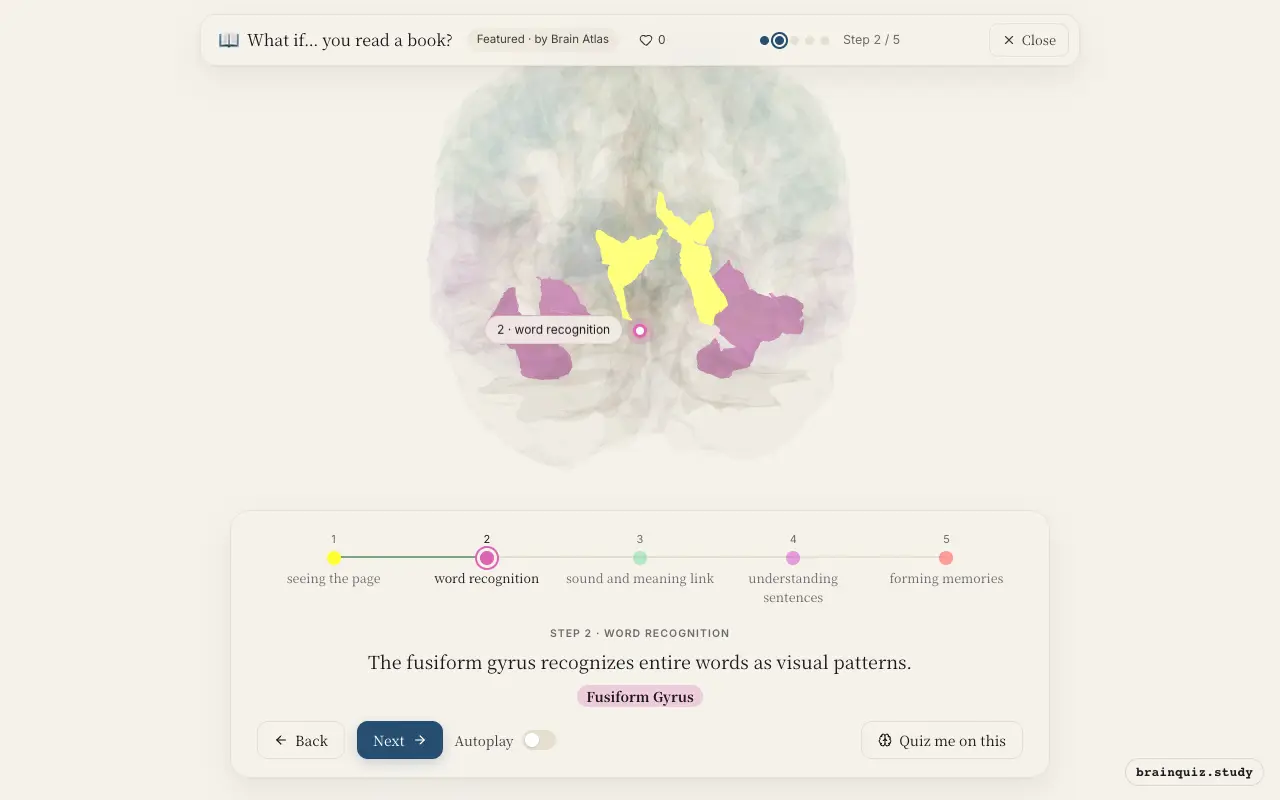
A subregion of the fusiform gyrus, often called the visual word form area, specializes in identifying written words. It quickly matches letter combinations to stored visual representations, enabling fluent reading.
3. Angular Gyrus: sound and meaning link
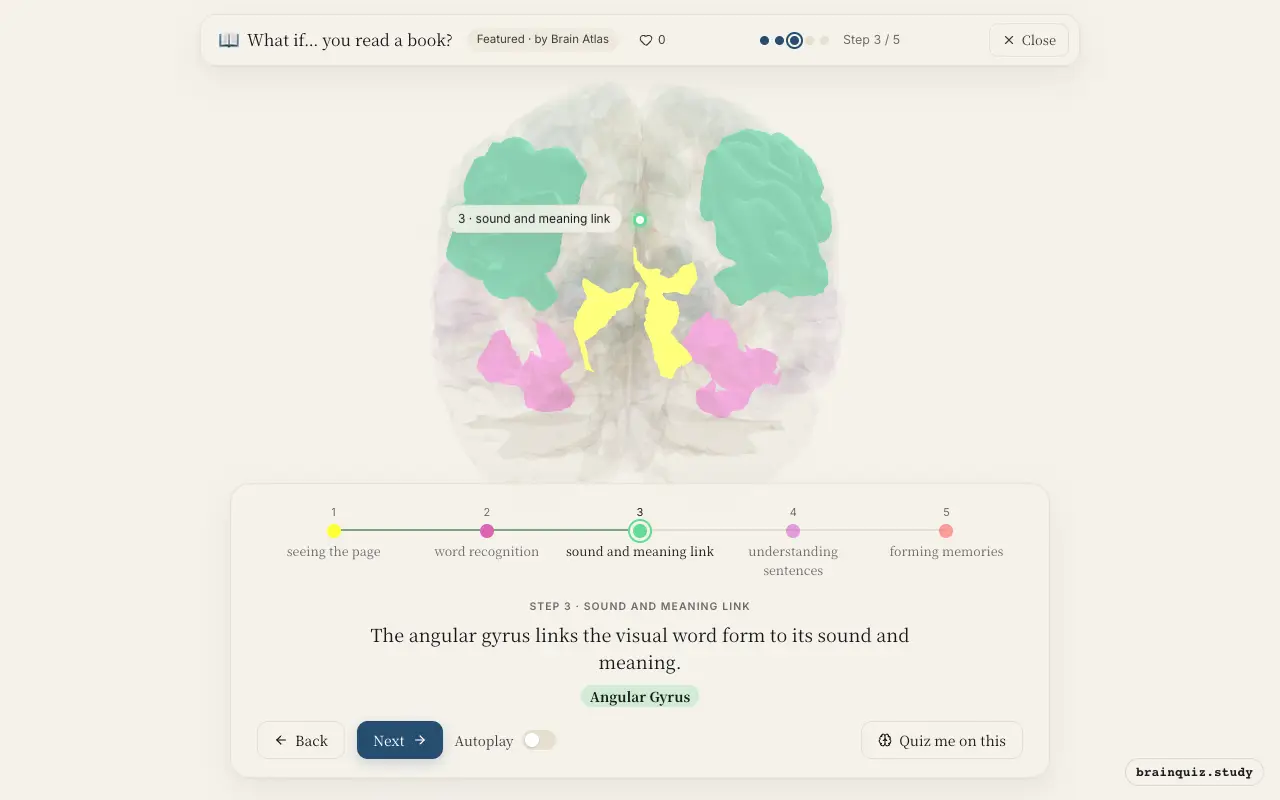
The angular gyrus integrates visual, auditory, and semantic information. It plays a key role in mapping the visual appearance of a word to its pronunciation and associated concepts.
4. Wernicke's Area: understanding sentences
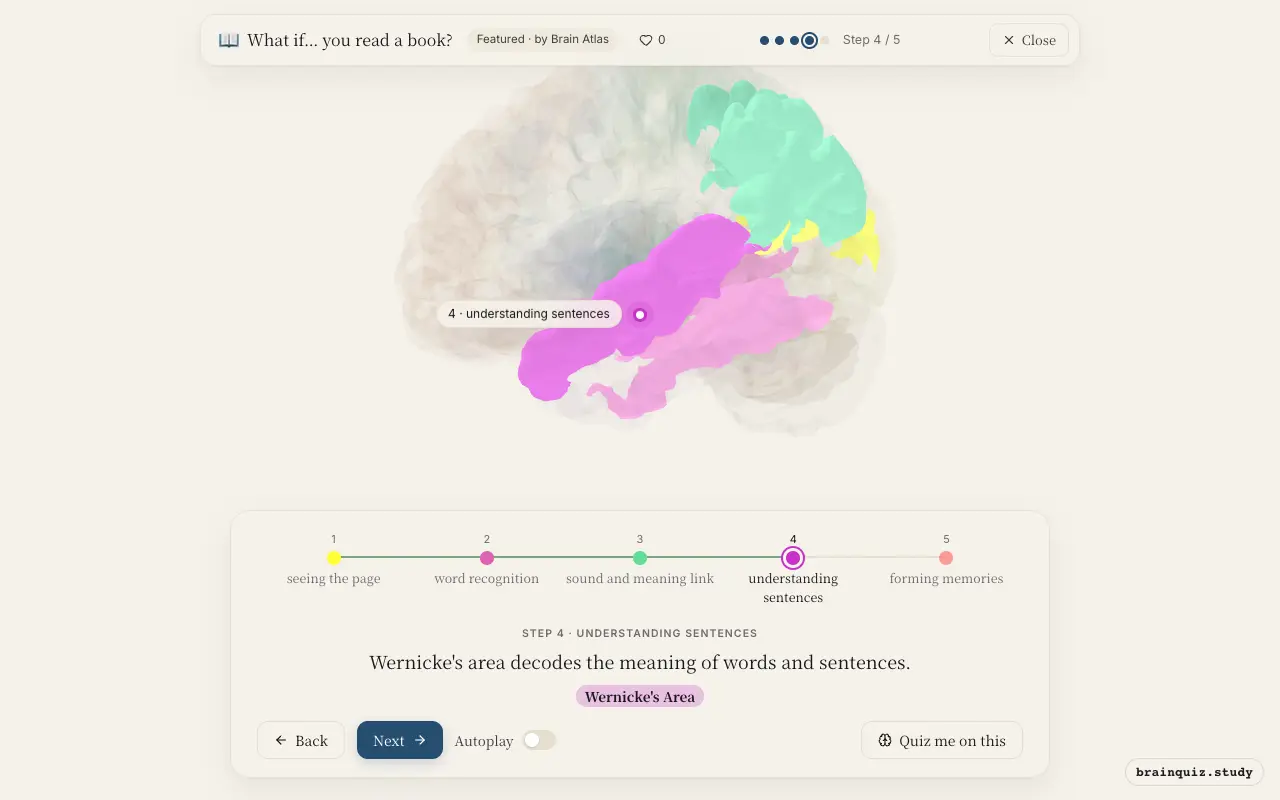
Located in the posterior temporal lobe, Wernicke's area is critical for language comprehension. It processes the grammatical structure and combines word meanings to understand the narrative.
5. Hippocampus: forming memories
The hippocampus binds the events, characters, and details into a coherent memory trace. It also links new information to existing knowledge, helping you learn from the book.
Good to know
- Reading speed in skilled adults averages about 200-300 words per minute, but the brain processes each word in under 500 milliseconds.
- The visual word form area responds preferentially to written words, but it can also activate for other visual stimuli.
- Dyslexia is associated with reduced activation in the fusiform gyrus and angular gyrus during reading.
Reading vs Listening
Reading a book relies heavily on visual word recognition in the fusiform gyrus and angular gyrus, while listening to an audiobook activates the auditory cortex and Wernicke's area more directly. Both engage language comprehension and memory, but reading adds an extra visual-to-language conversion step.
Test yourself
Which brain region is most specialized for recognizing written words?
What role does the angular gyrus play in reading?
Which region helps you remember the plot of a book after finishing it?
0 of 3 answered · 0 correct
Simplified: many regions work together at once, and this shows the main players in the order they act.