What happens in your brain when you get an itch?
Updated
An itch triggers a brain network: the thalamus relays the signal, the somatosensory cortex localizes it, the insula creates the unpleasant sensation, the anterior cingulate drives the urge to scratch, and the motor cortex executes the scratch.
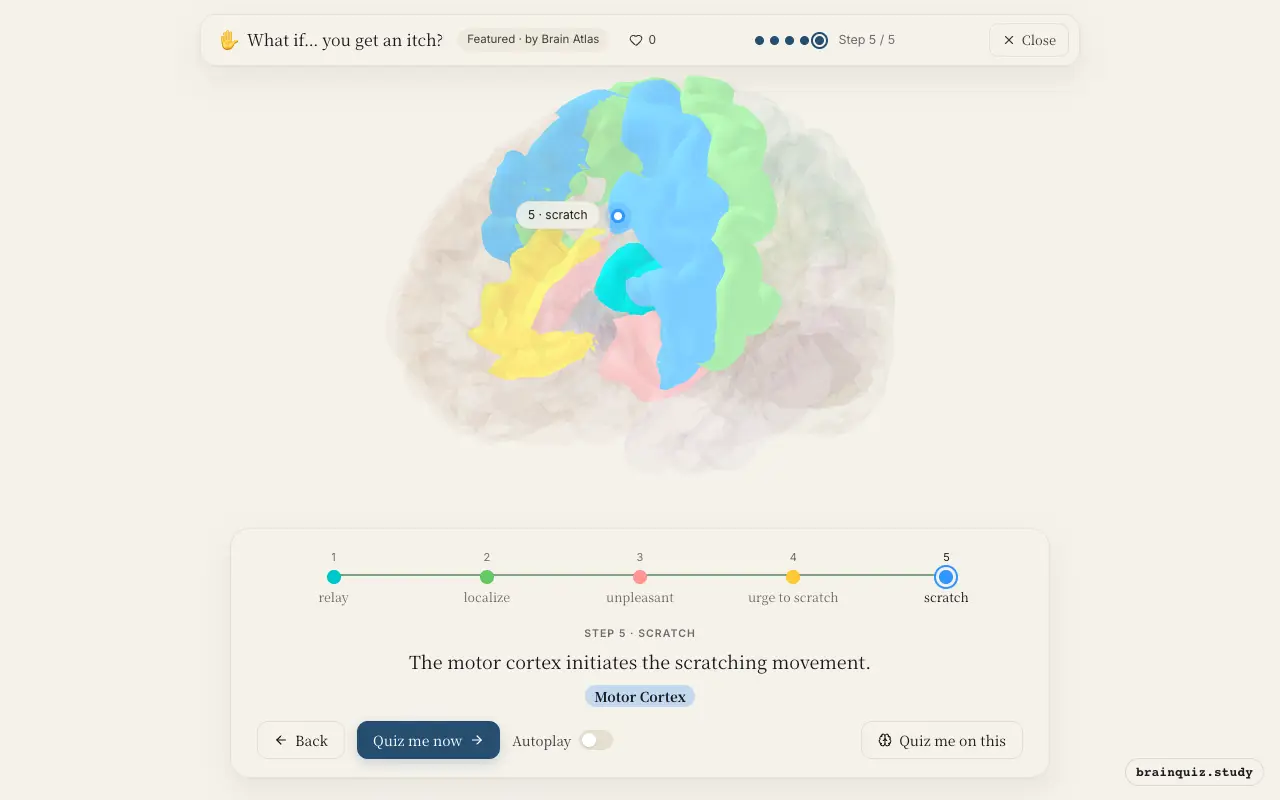
Watch it light up on the 3D brain
Brain regions that light up
| Order | Region | What it does here |
|---|---|---|
| 1 | Thalamus | Itch signals from the skin arrive at the thalamus. |
| 2 | Somatosensory Cortex | The somatosensory cortex pinpoints the itch location. |
| 3 | Insula | The insula contributes to the unpleasant feeling of itch. |
| 4 | Anterior Cingulate Cortex | The anterior cingulate contributes to the urge to scratch. |
| 5 | Motor Cortex | The motor cortex initiates the scratching movement. |
1. Thalamus: relay
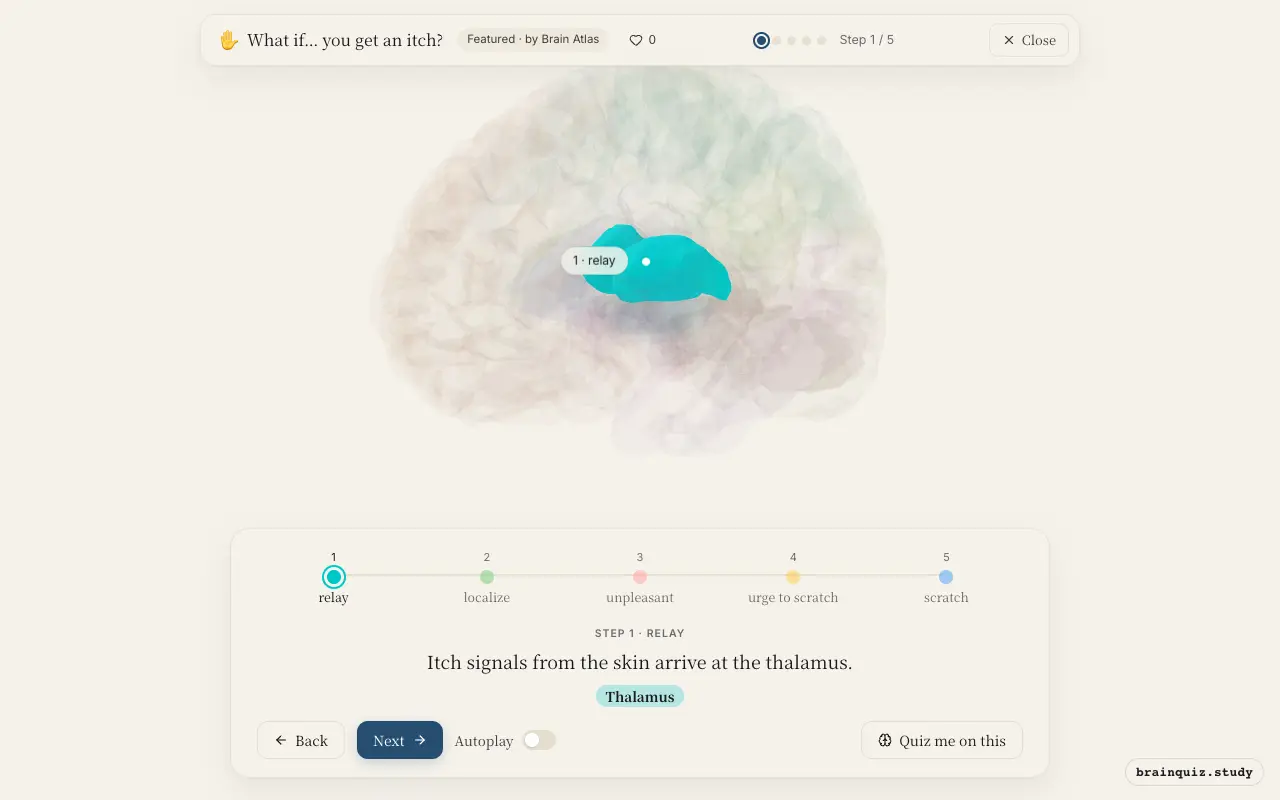
The thalamus is the brain's sensory relay station. It receives itch signals from the spinothalamic tract and directs them to the somatosensory cortex for further processing. This step is crucial for the conscious perception of itch.
2. Somatosensory Cortex: localize
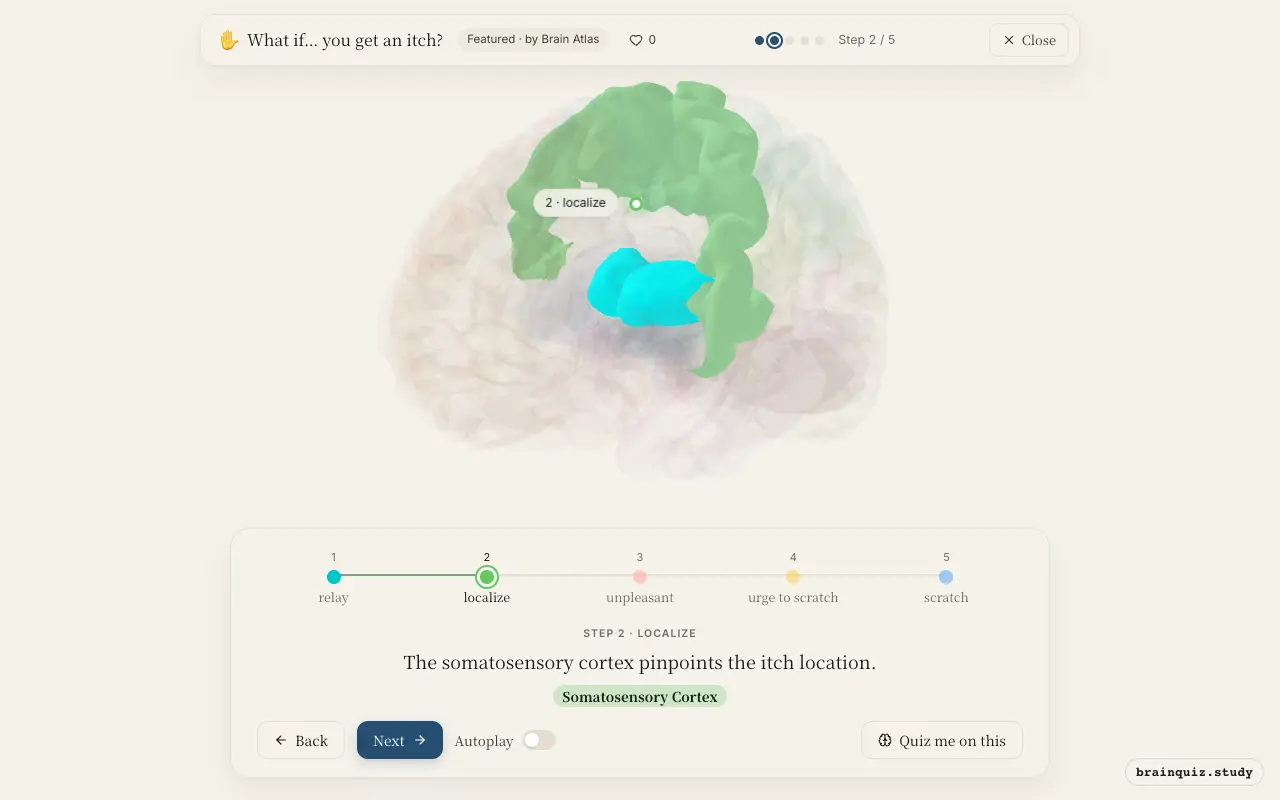
The primary somatosensory cortex processes the location, intensity, and quality of the itch. It creates a spatial map of the body, allowing you to know exactly where to scratch.
3. Insula: unpleasant
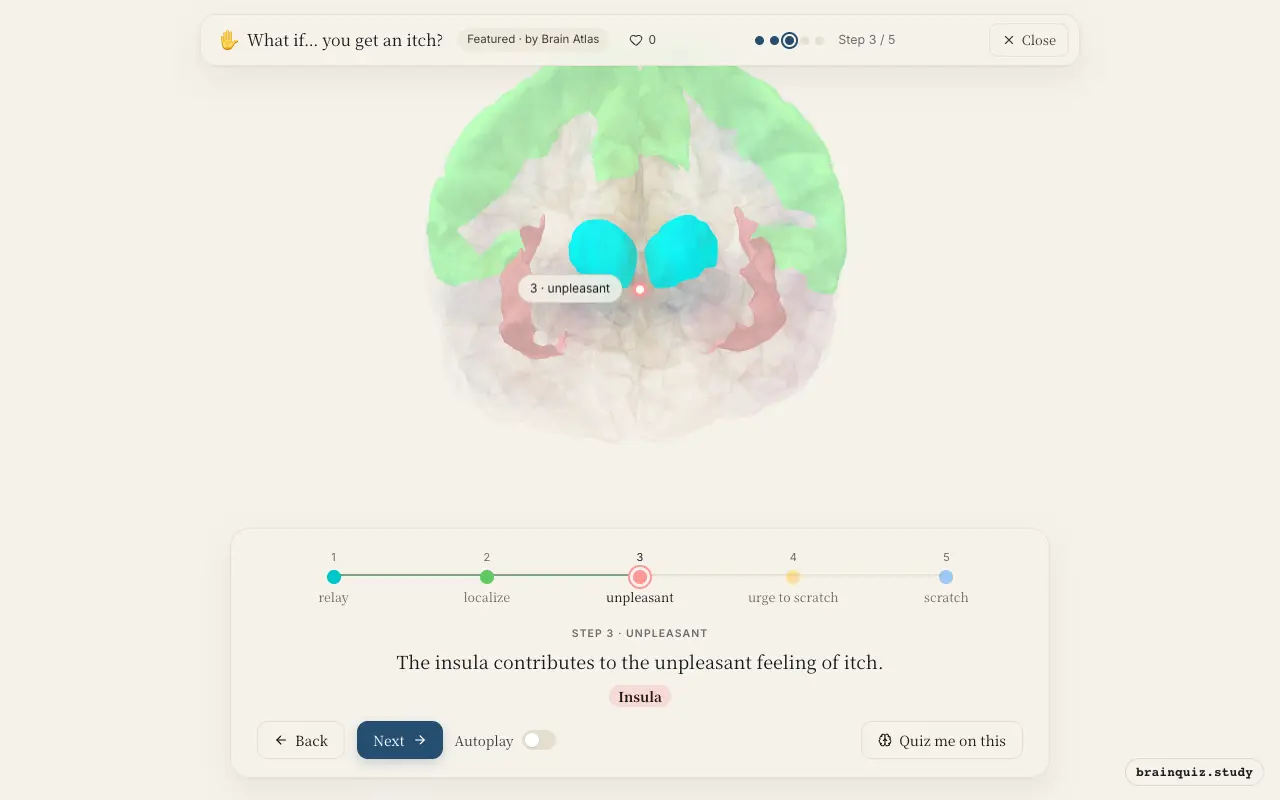
The insula is involved in interoception and emotional awareness. It contributes to the subjective unpleasantness of the itch, making it feel bothersome and driving the need for relief.
4. Anterior Cingulate Cortex: urge to scratch
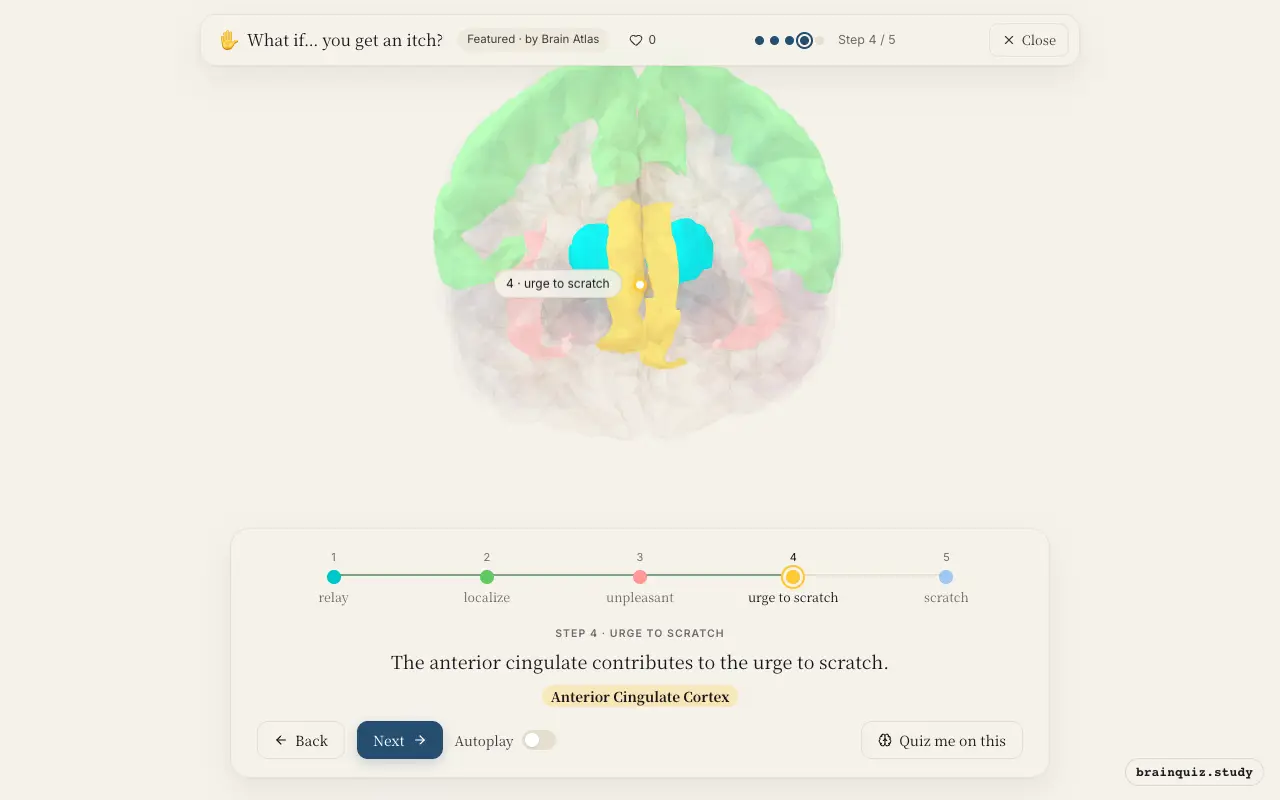
The anterior cingulate cortex is associated with motivation and conflict monitoring. It processes the motivational and emotional aspects of itch, generating a strong desire to scratch to relieve the sensation.
5. Motor Cortex: scratch
Once the urge to scratch is strong enough, the motor cortex plans and executes the voluntary movement. It sends signals down the corticospinal tract to move your hand to the itchy spot.
Good to know
- Itch and pain travel through separate but overlapping pathways in the spinal cord and brain.
- Scratching temporarily relieves itch by activating reward-related brain areas, but excessive scratching can cause skin damage and worsen the itch.
- The spinothalamic tract carries itch signals from the spinal cord to the thalamus.
Itch vs Pain
Itch activates the insula and anterior cingulate more strongly than pain, reflecting its affective and motivational components. Pain, in contrast, produces greater activation in the somatosensory cortex. Both sensations trigger withdrawal or avoidance behaviors, but only itch elicits scratching.
Test yourself
Which brain region relays itch signals to the cortex?
Which region is most associated with the unpleasantness of an itch?
What is the role of the anterior cingulate cortex in itch?
0 of 3 answered · 0 correct
Simplified: many regions work together at once, and this shows the main players in the order they act.