What happens in your brain when you stub your toe?
Updated
A stubbed toe triggers a spinal withdrawal reflex, then the pain signal travels via the thalamus to the somatosensory cortex for location, the anterior cingulate for unpleasantness, and the insula for bodily awareness.
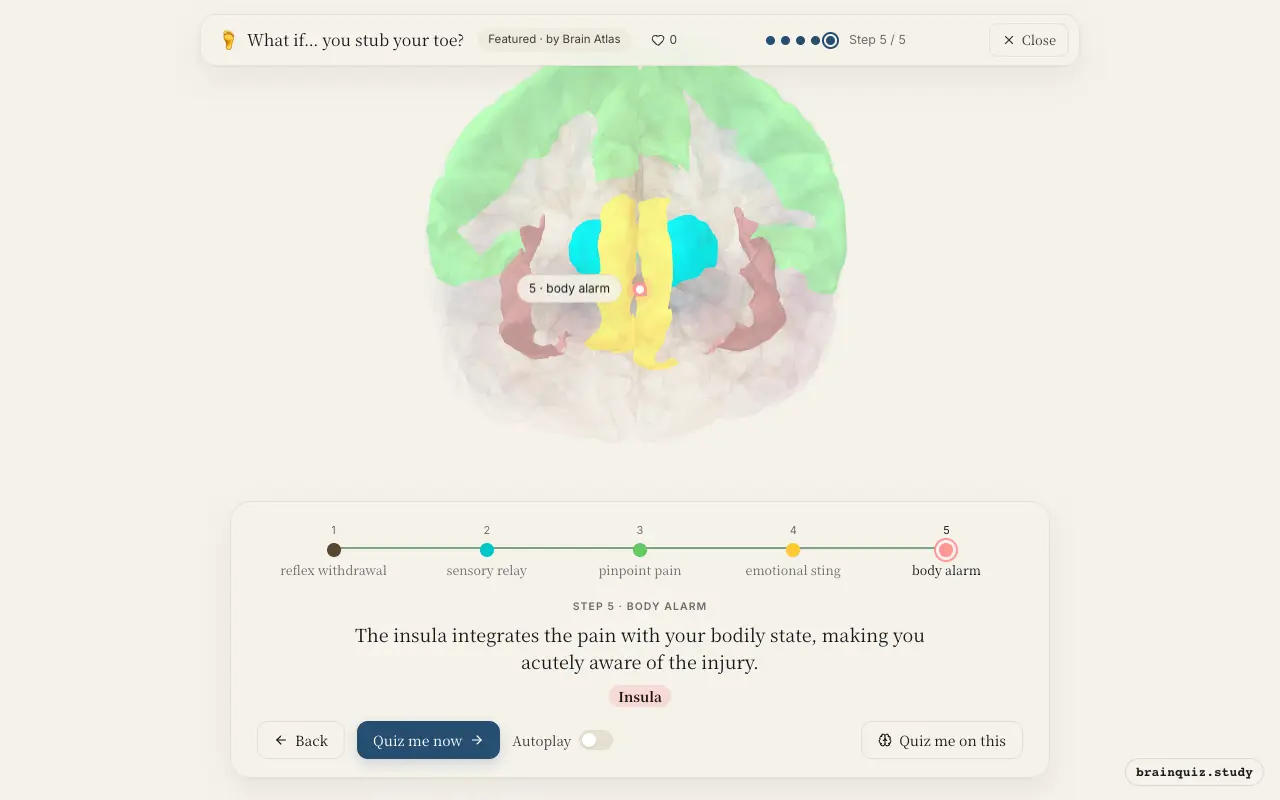
Watch it light up on the 3D brain
Brain regions that light up
| Order | Region | What it does here |
|---|---|---|
| 1 | Spinal Cord | A sudden pain signal triggers a spinal reflex, pulling your foot back before the brain is conscious. |
| 2 | Thalamus | The pain signal reaches the thalamus, the brain's sensory relay station, which routes it to the cortex. |
| 3 | Somatosensory Cortex | The somatosensory cortex maps the pain to a specific spot on your toe. |
| 4 | Anterior Cingulate Cortex | The anterior cingulate cortex registers the unpleasantness and emotional sting of the pain. |
| 5 | Insula | The insula integrates the pain with your bodily state, making you acutely aware of the injury. |
1. Spinal Cord: reflex withdrawal
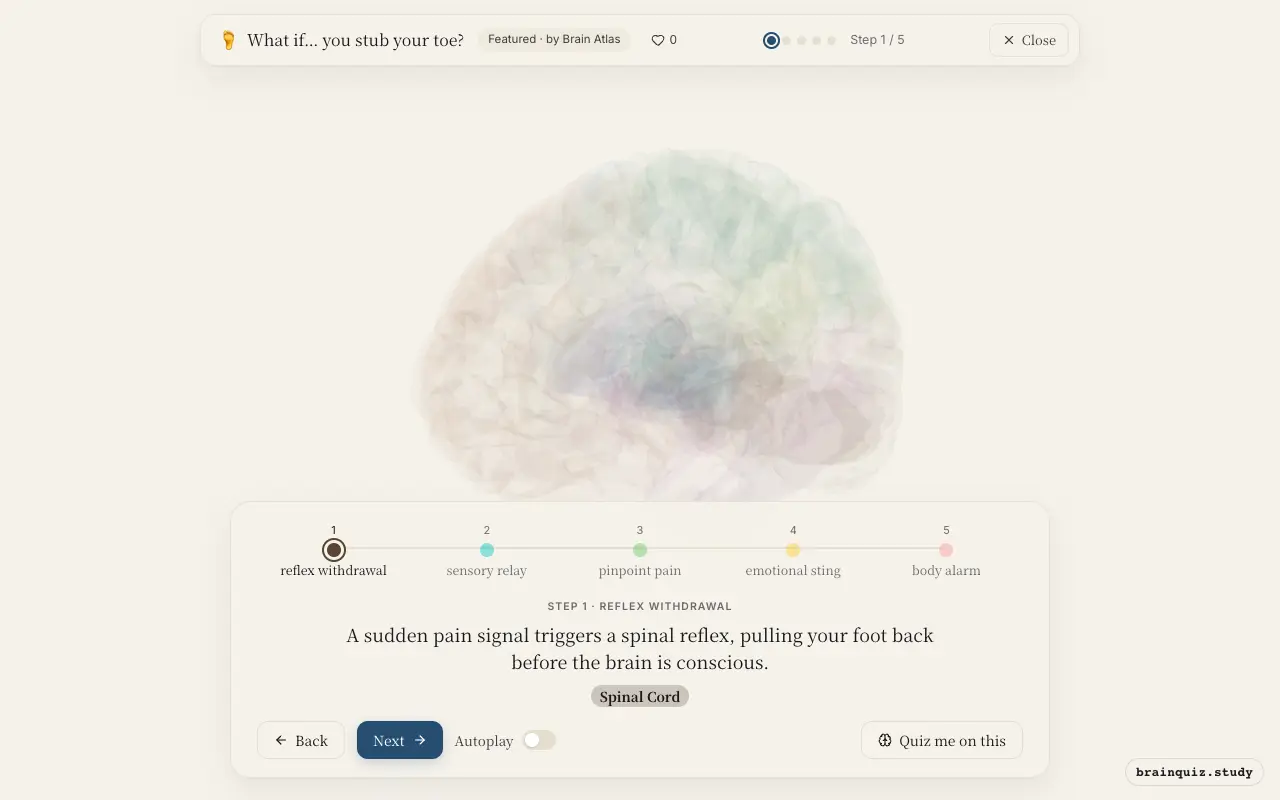
Damage-sensing nerves in the toe send signals to the spinal cord, which directly activates motor neurons to contract muscles and withdraw the foot. This happens in milliseconds, before the brain processes the pain.
2. Thalamus: sensory relay
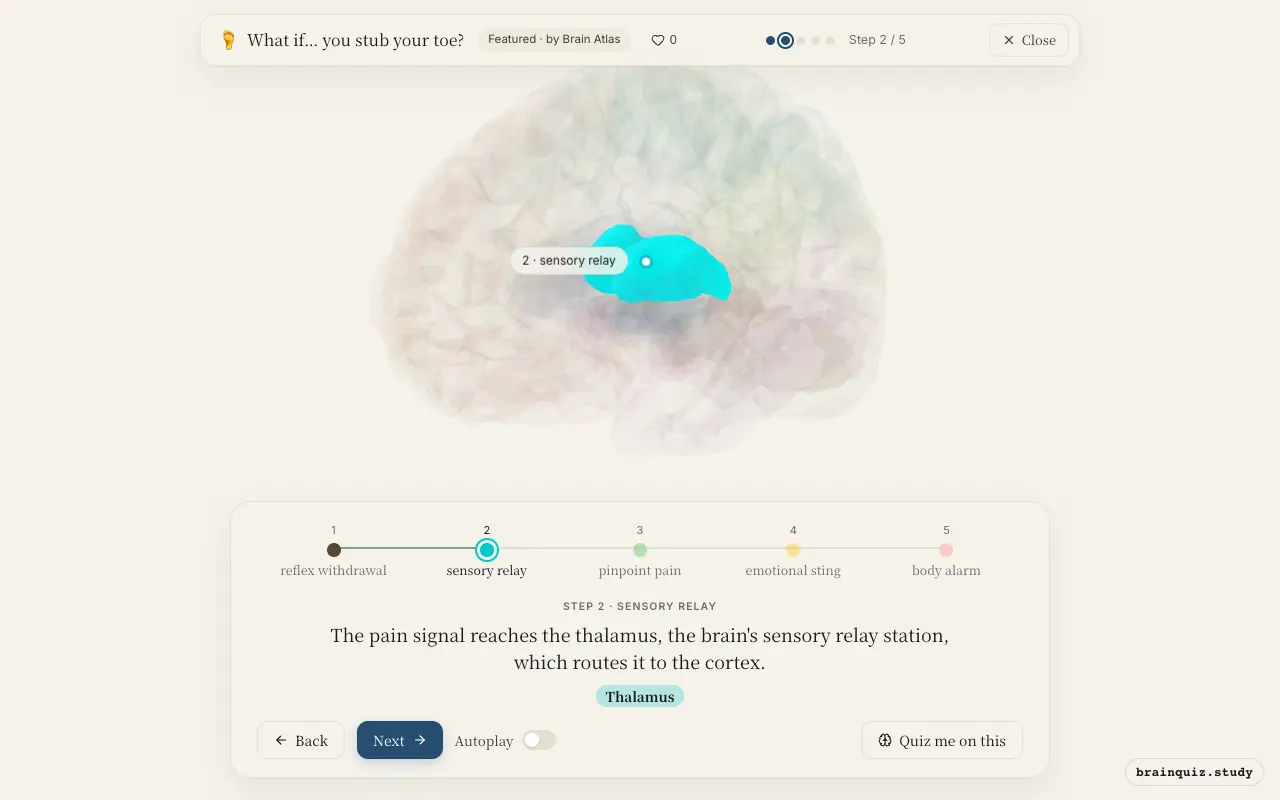
The spinothalamic tract carries nociceptive information from the spinal cord to the thalamus. The thalamus integrates and forwards these signals to the somatosensory cortex and other regions, also contributing to alertness and attention to the injury.
3. Somatosensory Cortex: pinpoint pain
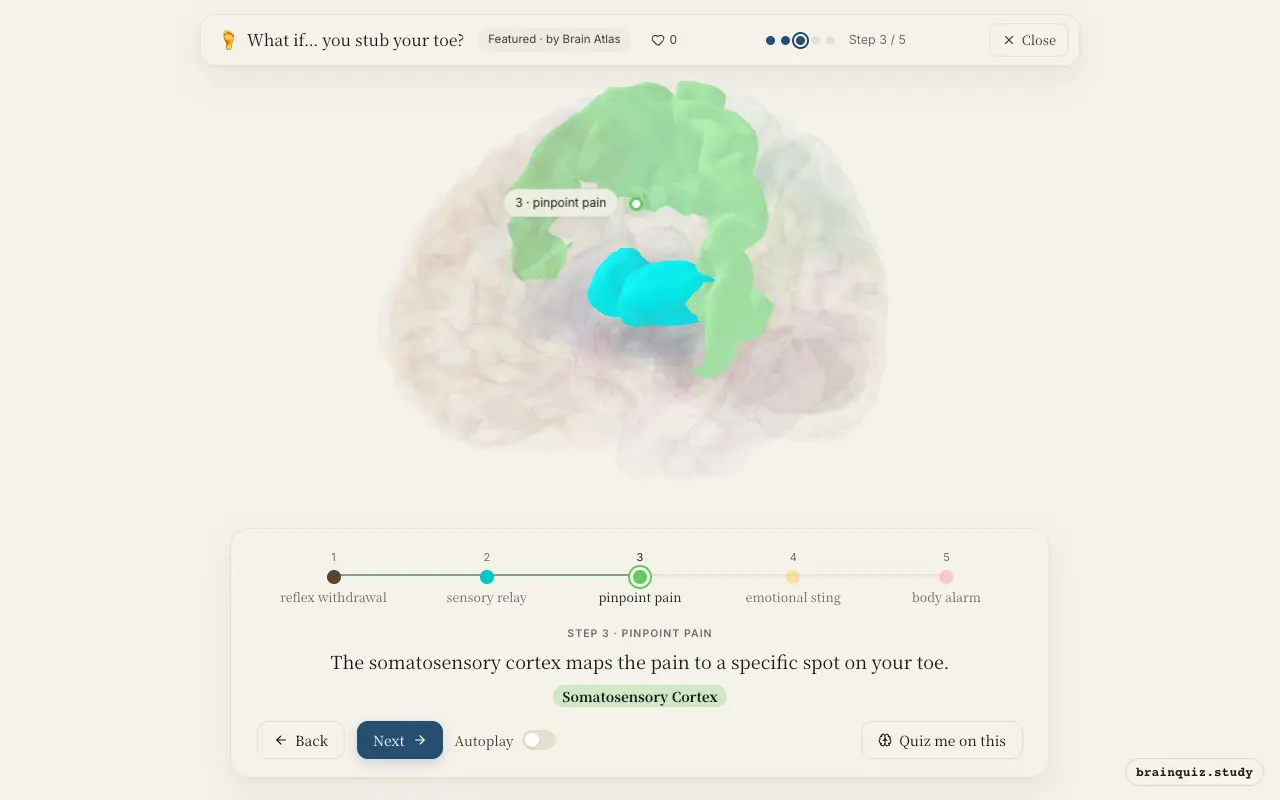
The primary somatosensory cortex receives the topographic pain signal, allowing you to identify exactly where the stub occurred. It processes the intensity and quality of the painful stimulus. This rapid localization helps you assess the injury, and the somatotopic map ensures precision.
4. Anterior Cingulate Cortex: emotional sting
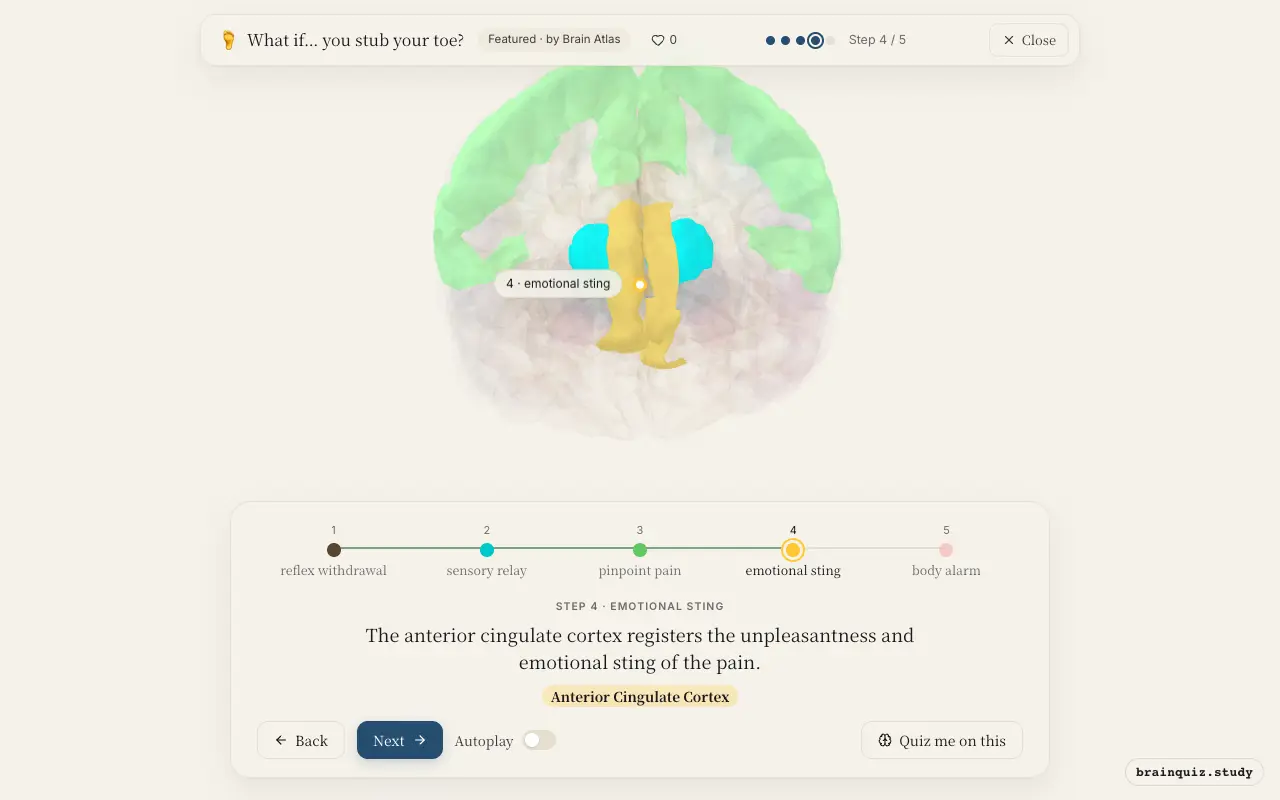
This region is involved in the affective dimension of pain—the suffering and negative emotion. It also directs attention to the painful stimulus, heightening its emotional impact. Activity here is linked to how much the pain bothers you; studies suggest it predicts subjective pain ratings.
5. Insula: body alarm
The insula processes interoceptive signals and subjective awareness of pain. It helps you feel the pain as happening to you, and may trigger a visceral response like a grimace or a surge of adrenaline. It also contributes to the motivation to protect the injured toe.
Good to know
- The withdrawal reflex is a spinal reflex arc that does not require brain input, allowing for a faster protective response.
- Pain signals travel to the brain via the spinothalamic tract, which decussates (crosses) in the spinal cord.
- Distraction can reduce pain by engaging prefrontal regions that dampen activity in the anterior cingulate and insula.
Stubbing your toe vs. seeing someone else stub theirs
When you stub your own toe, the somatosensory cortex is strongly activated to localize the injury. Watching someone else stub their toe activates the insula and anterior cingulate—emotional and empathic pain regions—but much less somatosensory cortex. Your brain simulates the pain without the actual sensory input.
Test yourself
Which brain region is responsible for the immediate withdrawal reflex when you stub your toe?
What is the role of the anterior cingulate cortex in the experience of stubbing your toe?
Which brain region integrates pain with your internal bodily state and self-awareness?
0 of 3 answered · 0 correct
Simplified: many regions work together at once, and this shows the main players in the order they act.